

Brand Stories
The Ocean Is Heating Faster Than Ever: Why Low-Carbon Design Must Start Now
Oct
What if the ocean we know today no longer looks the same within our lifetime?
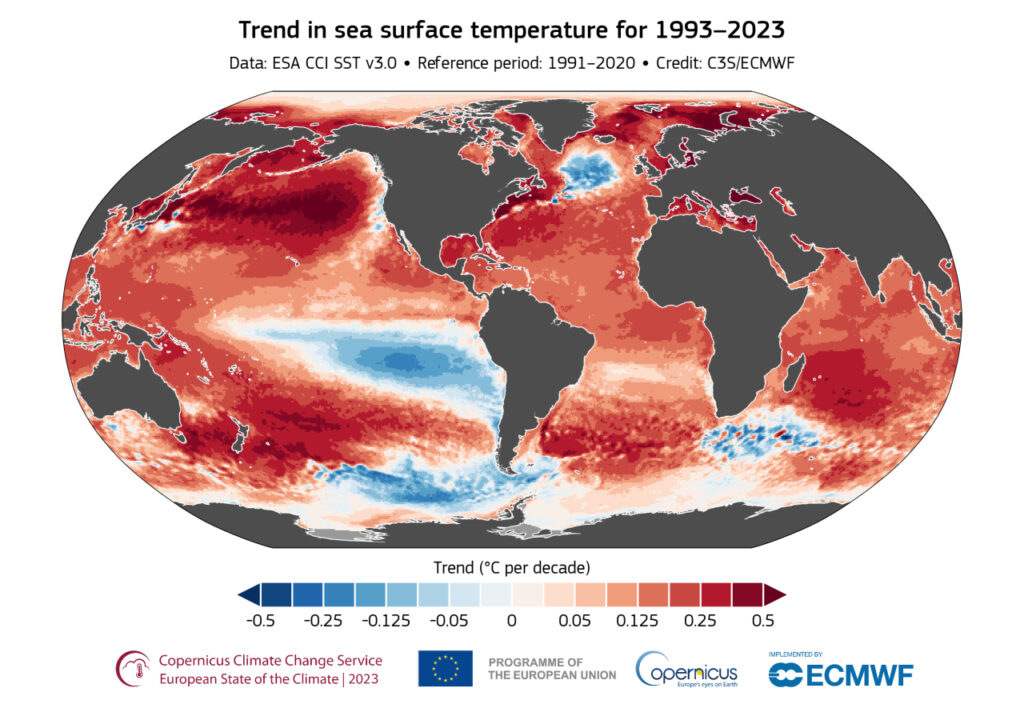
The warning signs are becoming increasingly difficult to ignore. Global oceans are storing unprecedented amounts of heat, sea levels are rising faster, ocean acidity is increasing, polar ice is disappearing, and marine ecosystems are struggling to adapt. In 2025 alone, the upper 2,000 metres of the world’s oceans gained roughly 23 zettajoules of additional heat compared with the previous year, according to major international ocean datasets. That is an enormous amount of energy stored beneath the surface.
The World Meteorological Organization also reported that ocean heat content reached its highest level in the modern observational record in 2025. More importantly, the rate of ocean warming during 2005–2025 was more than twice the rate observed during 1960–2005.
This is no longer only a story about hotter weather. Climate change is being stored inside the ocean, and what happens beneath the water will eventually influence coastlines, food systems, economies, communities and everyday life.
For sandals world, this global transformation raises an important question: if carbon emissions affect systems as large as the ocean, how should brands rethink the way products are designed, sourced and produced? The answer begins with sustainability, better materials and a serious transition toward lower-carbon production.
SUSTRAINABLE WITH SANDALS WORLD
The Ocean Is Absorbing the Heat We Create
The ocean acts like one of Earth’s largest climate buffers. When greenhouse gases such as carbon dioxide trap additional energy in the climate system, most of that excess heat does not remain in the atmosphere.
The ocean absorbs the majority of it.
UNESCO reports that approximately 90% of the excess heat caused by global warming has been absorbed by the ocean. This has helped slow the rise of atmospheric temperatures, but it comes at a significant cost.
Absorbing heat does not mean eliminating it.
That energy remains stored within seawater, sometimes for decades or even centuries. As a result, scientists closely monitor Ocean Heat Content, which measures the heat stored throughout the ocean rather than focusing only on surface temperature.
This distinction matters. Sea surface temperatures can rise or fall because of El Niño, La Niña, seasonal changes and regional weather patterns. Ocean Heat Content, however, reveals the deeper and longer-term direction of global warming.
The message from decades of observations is clear: the ocean continues to accumulate heat.
A Warmer Ocean Means a Higher Ocean
One major consequence of ocean warming is sea-level rise.
When seawater becomes warmer, it expands. Scientists call this process thermal expansion. Even without adding new water to the ocean, warming alone can increase sea level.
At the same time, glaciers and ice sheets on land are losing mass. Greenland, Antarctica and mountain glaciers around the world are sending additional water into the ocean.
These two processes work together:
Ocean Warming → Thermal Expansion → Sea-Level Rise
and
Global Warming → Melting Land Ice → More Ocean Water → Sea-Level Rise
Recent ocean assessments show that the rate of global mean sea-level rise has accelerated. From 2012 to 2025, sea level increased at roughly 4.2 millimetres per year, faster than the rate observed during the earlier satellite era.
A few millimetres may sound insignificant. However, sea-level rise raises the starting point from which tides, storm surges and coastal flooding occur.
A storm does not need to become dramatically stronger to create more damage if the ocean beneath it is already higher.
For coastal cities, islands and low-lying communities, this means greater risks from erosion, flooding, saltwater intrusion and damage to infrastructure.
The Ocean Is Not Only Getting Hotter Its Chemistry Is Changing
Another major challenge receives far less public attention: ocean deoxygenation.
Global ocean oxygen levels have declined by around 2% since the 1960s. Scientists have also identified hundreds of low-oxygen coastal zones around the world.
Warmer water naturally holds less dissolved oxygen than colder water. At the same time, stronger temperature differences between the surface and deeper ocean can reduce vertical mixing.
When water layers mix less efficiently, oxygen from the surface has difficulty reaching deeper waters.
Nutrient pollution can make the situation even worse. Excess nutrients from agriculture and wastewater can trigger large algal blooms. When algae die and microorganisms break them down, the decomposition process consumes oxygen.
Eventually, some waters can become hypoxic or develop so-called dead zones, where many marine animals struggle to survive.
A Warmer Ocean Means a Higher Ocean
One major consequence of ocean warming is sea-level rise.
When seawater becomes warmer, it expands. Scientists call this process thermal expansion. Even without adding new water to the ocean, warming alone can increase sea level.
At the same time, glaciers and ice sheets on land are losing mass. Greenland, Antarctica and mountain glaciers around the world are sending additional water into the ocean.
These two processes work together:
Ocean Warming → Thermal Expansion → Sea-Level Rise
and
Global Warming → Melting Land Ice → More Ocean Water → Sea-Level Rise
Recent ocean assessments show that the rate of global mean sea-level rise has accelerated. From 2012 to 2025, sea level increased at roughly 4.2 millimetres per year, faster than the rate observed during the earlier satellite era.
A few millimetres may sound insignificant. However, sea-level rise raises the starting point from which tides, storm surges and coastal flooding occur.
A storm does not need to become dramatically stronger to create more damage if the ocean beneath it is already higher.
For coastal cities, islands and low-lying communities, this means greater risks from erosion, flooding, saltwater intrusion and damage to infrastructure.
The Ocean Is Not Only Getting Hotter — Its Chemistry Is Changing
Carbon dioxide affects the ocean in another way.
As atmospheric CO₂ rises, the ocean absorbs part of it. When carbon dioxide dissolves in seawater, it forms carbonic acid and changes the chemical balance of the ocean.
This process is known as ocean acidification.
Since the beginning of the Industrial Revolution, average surface-ocean pH has fallen by around 0.1 units. Because the pH scale is logarithmic, this represents an increase in acidity of roughly 30%.
The ocean is still alkaline rather than literally “acidic.” However, even a relatively small shift in ocean chemistry can create significant biological consequences.
Corals, oysters, shellfish, sea urchins and some types of plankton depend on carbonate ions to build calcium carbonate shells and skeletons. When these ions become less available, organisms may need more energy to grow and maintain their structures.
Therefore, climate change does not simply make the ocean warmer. It can alter the basic chemistry that marine ecosystems depend on.
A Warmer Ocean Is Also Losing Oxygen
Another major challenge receives far less public attention: ocean deoxygenation.
Global ocean oxygen levels have declined by around 2% since the 1960s. Scientists have also identified hundreds of low-oxygen coastal zones around the world.
Warmer water naturally holds less dissolved oxygen than colder water. At the same time, stronger temperature differences between the surface and deeper ocean can reduce vertical mixing.
When water layers mix less efficiently, oxygen from the surface has difficulty reaching deeper waters.
Nutrient pollution can make the situation even worse. Excess nutrients from agriculture and wastewater can trigger large algal blooms. When algae die and microorganisms break them down, the decomposition process consumes oxygen.
Eventually, some waters can become hypoxic or develop so-called dead zones, where many marine animals struggle to survive.
Coral Reefs Are Showing Us What Ocean Stress Looks Like
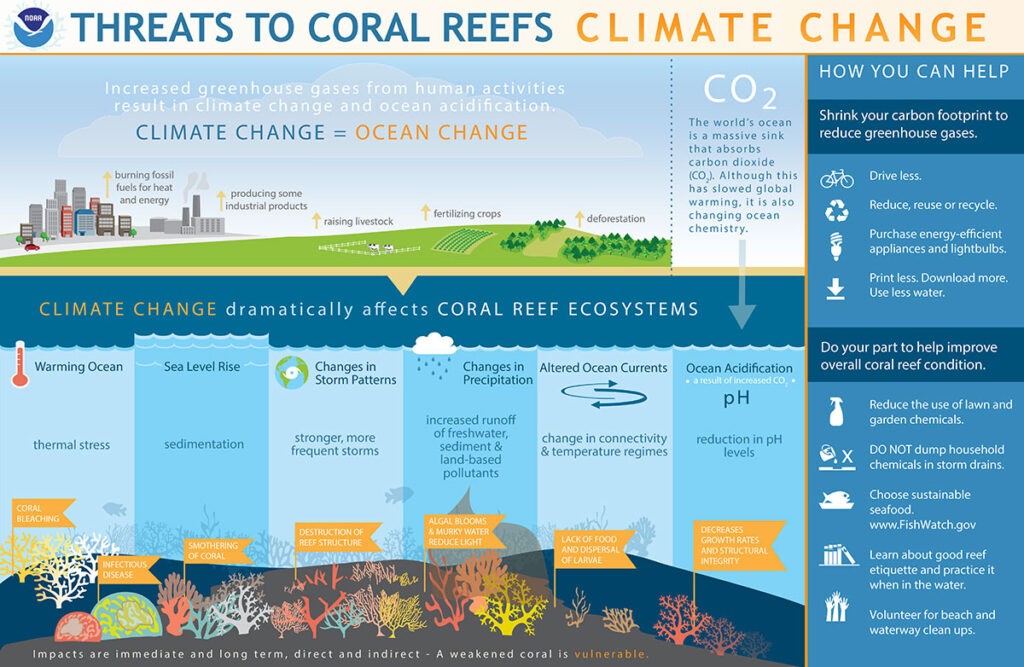
Ocean Heat Content is difficult to see with our eyes. Coral bleaching is not.
During recent global marine heat events, more than 80% of the world’s reef areas were exposed to levels of heat stress capable of causing coral bleaching.
When seawater remains too warm for too long, corals can expel the microscopic algae living inside their tissues. These algae provide much of the coral’s energy and colour.
Without them, corals turn pale or white.
Some corals can recover if temperatures fall quickly enough. However, prolonged or repeated marine heatwaves dramatically increase the risk of coral mortality.
The consequences go far beyond the reefs themselves. Coral ecosystems support fisheries, biodiversity and tourism while helping reduce wave energy before it reaches the coastline.
When reefs weaken, coastal communities can lose both ecological and economic protection.
Sustainability Is Also About What We Choose to Produce
When people hear about ocean warming, the problem can feel distant. The ocean is far away, factories may be inland, shops are in cities, and our sandals are simply on our feet. However, these systems remain connected through carbon emissions.
Every product creates an environmental footprint through raw materials, manufacturing, energy use, transportation, packaging, product lifespan and end-of-life management. One pair of handmade sandals will not change the temperature of the ocean. However, billions of production and purchasing decisions collectively influence energy demand, fossil-fuel consumption and greenhouse-gas emissions.
For this reason, modern sustainability must go beyond replacing a plastic bag or adding a green label to packaging. Brands need to consider where materials come from, how much energy production requires, how far products travel and how long those products remain useful.
Another important question is whether manufacturers can reduce dependence on fossil-based materials. Local production and handmade craftsmanship may also create additional value while reducing unnecessary complexity within certain parts of the supply chain.
SW GREEN
Low Carbon Does Not Mean Zero Carbon
This distinction is essential.
A Low Carbon product is not automatically Carbon Neutral, Carbon Negative or environmentally impact-free.
Every pair of shoes still requires materials, energy, transport and labour.
Claims such as “Zero Carbon” or “Carbon Neutral” require robust carbon-footprint calculations, defined system boundaries and credible life-cycle data.
For sandals world, the more responsible approach is not to claim perfection. It is to identify where carbon intensity can realistically be reduced.
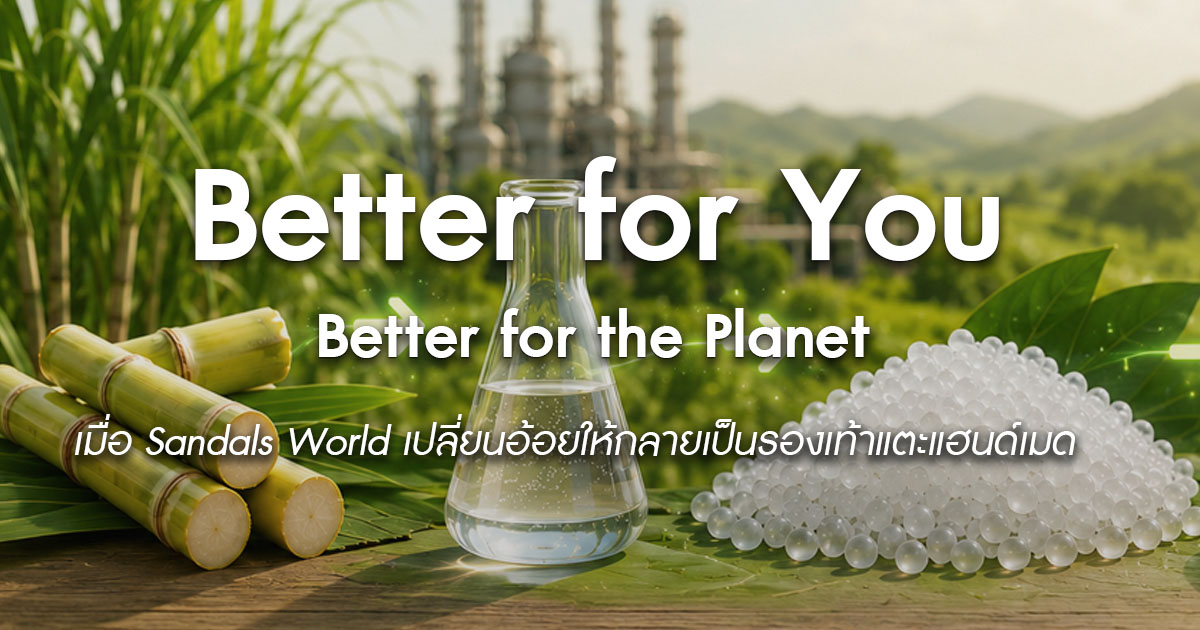
One direction is the development of BIO EVA SW GREEN, which introduces sugarcane-based feedstock as an alternative to relying entirely on conventional fossil-derived EVA inputs.
This approach does not mean BIO EVA is impact-free or automatically biodegradable.
Instead, it represents part of a broader Low Carbon Transition: reducing dependence on fossil-based raw materials where possible while continuing to improve material choices, durability and product design.
That distinction matters because genuine sustainability should be measurable, transparent and continuously improving rather than built around exaggerated environmental claims.

Handmade and Local Craft Can Be Part of a Lower-Carbon Future
Thailand has another powerful advantage: craft knowledge.
Across the country, communities continue to work with techniques including macramé, crochet, weaving, embroidery, natural materials and other forms of skilled craftsmanship.
These traditions create an opportunity for Thailand sandals to compete through something different from mass production.
Instead of producing only for speed and volume, local craft can create value through design, skill, cultural identity and longer-lasting emotional connections between people and products.
This is where handmade and sustainability can intersect.
For Sandals World, the ideas behind Artistic Handmade Sandals, Art & Craft Sandals and Sustainable Thai Craft Sandals extend beyond visual style.
They represent a direction that connects:
Design + Craft + Community + Better Materials + Longer Use
A handmade product still has an environmental footprint. However, a system that supports local makers, improves material choices, reduces unnecessary fossil-based inputs and designs products for longer use can move toward a more responsible production model.
The goal is not to claim that craft alone will solve climate change.
The goal is to build a better system, step by step.
From the Ocean to a Pair of Sandals, Everything Is Connected
A factory can stand hundreds of kilometres away from the coastline, yet its carbon emissions remain connected to the ocean.
Carbon dioxide released from fossil fuels enters the atmosphere. The greenhouse effect traps more energy. The ocean absorbs much of that excess heat. Seawater expands. Glaciers and ice sheets lose mass. Sea levels rise.
At the same time, the ocean absorbs carbon dioxide and becomes more acidic.
Eventually, the consequences return to society through coastal flooding, ecosystem decline, fisheries disruption, tourism losses, food-security risks and higher adaptation costs.
This is why Low Carbon should not be treated as a temporary marketing trend.
It is part of a much larger transition that every industry will increasingly need to consider.
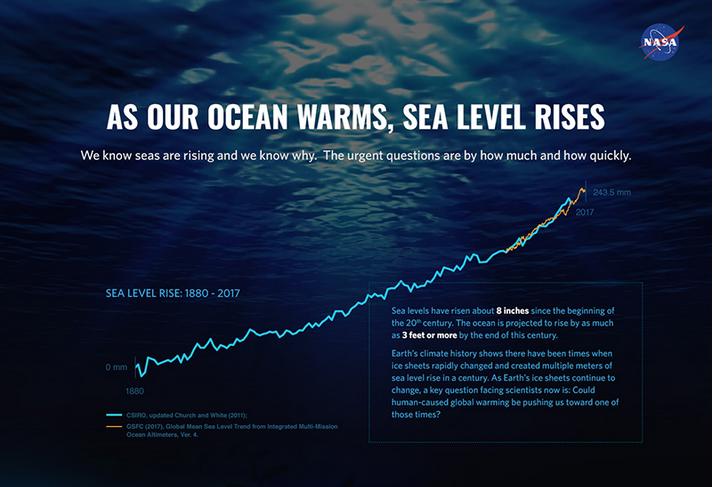
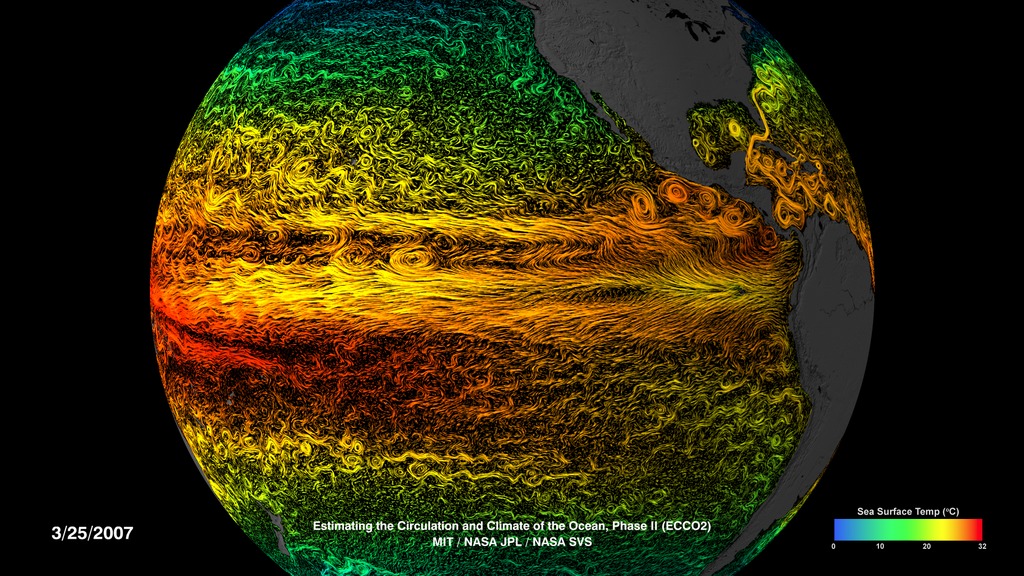
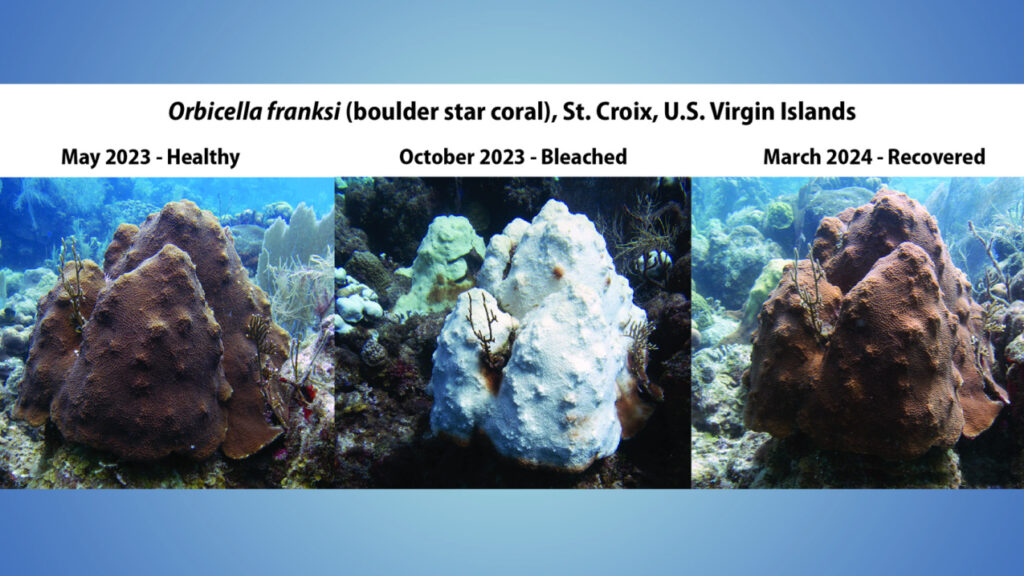
Image Credit: NASA/Goddard Space Flight Center Scientific Visualization Studio
SANDALS WORLD
Sustainable Thai Craft Sandals: A Small Step Inside a Much Bigger Change
A factory can stand hundreds of kilometres away from the coastline, yet its carbon emissions remain connected to the ocean.
Once carbon dioxide from fossil fuels enters the atmosphere, greenhouse gases trap additional energy within the climate system. Much of that excess heat eventually moves into the ocean, where warmer seawater expands and contributes to sea-level rise.
Meanwhile, glaciers and ice sheets continue to lose mass, adding even more water to the ocean. At the same time, seawater absorbs part of the atmospheric CO₂, gradually changing ocean chemistry and increasing acidification.
Eventually, these connected changes return to society through coastal flooding, ecosystem decline, fisheries disruption, tourism losses, food-security risks and rising adaptation costs.





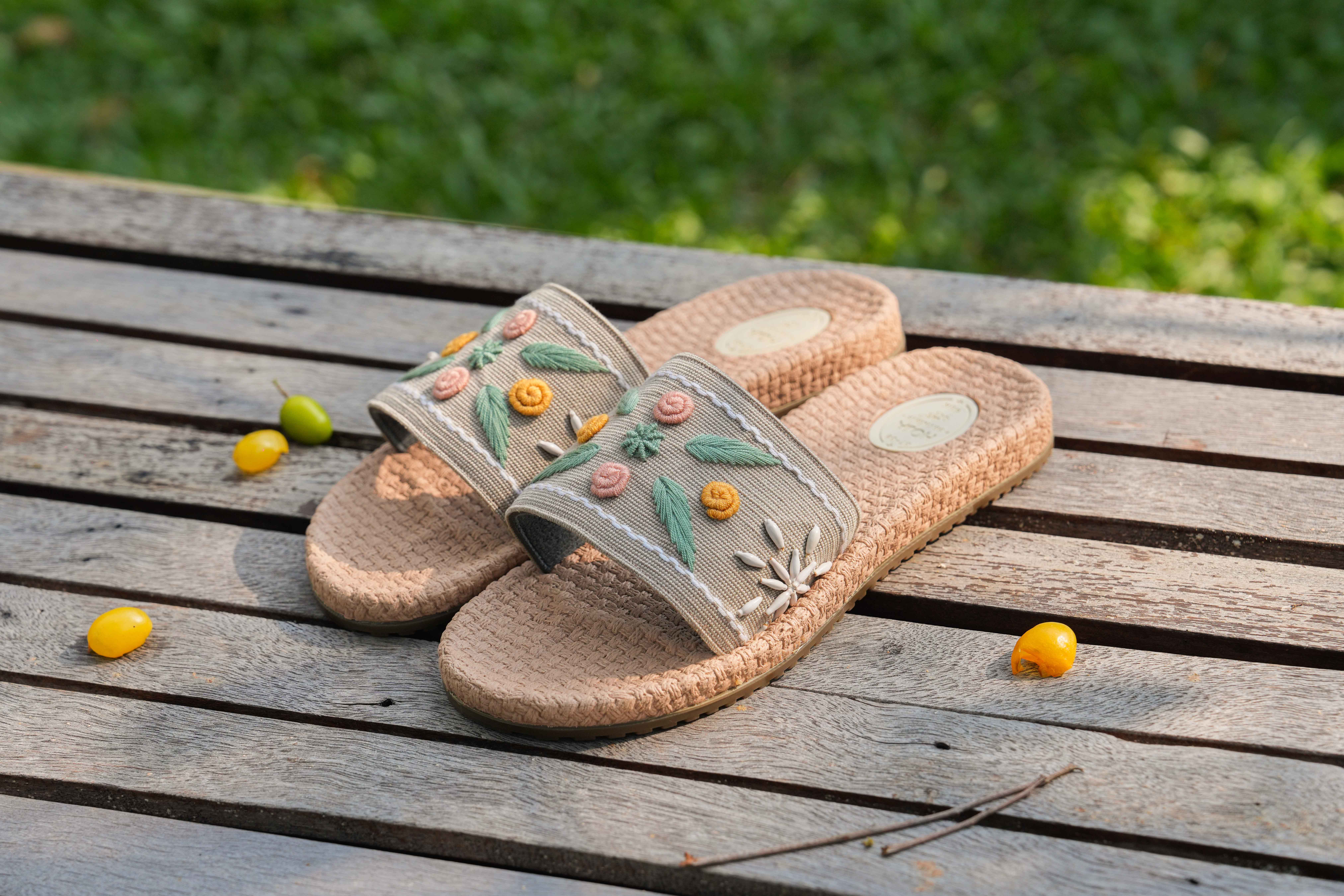
𝙎𝙖𝙣𝙙𝙖𝙡𝙨 𝙒𝙤𝙧𝙡𝙙 𝙞𝙨 𝙏𝙝𝙖𝙞𝙡𝙖𝙣𝙙’𝙨 𝙡𝙖𝙧𝙜𝙚𝙨𝙩 𝙝𝙪𝙗 𝙤𝙛 𝙖𝙧𝙩𝙞𝙨𝙩𝙞𝙘 𝙝𝙖𝙣𝙙𝙢𝙖𝙙𝙚 𝙨𝙖𝙣𝙙𝙖𝙡𝙨


ABOUT THE CONTENT CREATOR
BUNTHARIK INSIRI
(Content Writer)
Sandals World | Art & Craft Sandals | Sustainable Thai Craft Sandals Tags: handmade sandals, sandals world, foot health,
Thailand sandals, artistic handmade sandals, art & craft sandals, plantar fasciitis, bunion, sustainable sandals and BIO EVA ,SW GREEN
The Ocean Is Heating Faster Than Ever: Why Low-Carbon Design Must Start Now
Post Views: 1 What if the ocean we know today no longer looks the same [...]
Oct

If Local Art Disappears, What Will the World Remember? From Mae Hong Son to D NICE MARKET with Sandals World
Post Views: 12 Imagine a future where traditional patterns disappear from local communities. Craft techniques [...]
Oct

VPADA Handmade Sandals: Where Thai Craft Blooms Into Modern Style
Post Views: 8 “Walk with nature, step with grace.” What if a small woven flower, [...]
Oct

Plastic Waste and Sustainable Sandals: Better Materials, Better Truth, Better Steps
Post Views: 16 Plastic has transformed modern life. Its lightweight structure, versatility, and low cost [...]
Oct

What’s Really Under Your Feet? From Plastic and EVA Foam to BIO EVA SW GREEN
Post Views: 18 Plastic is everywhere. We drink from it, carry food in it, build [...]
Sep
Only 9% Gets Recycled: Are We Solving the Plastic Crisis the Wrong Way?
Post Views: 16 Every time we drop a plastic bottle into a recycling bin, we [...]
Sep
Bangkok Flood 2026: Why Bangkok Flooded So Severely | Sandals World
Post Views: 27 At the end of September 2026, one question was on the minds [...]
Sep
El Niño 2026 and Sustainable Thai Craft Sandals: Why Every Step Matters
Post Views: 22 The climate is changing in ways that are becoming harder to ignore. [...]
Sep
SANDALS WORLD GUIDE
Artistic Handmade Sandals
BY
SANDALS WORLD THAILAND
The Largest Hub
of Artistic Handmade Sandals in Thailand.