

Brand Stories
From Oil to Sugarcane: How Plastic Materials Are Changing the Future of Handmade Sandals
Nov
Fossil-Based Plastic vs. Bio-Based EVA: A New Material Choice for Handmade Sandals
Have you ever wondered what your favorite pair of sandals is actually made from?
At first glance, you might think of rubber, leather, fabric, or colorful threads carefully woven by skilled artisans. However, beneath the beautiful designs and comfortable soles lies a material story that many people rarely consider.
For decades, most plastics have been produced using fossil-based resources, primarily crude oil and natural gas. Through a series of chemical processes, these raw materials become plastic resins used in everyday products, from packaging and electronics to footwear.
Today, however, the materials industry is exploring alternatives.
One promising development involves using renewable resources, such as sugarcane, to produce some of the chemical building blocks traditionally derived from fossil fuels.
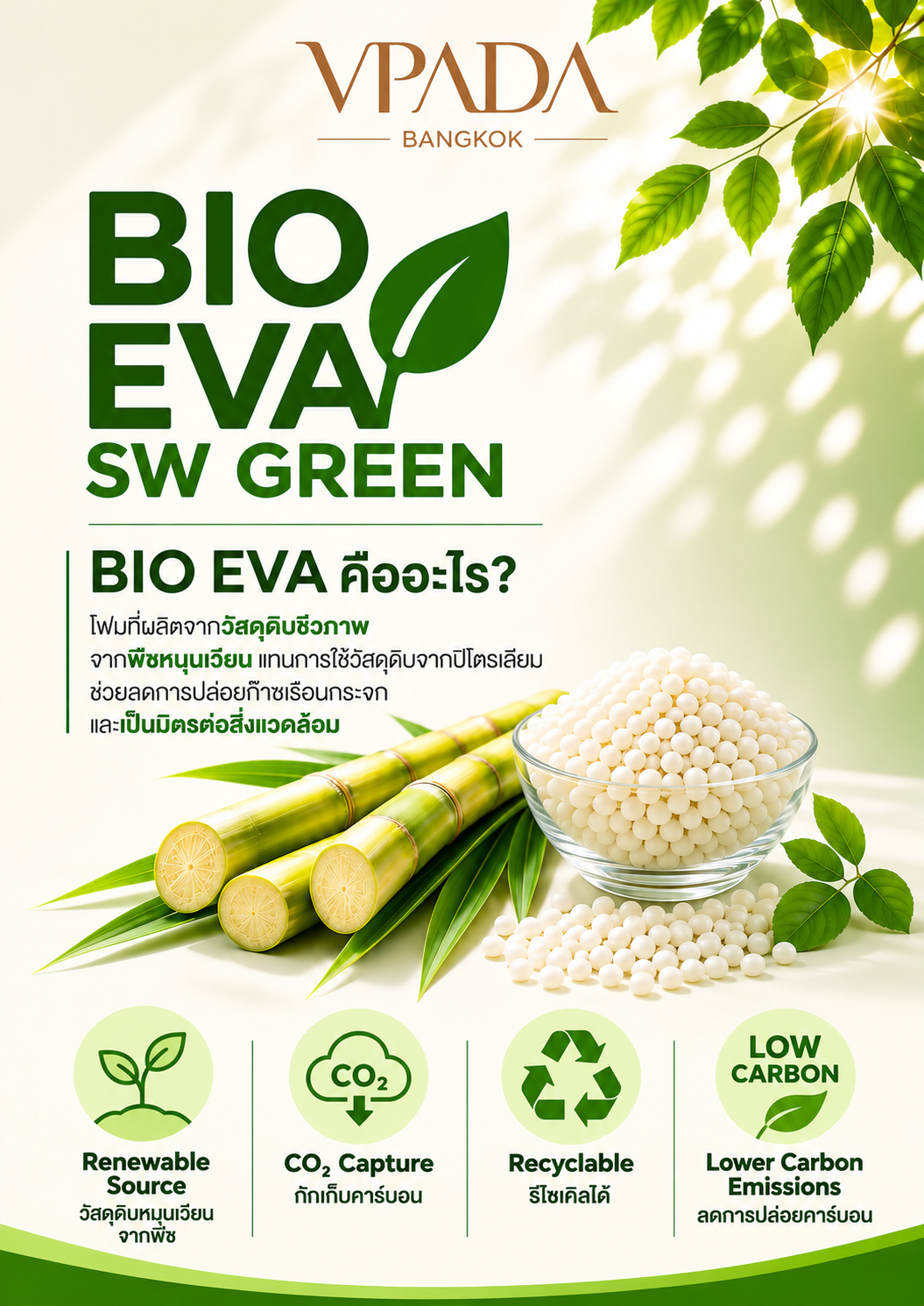
This innovation has led to the development of Bio-Based EVA, a material that can offer similar performance to conventional EVA while reducing dependence on fossil-based feedstocks.
For Sandals World, this raises an important question:
Can we preserve the beauty of traditional Thai craftsmanship while making more responsible material choices?
This question inspired the direction of BIO EVA SW GREEN, an initiative that connects material innovation, handmade sandals, and the future of Thai craft fashion.
What Are Most Plastic Pellets Made From?
Before exploring alternative materials, it is important to understand where conventional plastics come from.
Plastic resin pellets are small pieces of polymer material used by manufacturers to produce plastic products. These pellets can be melted, molded, or combined with additives to achieve different properties.
Most conventional plastics begin with fossil-based feedstocks, particularly crude oil and natural gas. Some production routes around the world also rely on coal-derived materials.
According to PlasticsEurope, crude oil undergoes refining to separate it into different fractions. One important fraction is naphtha, which serves as a feedstock for petrochemical production.
These materials then undergo processes such as steam cracking to create smaller molecules, including ethylene and propylene.
Through polymerization, these molecules form long polymer chains that become familiar plastics such as Polyethylene (PE), Polypropylene (PP), and Ethylene Vinyl Acetate (EVA).
These polymers are widely used because they can offer durability, flexibility, low weight, and versatility.
From Petroleum to EVA Sandal Soles
In the footwear industry, EVA is one of the most commonly used materials for producing lightweight and flexible foam soles.
EVA stands for Ethylene Vinyl Acetate, a copolymer made by combining ethylene and vinyl acetate.
In conventional production, these chemical building blocks generally originate from petrochemical processes.
Once the EVA resin is produced, manufacturers can combine it with other ingredients and process it into foam with specific characteristics.
Depending on the formulation, EVA foam can provide flexibility, cushioning, and shock absorption.
These properties make it suitable for many types of sandals, including casual footwear, sports sandals, and handmade fashion designs.
However, conventional EVA still depends heavily on fossil-based raw materials.
As concerns about resource consumption and environmental impacts continue to grow, manufacturers are exploring ways to reduce this dependence.
The goal is not necessarily to replace the useful properties of EVA.
Instead, the question is whether some of its raw materials can come from more renewable sources.

What Is Bio-Based EVA, and How Can Sugarcane Become a Sandal Material?
Sugarcane is commonly associated with sugar production. However, this familiar agricultural crop also has potential applications in the bio-based chemicals industry.
Through fermentation and chemical processing, sugarcane can become a source of ethanol, which can then be converted into ethylene.
This process creates an alternative pathway for producing one of the main building blocks of EVA.
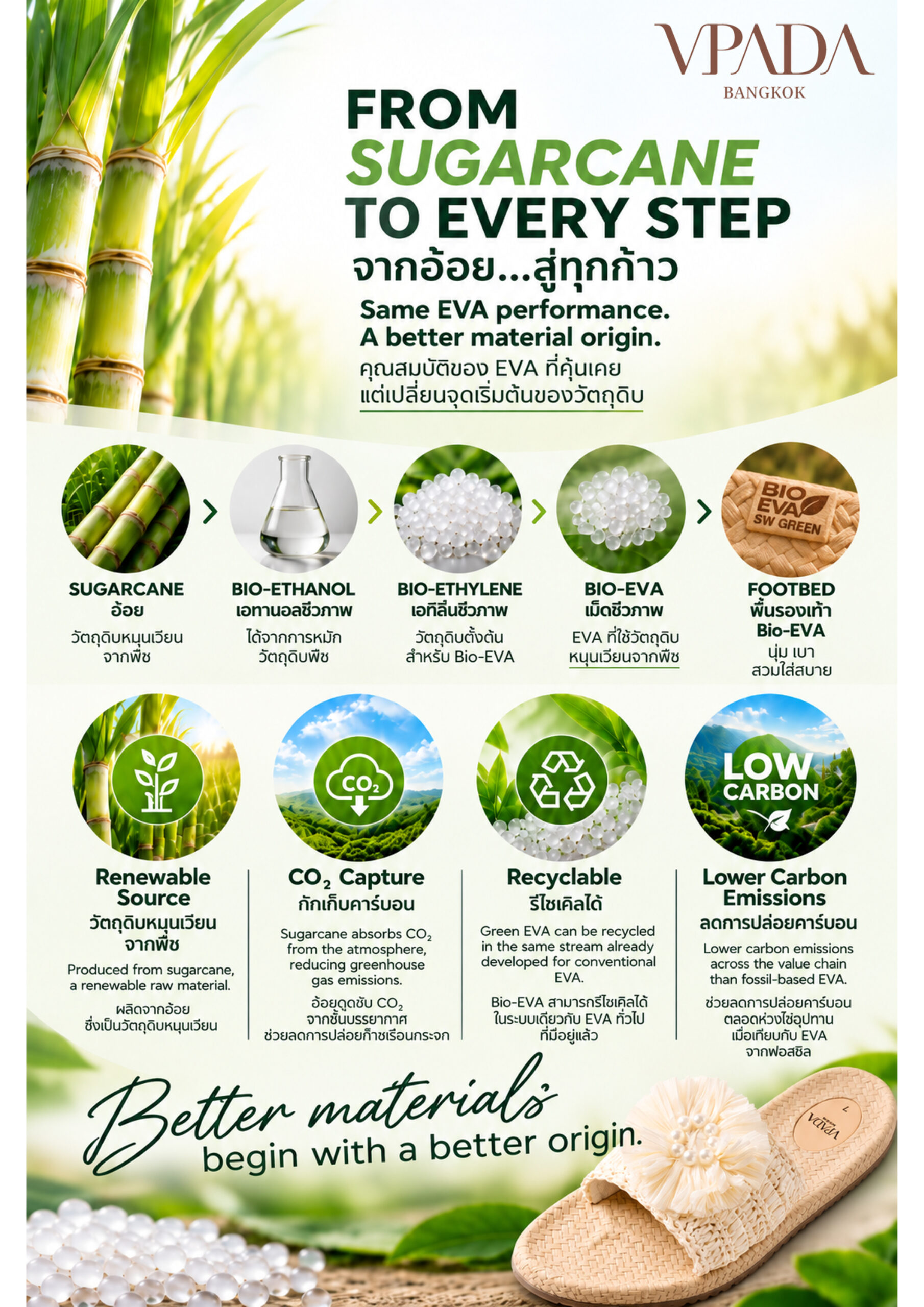
The production journey can be summarized as follows:
Sugarcane → Bioethanol → Bioethylene → Bio-Based EVA → Foam Sole
Step 1: From Sugarcane to Bioethanol
The process begins by using sugars obtained from sugarcane as feedstock for fermentation.
During fermentation, microorganisms convert these sugars into bioethanol.
This means sugarcane can serve purposes beyond food and fuel production. It can also provide renewable carbon for certain industrial chemicals.
Step 2: From Bioethanol to Bioethylene
Next, bioethanol undergoes a chemical process called dehydration.
During this process, water is removed from ethanol molecules, producing ethylene derived from biomass.
This product is known as bioethylene.
Interestingly, bioethylene has the same chemical structure as ethylene produced from fossil resources.
The key difference lies in where the carbon originally comes from, rather than in the chemical identity of the molecule.
This distinction is important because it allows certain bio-based materials to offer properties comparable to their fossil-based equivalents.
Step 3: Producing Bio-Based EVA
Once bioethylene is available, manufacturers can combine it with vinyl acetate to produce Bio-Based EVA.
However, Bio-Based EVA does not automatically mean that every ingredient comes from plants.
Some components may still originate from fossil resources, depending on the production process and material grade.
For example, the Braskem I’m green™ bio-based portfolio includes Bio-Based EVA grades with approximately 45–80% bio-based carbon content, measured according to ASTM D6866.
Importantly, this percentage refers to the bio-based carbon content of the resin. It does not mean that a finished sandal contains 45–80% sugarcane by weight.
After production, Bio-Based EVA resin can be processed into foam for footwear applications.
Manufacturers can then adjust the formulation and test the finished material to meet requirements for flexibility, comfort, and durability.
Fossil-Based EVA vs. Bio-Based EVA: What Is the Difference?
At first glance, conventional EVA foam and Bio-Based EVA foam may look almost identical.
Both can be produced in different colors, shapes, and textures. They can also offer similar levels of flexibility and cushioning when appropriately formulated.
However, the most important difference lies at the beginning of the material’s journey.
| Comparison | Fossil-Based EVA | Bio-Based EVA |
|---|---|---|
| Raw material source | Fossil-derived feedstocks | Partially derived from biomass, such as sugarcane |
| Carbon origin | Primarily fossil carbon | Bio-based carbon, potentially combined with fossil carbon |
| Dependence on petroleum | Generally high | Can be reduced |
| Material performance | Lightweight and flexible | Can offer comparable properties |
| Foam production | Widely used in footwear | Can be processed into footwear foam |
| Biodegradability | Not inherently biodegradable | Not inherently biodegradable |
| Environmental impact | Depends on production and life cycle | Depends on farming, processing, energy, and end-of-life management |
The difference between these two materials is not simply about choosing a product with a more environmentally friendly name.
It represents a change in how manufacturers source the carbon used to produce certain plastics.
This is an important part of sustainability because environmental responsibility can begin long before a finished product reaches the customer.
Is Sugarcane-Based Plastic Really Better Than Petroleum-Based Plastic?
This is one of the most important questions surrounding bio-based materials.
Bio-Based EVA has the potential to reduce dependence on fossil feedstocks. However, this does not automatically mean that it has a lower environmental impact in every situation.
Sugarcane is a renewable agricultural resource. As it grows, the plant absorbs carbon dioxide from the atmosphere through photosynthesis.
This creates an opportunity to use recently captured biogenic carbon instead of relying entirely on carbon extracted from fossil reserves.
However, sugarcane cultivation also requires land, water, fertilizers, machinery, and transportation.
Meanwhile, converting sugarcane into ethanol, ethylene, and EVA resin requires industrial processing and energy.
Land-use changes may also create additional environmental impacts, particularly if agricultural expansion affects forests, biodiversity, or food production.
Therefore, choosing a bio-based material is only one part of a larger sustainability strategy.
A more complete comparison requires a Life Cycle Assessment (LCA), which evaluates environmental impacts across different stages of a product’s life.
These stages may include raw material production, manufacturing, transportation, use, and disposal.
The European Environment Agency emphasizes the importance of considering environmental performance across the full life cycle of plastic materials.
In other words, renewable origins can offer meaningful advantages, but responsible environmental claims must still be supported by evidence.
Bio-Based Does Not Mean Biodegradable
Another common misunderstanding is that plastics made from plants will naturally break down after use.
However, this is not necessarily true.
Bio-based refers to materials that are entirely or partially derived from biomass.
Biodegradable refers to materials that can be broken down by microorganisms under specific environmental conditions.
These are two different concepts.
Although Bio-Based EVA may contain carbon derived from sugarcane, its polymer structure remains similar to that of conventional EVA.
As a result, Bio-Based EVA should not be described as naturally biodegradable without specific scientific evidence.
Understanding this difference helps consumers distinguish between renewable material sourcing and biodegradability.
It also encourages more transparent communication about sustainability.
BIO EVA SW GREEN: How Sandals World Is Rethinking Material Choices
For Sandals World, developing handmade sandals involves more than creating beautiful designs.
It also means examining the materials, production methods, and decisions that shape each product.
Built around three core values — Handmade, Community, and Local — Sandals World aims to connect traditional Thai craftsmanship with responsible material development.
The artistry of local makers remains at the heart of the brand.
At the same time, material innovation offers new opportunities to improve products without losing their cultural identity.
This is where BIO EVA SW GREEN comes in.
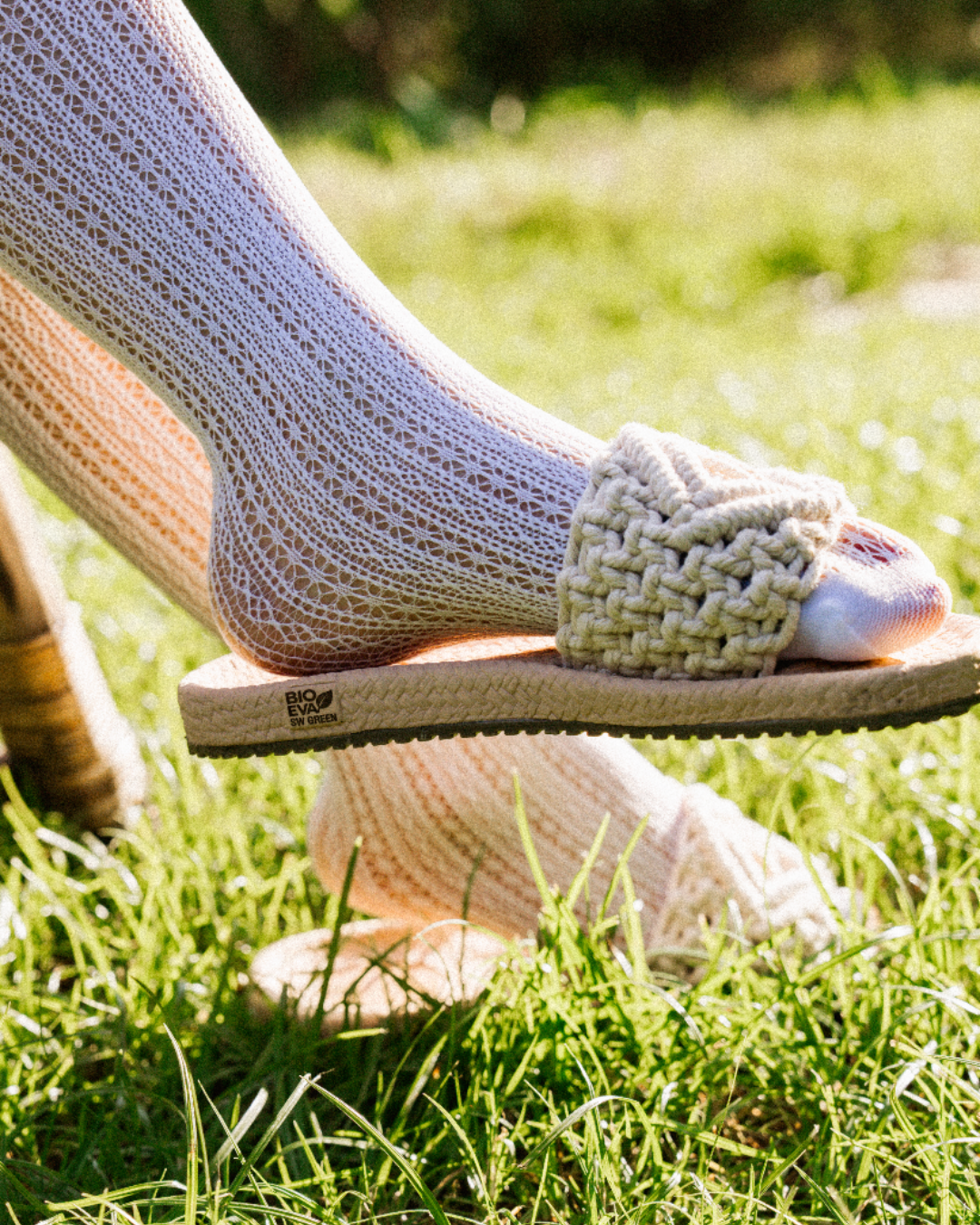
The initiative explores alternative materials for sandal soles, particularly Bio-Based EVA made partly from sugarcane-derived feedstocks.
The objective is to reduce reliance on conventional fossil-based raw materials while maintaining the qualities required for comfortable, functional footwear.
Another important area of development is the use of Thai natural rubber for sandal outsoles.
These materials serve different functions.
EVA foam can provide a lightweight and flexible foundation, while natural rubber can be formulated into an outsole designed for traction and wear resistance.
Nevertheless, actual performance depends on the complete material formulation, outsole design, and product testing.
Properties such as slip resistance, durability, and shock absorption cannot be guaranteed solely by the origin of the raw materials.
This approach reflects an important belief:
Traditional craftsmanship and modern material innovation do not have to compete. They can evolve together.
For Sandals World, developing Sustainable Thai Craft Sandals means finding ways to respect the knowledge of local artisans while exploring materials that better reflect the needs of the future.
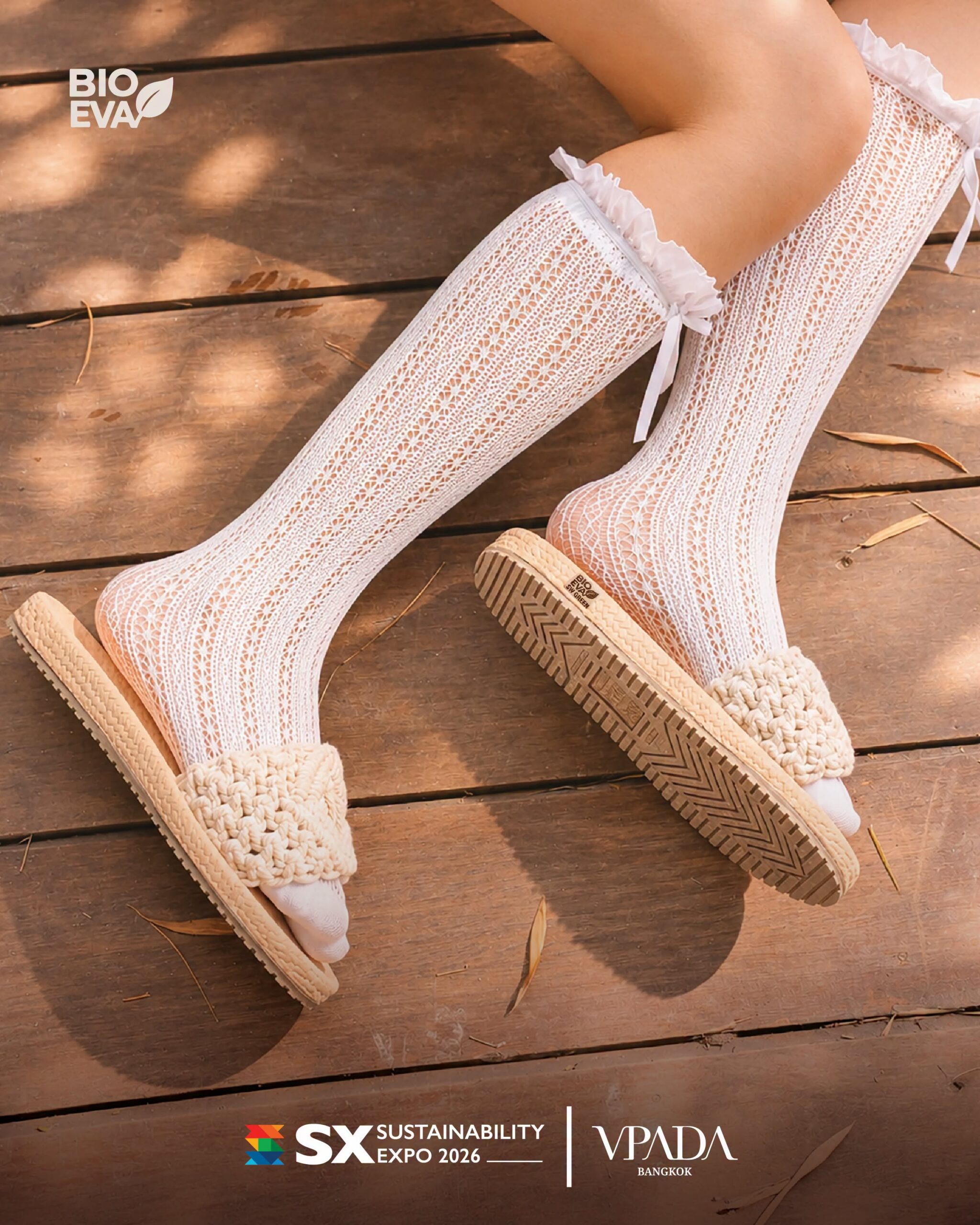
Thai Craftsmanship Meets Material Innovation: Beauty Beyond What We See
When people think about handmade sandals, they often imagine colorful threads, intricate knotting techniques, unique patterns, and carefully crafted details.
These elements give every pair its own personality.
They also reflect the experience, patience, and creativity of the artisans who make them.
For Artistic Handmade Sandals, beauty is not limited to appearance.
It also comes from the ideas, techniques, and thoughtful decisions behind each creation.
Likewise, Art & Craft Sandals can gain additional value through material selection, comfort-focused design, and attention to durability.
Changing part of the raw material source from fossil-derived ethylene to sugarcane-derived bioethylene may not create an obvious visual difference.
Customers might not immediately notice the change when looking at a finished pair of sandals.
However, this decision can represent an important shift in how a product is developed.
It brings environmental considerations into the design process, beginning with the selection of materials.
When supported by transparent information, product testing, and responsible production practices, this approach helps give sustainability a clearer and more meaningful role.
For Thailand, a country with a rich craft heritage and strong agricultural resources, this creates an interesting opportunity.
The future of Thailand sandals may involve more than introducing beautiful designs to international audiences.
It may also involve combining local craftsmanship, responsible materials, and modern innovation to create products with a stronger sense of purpose.


The Future of Sustainable Sandals Goes Beyond Materials
Although Bio-Based EVA represents a promising material development, sustainability does not end with replacing one raw material.
A pair of sandals made from alternative materials may still create considerable environmental impacts if it wears out quickly and needs frequent replacement.
On the other hand, durable footwear designed for long-term use may help reduce resource consumption over time.
This is why product quality and longevity remain important parts of responsible footwear development.
The same principle connects with Circular Fashion, an approach that considers how products are designed, produced, used, repaired, reused, and recovered.
Rather than focusing only on the moment of purchase, circular thinking considers what happens throughout a product’s entire life.
Recycling is another important consideration.
Some Bio-Based EVA resins may be compatible with existing recycling processes. However, recycling finished EVA foam footwear can be more complicated, especially when materials are cross-linked, bonded, or combined with other components.
Therefore, a more sustainable future requires more than a single material innovation.
It requires thoughtful design, reliable product performance, appropriate end-of-life systems, and cooperation between manufacturers and consumers.
For handmade footwear brands, these challenges also create opportunities to rethink how products are designed and valued.
From Oil to Sugarcane: A Small Step Toward the Future of Thai Craftsmanship
So, what are most plastic pellets made from?
Today, the answer is still largely fossil-based resources.
However, advances in material science are opening new possibilities.
Sugarcane can now provide a renewable source of carbon for certain chemical building blocks used in plastic production.
This makes it possible to develop Bio-Based EVA without necessarily sacrificing the functional advantages associated with conventional EVA.
For Sandals World, BIO EVA SW GREEN is not a promise that sandals will have zero environmental impact.
Instead, it represents an effort to explore better material choices, reduce dependence on fossil-based feedstocks, and continue improving through research and evidence.
Because the value of a handmade sandal is not defined by craftsmanship alone.
It also comes from the decisions made throughout its journey, from the materials selected at the beginning to the experiences it shares with the person wearing it.
Every material has a story.
Every design reflects a choice.
And every thoughtful choice can become part of a larger transformation.
FROM CANE TO CRAFT.
A New Material. A New Chapter.
Same Craft. New Sole. Greener Future.
Meaningful change does not always begin with something big.
Sometimes, it begins with the material beneath our feet.
And for Sandals World, that is one step worth exploring as we continue shaping the future of Thai handmade sandals.

References
- PlasticsEurope — Plastic production processes and conventional petrochemical feedstocks.
- Braskem I’m green™ — Bio-based EVA materials and renewable carbon content.
- European Bioplastics — Definitions and distinctions between bio-based and biodegradable plastics.
- European Environment Agency — Environmental impacts and considerations for plastic materials.
- European Commission Joint Research Centre — Research on bio-based materials and sustainability.
𝙎𝙖𝙣𝙙𝙖𝙡𝙨 𝙒𝙤𝙧𝙡𝙙 𝙞𝙨 𝙏𝙝𝙖𝙞𝙡𝙖𝙣𝙙’𝙨 𝙡𝙖𝙧𝙜𝙚𝙨𝙩 𝙝𝙪𝙗 𝙤𝙛 𝙖𝙧𝙩𝙞𝙨𝙩𝙞𝙘 𝙝𝙖𝙣𝙙𝙢𝙖𝙙𝙚 𝙨𝙖𝙣𝙙𝙖𝙡𝙨


ABOUT THE CONTENT CREATOR
BUNTHARIK INSIRI
(Content Writer)
Sandals World | Art & Craft Sandals | Sustainable Thai Craft Sandals Tags: handmade sandals, sandals world, foot health,
Thailand sandals, artistic handmade sandals, art & craft sandals, plantar fasciitis, bunion, sustainable sandals and BIO EVA ,SW GREEN
From Oil to Sugarcane: How Plastic Materials Are Changing the Future of Handmade Sandals
Views: 9 Fossil-Based Plastic vs. Bio-Based EVA: A New Material Choice for Handmade Sandals Have [...]
Nov

Milala Handmade at POPUPASIA 2026: Every Knot Tells a Story, Every Connection Matters
Views: 40 More Than Sandals. A Story of Craftsmanship, Love, and the People Who Make [...]
Nov

Thailand Tourism 2026: Fewer Tourists, But Is Thailand Entering a New Era of Travel?
Views: 20 Fewer international visitors, changing spending patterns, and a growing focus on meaningful experiences. [...]
Nov

Milala Handmade: From a Simple Knot to Handmade Sandals Loved Around the World | The Power of Knot
Views: 14 Have you ever picked up a pair of beautiful sandals and wondered how [...]
Nov

LOy Krathong, LOve Thai Style! Celebrate Thai Culture, Express Your Style, and Craft Happy Memories with VPADA
Views: 91 Who says traditional Thai fashion is only for special occasions? And who says [...]
Nov

From Sugarcane to Every Step: VPADA x Sandals World Unveils BIO EVA SW GREEN at SX2026
Views: 43 What if the next big change in sustainable fashion starts with something we [...]
Nov

Looking for Handmade Sandals in Chiang Mai? Discover Your Perfect Pair at CMP Handmade Sandals
Views: 31 More Than Temples and Cafés: Discover Chiang Mai’s Handmade Treasures Chiang Mai is [...]
Nov

From Sugarcane Fields to Handmade Sandals: VPADA x Sandals World Unveils BIO EVA SW GREEN at SX MARKET 2026 🌱
Views: 24 Same Craft. New Sole. Greener Future. What if the beautiful sandals you wear [...]
Nov
SANDALS WORLD GUIDE



Artistic Handmade Sandals
BY
SANDALS WORLD THAILAND
The Largest Hub
of Artistic Handmade Sandals in Thailand.