

Brand Stories, Events, Sandals World News, Sustainability, VPADA
From Sugarcane to Every Step: VPADA x Sandals World Unveils BIO EVA SW GREEN at SX2026

Nov
What if the next big change in sustainable fashion starts with something we rarely notice — the soles beneath our feet?
When we think of handmade sandals, we often imagine beautiful patterns, intricate craftsmanship, and unique artistic designs. But have you ever wondered where the materials used to make your favorite sandals actually come from?
The soles of our shoes may seem like a small detail. However, they play an important role in comfort, durability, and the way we use natural resources.
Today, the story of footwear materials no longer has to begin entirely with petroleum.
Sugarcane, one of Thailand’s most important agricultural crops, can also serve as a renewable raw material for producing bio-based components used in footwear.
This is the idea behind BIO EVA SW GREEN, a material development initiative by Sandals World that aims to introduce more responsible material choices into the world of Thai handmade sandals.
In 2026, this vision takes another step forward through a collaboration with VPADA Bangkok, a Thai handmade footwear brand returning to Sustainability Expo 2026 (SX2026) for the second time.
Together, VPADA and Sandals World are introducing sugarcane-based BIO EVA SW GREEN foam soles, combining traditional Thai craftsmanship with innovative material development.
VPADA Returns to SX2026 with a New Chapter for Thai Handmade Sandals
Sustainability Expo 2026, or SX2026, takes place from November 6–15, 2026, at the Queen Sirikit National Convention Center in Bangkok.
The event brings together organizations, entrepreneurs, designers, and communities that share a common interest in sustainability, responsible resource management, and innovation for a better future.
For VPADA Bangkok, returning to SX2026 for the second time represents more than another opportunity to showcase its products.
It reflects an important step in the brand’s development.
Known for its distinctive handmade designs and contemporary Thai craftsmanship, VPADA is exploring an important question:
How can beautiful handmade sandals evolve through more thoughtful material choices?
This question has led to a collaboration with Sandals World to introduce BIO EVA SW GREEN foam soles, beginning with VPADA’s Macramé Collection.
The collection features intricate hand-knotted designs that celebrate traditional craft techniques through a contemporary fashion perspective.
While the material used in the soles is changing, the heart of VPADA remains the same: creativity, craftsmanship, and attention to detail.
The result represents a new direction for Thailand sandals, where traditional artistry and material innovation can develop together.
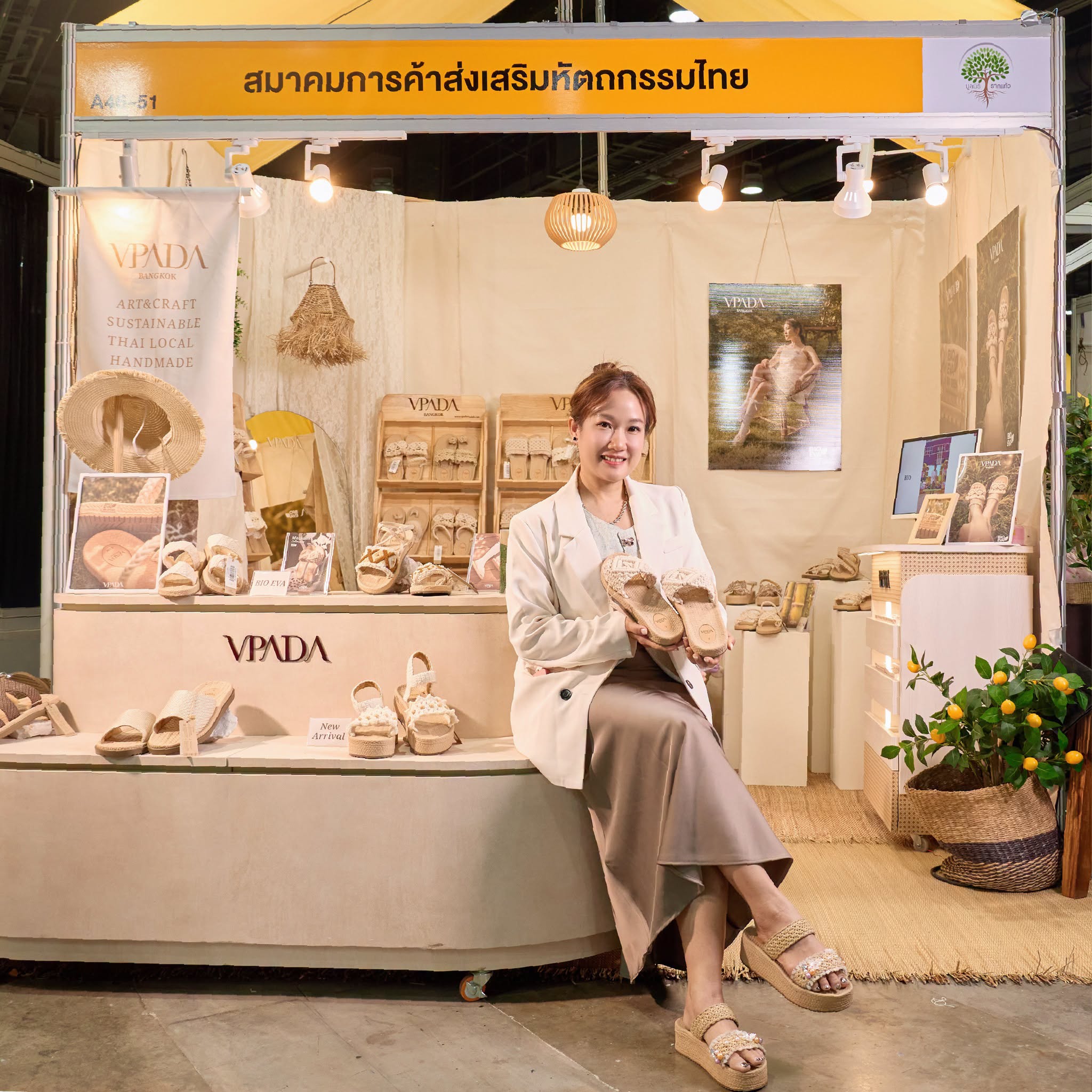
“Same Craft. New Sole. Greener Future.”
What Is BIO EVA SW GREEN? How Can Sugarcane Become a Sandal Sole?
Before understanding BIO EVA SW GREEN, it helps to understand EVA.
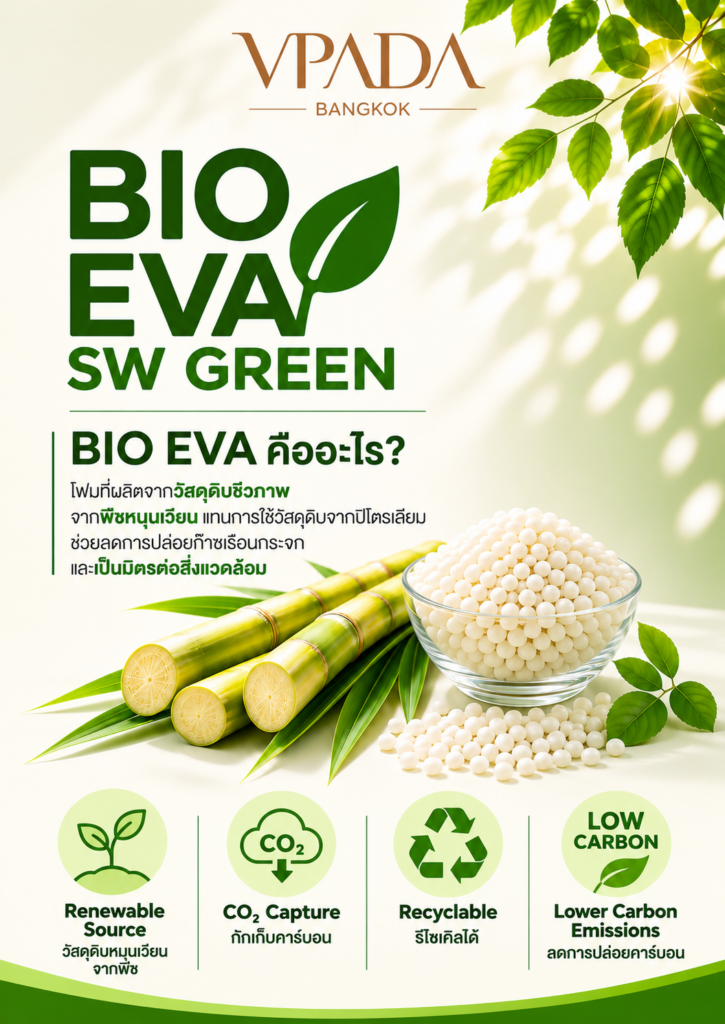
EVA, or Ethylene Vinyl Acetate, is a polymer widely used in footwear manufacturing because it can be formulated to provide lightweight cushioning, flexibility, and shock absorption.
Traditionally, EVA is manufactured using raw materials derived from fossil resources.
However, Bio-based EVA offers an alternative approach by replacing part of the fossil-based feedstock with materials derived from renewable biological sources, such as sugarcane.
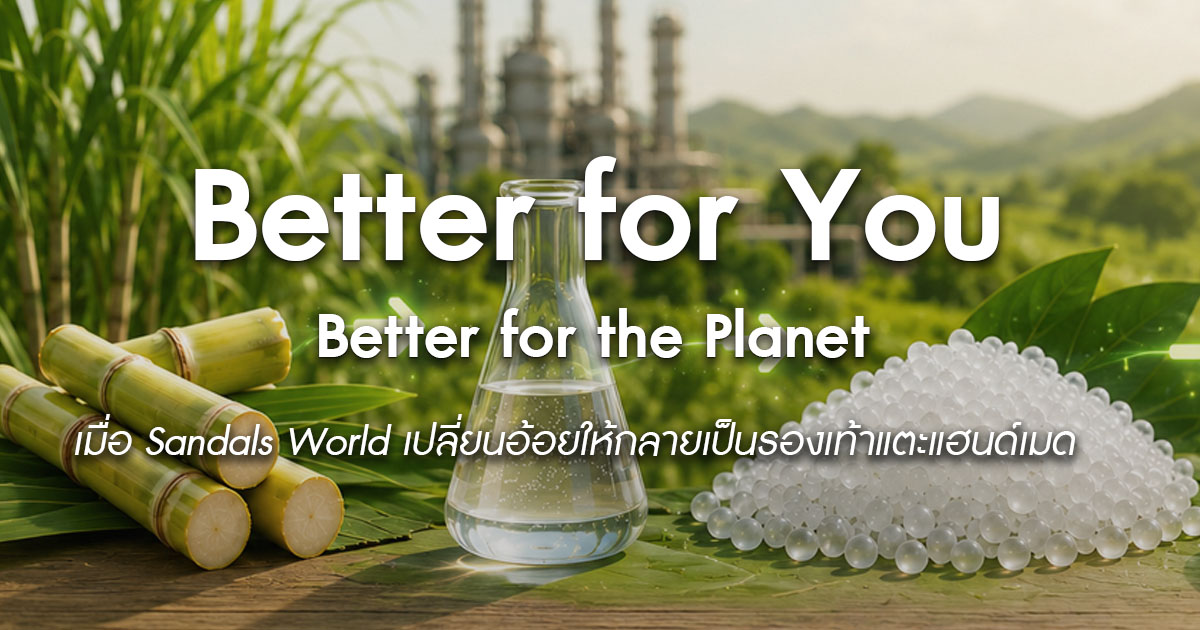
From Sugarcane to BIO EVA Foam: Understanding the Process
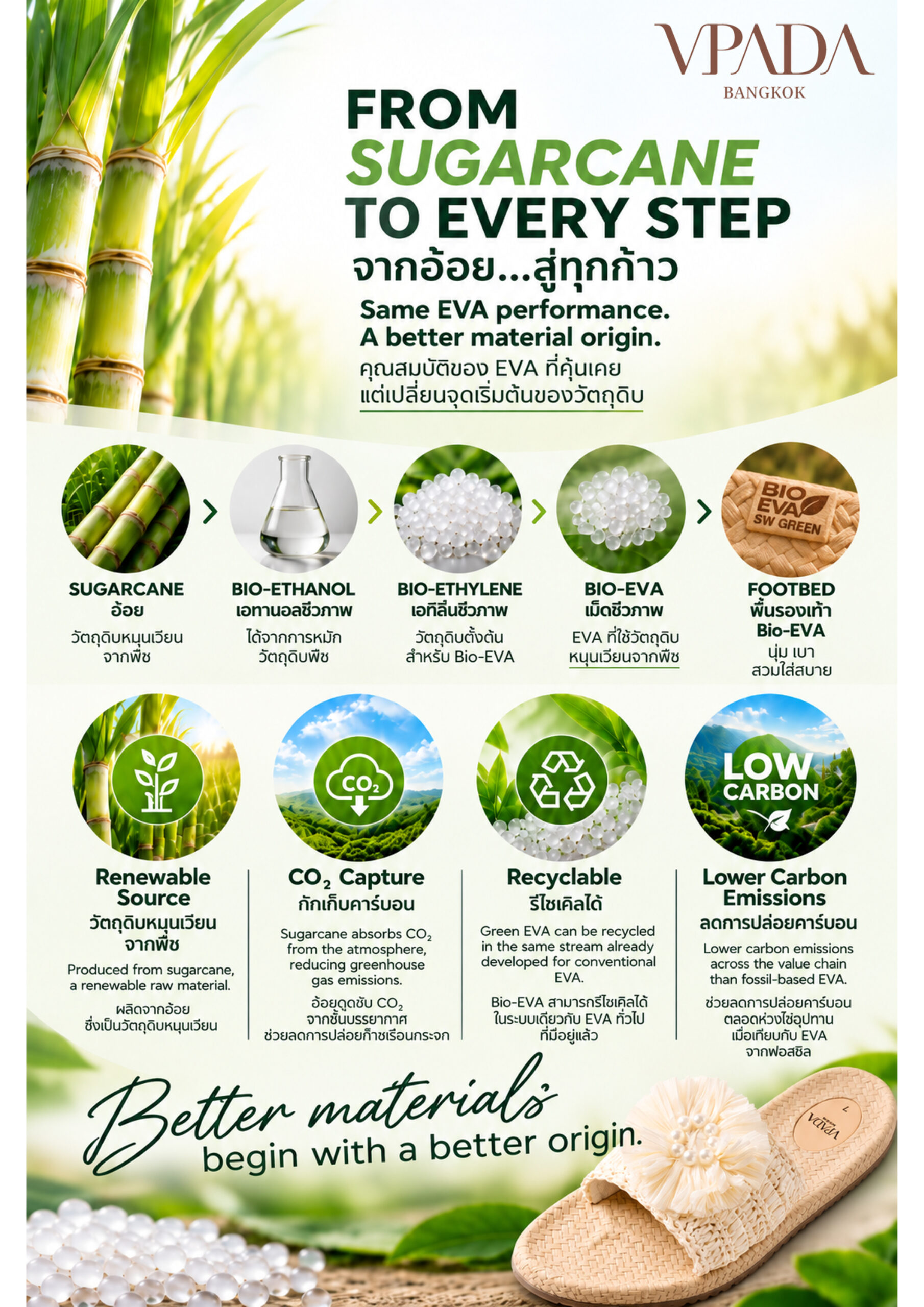
The transformation can be explained through five main stages.
1. Sugarcane — A Renewable Agricultural Resource
The process begins with sugarcane, a crop that can be cultivated and replenished through agricultural production cycles.
Sugarcane provides a biological source of carbon that can be used in industrial material production.
2. Bio-Ethanol — Turning Plants into Chemical Feedstock
Sugars extracted from sugarcane undergo fermentation and processing to produce bio-ethanol.
This ethanol can then be used as a feedstock in the chemical industry.
3. Bio-Ethylene — An Important Building Block
Bio-ethanol undergoes a chemical conversion process to produce bio-ethylene.
Bio-ethylene serves as a key building block for manufacturing certain polymers, including bio-based polyethylene and EVA.
4. Bio-based EVA — A Different Material Origin
Bio-ethylene is combined with other components to produce EVA containing carbon derived from renewable biological feedstocks.
Importantly, Bio-based EVA remains an EVA polymer. The key difference is the origin of part of its raw materials.
5. BIO EVA Foam Footbed — From Material to Footwear
The resulting material can be formulated into foam and shaped into sandal soles designed for everyday comfort.
This means BIO EVA is not simply crushed sugarcane turned directly into footwear.
Instead, it is a material developed through chemical processes that allow renewable feedstocks to replace part of the fossil-based resources traditionally used in EVA production.
Depending on its formulation, the foam can retain the familiar characteristics of EVA, including lightweight flexibility and cushioning.
However, actual performance depends on the specific formulation, manufacturing process, and product testing.
This idea is reflected in the project’s message:
“Same EVA Performance. A Better Material Origin.”
The familiar characteristics of EVA, with a more thoughtful starting point for its raw materials.
Why Does Material Transition Matter for Sustainability?
In the fashion industry, sustainability is often associated with reducing waste, recycling products, and encouraging reuse.
However, environmental responsibility also begins much earlier — during product design and material selection.
For Sandals World, BIO EVA SW GREEN represents an opportunity to explore Material Transition, the process of moving toward more responsible material choices.
There are four important aspects to understand.
1. Renewable Source — Materials Derived from Renewable Resources
Sugarcane is a renewable agricultural resource that can be cultivated again after harvesting.
Unlike fossil fuels, which take millions of years to form, agricultural feedstocks can be replenished through new growing cycles.
Using sugarcane-derived materials as part of the production process may therefore help reduce dependence on fossil-based feedstocks.
2. Biogenic Carbon — Carbon from Biological Sources
During its growth, sugarcane absorbs carbon dioxide from the atmosphere through photosynthesis.
Some of this biogenic carbon can become part of products manufactured using sugarcane-derived feedstocks.
However, carbon absorption during cultivation does not automatically make a product carbon-neutral.
Environmental impact must also account for agricultural activities, manufacturing, energy consumption, transportation, and end-of-life management.
3. Recycling Potential — Exploring Circular Material Systems
Bio-based EVA belongs to the same polymer family as conventional EVA.
This means it may be compatible with recycling technologies designed for suitable EVA materials.
However, recycling finished foam soles can be more challenging, particularly when the footwear contains multiple materials, adhesives, or crosslinked foam structures.
Actual recyclability depends on collection systems, processing technology, and the availability of appropriate recycling facilities.
Therefore, being bio-based does not automatically guarantee that a finished product can be recycled in every location.
4. Lower Carbon Footprint — Opportunities to Reduce Environmental Impact
Replacing fossil-based feedstocks with renewable alternatives may help reduce greenhouse gas emissions in certain production processes.
Nevertheless, any claim that a specific BIO EVA sole has a lower carbon footprint than a conventional EVA sole should be supported by appropriate evidence.
This may include manufacturing data and a Life Cycle Assessment (LCA), which examines environmental impacts throughout a product’s life cycle.
For this reason, Sandals World emphasizes research, material development, and verifiable information as important parts of the SW GREEN initiative.
Bio-based Does Not Mean Biodegradable: What Consumers Should Know
One of the most important things to understand about BIO EVA is that bio-based materials are not necessarily biodegradable.
These two terms describe different characteristics.
Bio-based refers to materials derived partly or entirely from biological resources.
Biodegradable describes the ability of a material to break down through biological processes under specific conditions.
Although BIO EVA can contain renewable biological carbon, it does not automatically decompose in the natural environment.
Furthermore, a complete pair of handmade sandals may contain several materials, including decorative components, straps, adhesives, foam, and outsoles.
Not all of these components are necessarily bio-based.
Therefore, introducing BIO EVA SW GREEN does not mean that a finished pair of sandals has zero environmental impact.
Instead, it represents an effort to explore better material options and improve understanding of the resources used in footwear manufacturing.
At Sandals World, sustainability should go beyond attractive marketing messages.
It should be supported by responsible decisions, continuous development, and transparent information.
“A Better Material Choice, Not a Zero-Impact Promise.”
This principle remains central to the development of SW GREEN.
When Thai Craftsmanship Meets Material Innovation
What makes VPADA special is not simply the shape or appearance of its sandals.
The brand celebrates the beauty of Thai craftsmanship by transforming traditional techniques into contemporary fashion.
Its Macramé Collection showcases hand-knotting techniques that require patience, artistic skills, and attention to detail.
Every knot contributes to the character of the design, reflecting the time and expertise of the artisan behind it.
This is the charm of Artistic Handmade Sandals — footwear that brings together individual creativity and the value of skilled craftsmanship.
By introducing BIO EVA SW GREEN foam soles, VPADA is exploring how traditional handmade techniques can be combined with modern material development.
The result offers another direction for Art & Craft Sandals, where visual beauty, functionality, and responsible material selection become part of the same design philosophy.
For Sandals World, the future of Thailand sandals should not be defined by aesthetics alone.
It should also create opportunities for Thai artisans, local producers, and communities to develop alongside new technologies.
After all, craftsmanship is more than a finished product.
It is a combination of people, knowledge, culture, and stories passed from one generation to another.
By connecting these values with thoughtful innovation, Thai handmade footwear can continue to evolve while maintaining its unique cultural identity.
SW GREEN by Sandals World: More Than Changing the Sole
For Sandals World, sustainability is not defined by BIO EVA alone.
The SW GREEN initiative represents a broader commitment to studying responsible material use, supporting local craftsmanship, and improving footwear development through reliable information.
It reflects the belief that meaningful progress requires a balance between innovation, people, and the environment.
This vision connects with the three core pillars of Sandals World.

Handmade — Preserving the Value of Thai Craftsmanship
Sandals World supports traditional skills while encouraging contemporary design that can introduce Thai craftsmanship to new audiences.
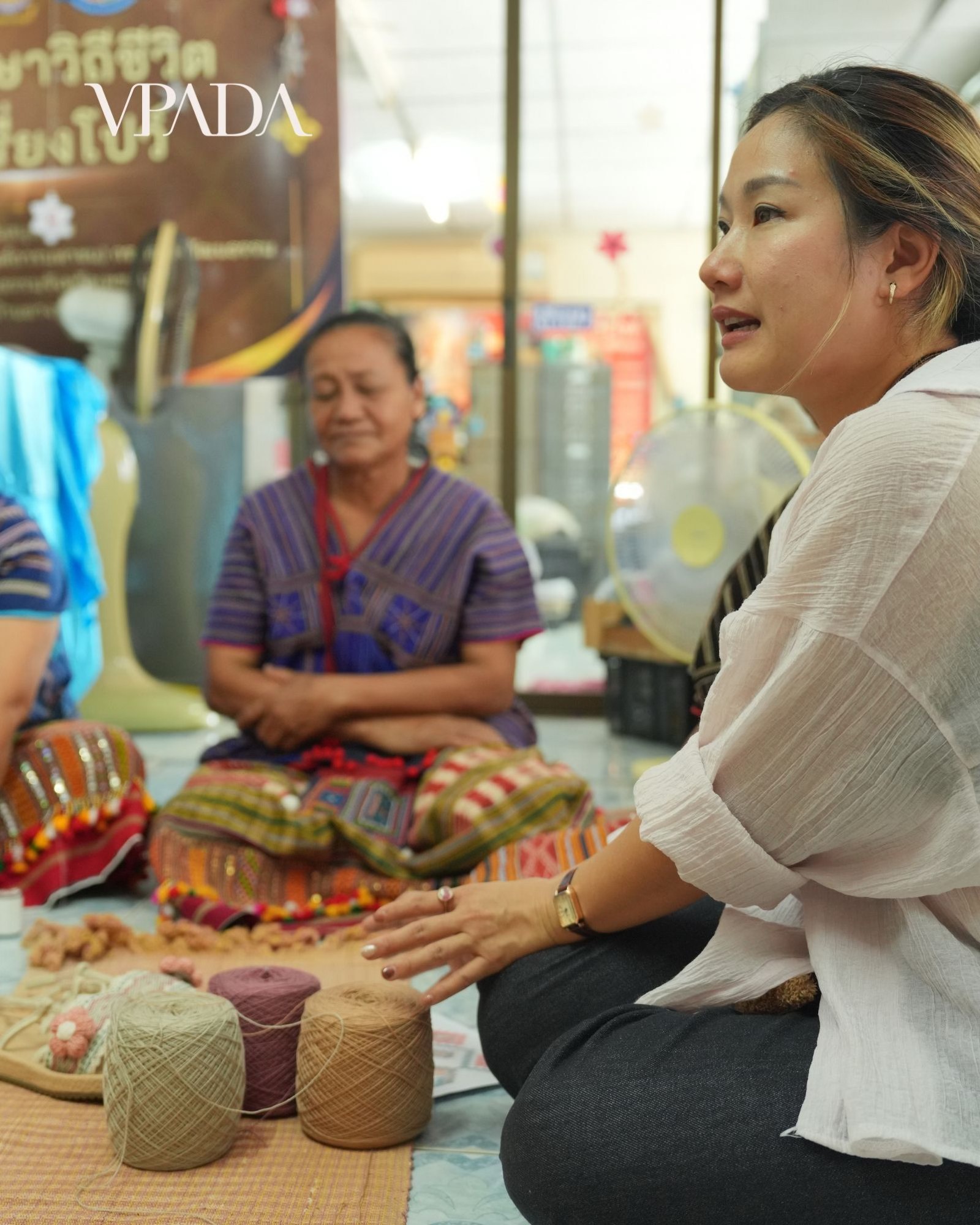
Community — Creating Opportunities for Local Artisans
The organization works toward supporting craftspeople, small producers, and local communities by encouraging skills development and opportunities for sustainable livelihoods.
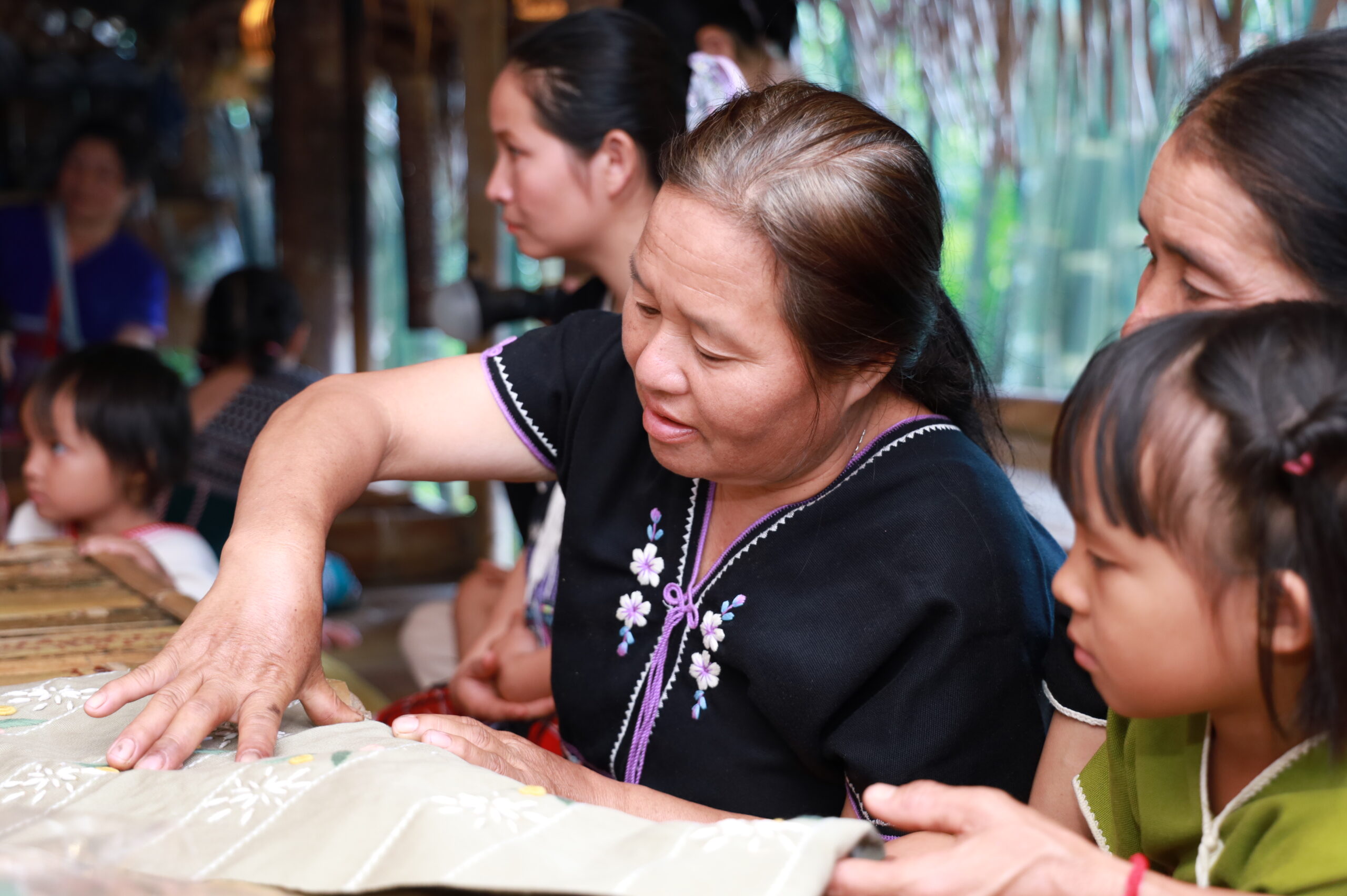
Local — Celebrating Thailand’s Resources and Expertise
Sandals World recognizes the value of local knowledge, Thai agricultural resources, and domestic production capabilities.
Discover VPADA x BIO EVA SW GREEN at SX MARKET 2026
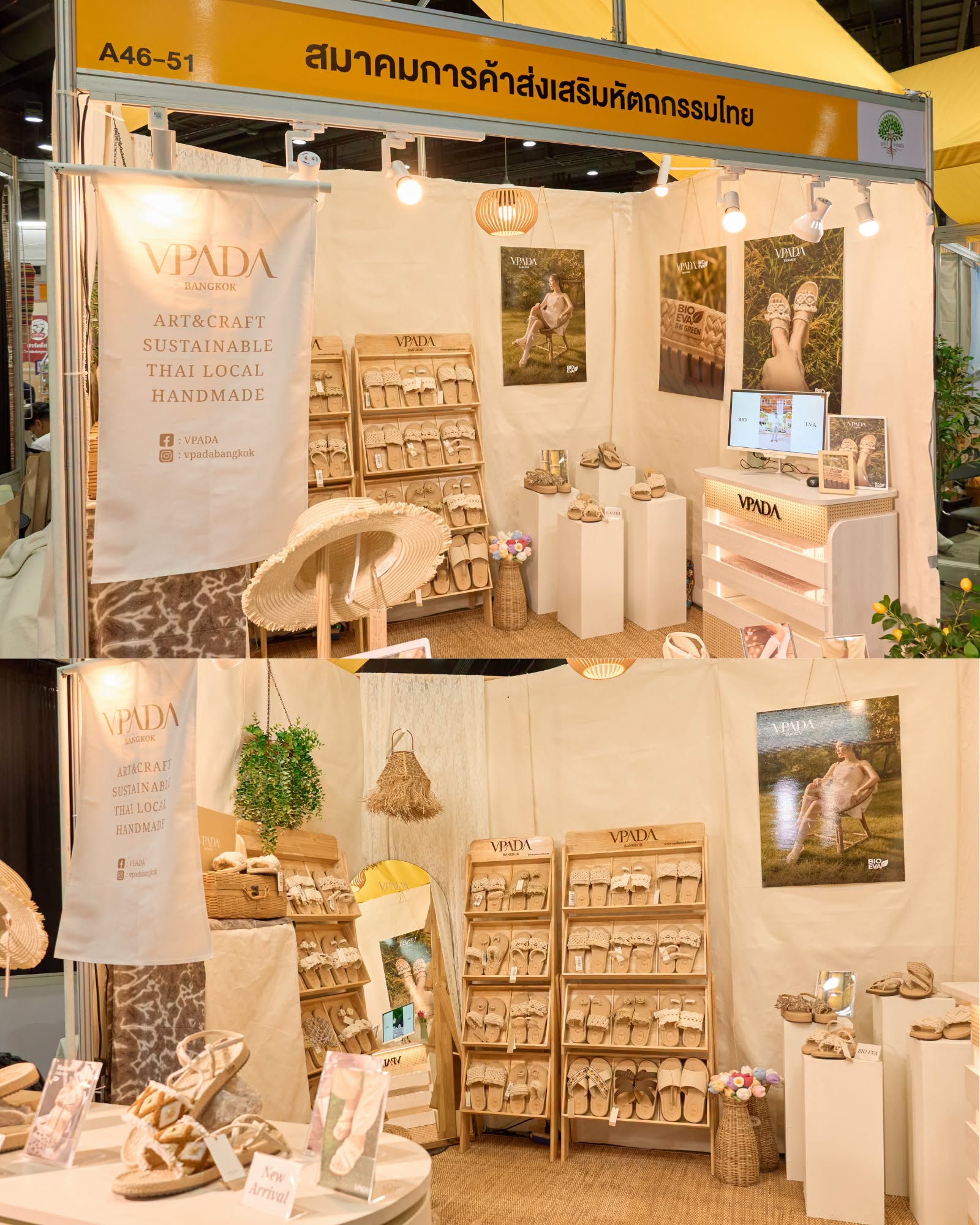
For anyone interested in handmade sandals, Thai craftsmanship, or innovative material alternatives, VPADA Bangkok is introducing its Macramé Collection featuring BIO EVA SW GREEN foam soles at SX MARKETPLACE 2026.
Visitors can explore the collection, discover the design details, and learn how sugarcane-based materials are being introduced into handmade footwear.
The collaboration also provides an opportunity to see how fashion and material innovation can complement one another.
Event Details
📍 Location: SX MARKETPLACE, Hall 7, LG Floor, Queen Sirikit National Convention Center, Bangkok, Thailand
📅 Dates: November 6–15, 2026
⏰ Time: 10:00 AM – 8:00 PM
🌱 Booth: A47 | Yellow Zone – Strong Communities
✨ Highlights: VPADA Macramé Collection featuring BIO EVA SW GREEN foam soles, priced at THB 690, available in UK sizes 5–9. Selected men’s sandal designs are also available in UK sizes 9–10.
The event offers a chance to experience how traditional Thai handmade craftsmanship and modern material development can come together in everyday fashion.
From Sugarcane to Every Step: A New Chapter for Thai Handmade Sandals
Meaningful change does not always begin with a revolutionary invention.
Sometimes, it begins with a simple question.
Can we make better choices about the materials we use every day?
For VPADA and Sandals World, introducing BIO EVA SW GREEN into handmade sandals represents the beginning of a longer journey toward responsible material development.
It is not the final destination of sustainability.
Instead, it is an opportunity to continue learning, researching, and improving the way footwear is designed and produced.
Because the true beauty of handmade sandals should not be limited to what we see on the surface.
It should also reflect the creativity, responsibility, and human craftsmanship behind every pair.
From every carefully tied knot to every thoughtfully selected material, each decision contributes to the future of Thai craftsmanship.
And through initiatives such as BIO EVA SW GREEN, Sandals World continues working toward a future where traditional Thai craft can grow alongside innovation.
A future where artistic expression, local communities, and material responsibility all have a place.
One Step Better Begins with Material Choice. 🌱
BIO EVA SW GREEN by Sandals World
Material Transition — A Thoughtful Step Forward.
Discover more about Thai handmade sandals, sustainability, and craftsmanship at Sandals World — Thailand’s Sustainable Art & Craft Sandals Hub.
𝙎𝙖𝙣𝙙𝙖𝙡𝙨 𝙒𝙤𝙧𝙡𝙙 𝙞𝙨 𝙏𝙝𝙖𝙞𝙡𝙖𝙣𝙙’𝙨 𝙡𝙖𝙧𝙜𝙚𝙨𝙩 𝙝𝙪𝙗 𝙤𝙛 𝙖𝙧𝙩𝙞𝙨𝙩𝙞𝙘 𝙝𝙖𝙣𝙙𝙢𝙖𝙙𝙚 𝙨𝙖𝙣𝙙𝙖𝙡𝙨


ABOUT THE CONTENT CREATOR
BUNTHARIK INSIRI
(Content Writer)
Sandals World | Art & Craft Sandals | Sustainable Thai Craft Sandals Tags: handmade sandals, sandals world, foot health,
Thailand sandals, artistic handmade sandals, art & craft sandals, plantar fasciitis, bunion, sustainable sandals and BIO EVA ,SW GREEN
Brand Partner News Sustainability Knowledge & Insights Sandals World News Community Brand Stories Travel & Destinations Events

From Sugarcane to Every Step: VPADA x Sandals World Unveils BIO EVA SW GREEN at SX2026
Views: 9 What if the next big change in sustainable fashion starts with something we [...]
Nov

Looking for Handmade Sandals in Chiang Mai? Discover Your Perfect Pair at CMP Handmade Sandals
Views: 20 More Than Temples and Cafés: Discover Chiang Mai’s Handmade Treasures Chiang Mai is [...]
Nov

From Sugarcane Fields to Handmade Sandals: VPADA x Sandals World Unveils BIO EVA SW GREEN at SX MARKET 2026 🌱
Views: 15 Same Craft. New Sole. Greener Future. What if the beautiful sandals you wear [...]
Nov

A Little Halloween Magic at Song Wat! Celebrating the First Day of VPADA Bangkok Pop-up
Views: 15 Halloween may be over, but the handmade happiness at Song Wat is still [...]
Nov

Thailand 2027–2030: Working Just as Hard, but Living a Harder Life? 4 Crises You Cannot Ignore
Views: 22 What if your salary stays the same, but everything around you becomes more [...]
Nov

Thailand May Pay More Than You Think as the World Gets Hotter
Views: 18 What if one day you had to pay more for electricity, spend more [...]
Nov

From Sugarcane to Sandals: BIO EVA & SW GREEN A New Chapter for Thai Craftsmanship
Views: 28 A Thoughtful Step Forward Because a Better Future Begins with the Materials We [...]
Oct
Climate Crisis 2026: Four Years Left to Act? How Global Warming, El Niño, and Extreme Weather Are Changing Our Future
Views: 29 What if food becomes more expensive, clean water becomes harder to access, and [...]
Oct
SANDALS WORLD GUIDE


The Largest HubArtistic Handmade Sandals
BY
SANDALS WORLD THAILAND
of Artistic Handmade Sandals in Thailand.