

Brand Stories
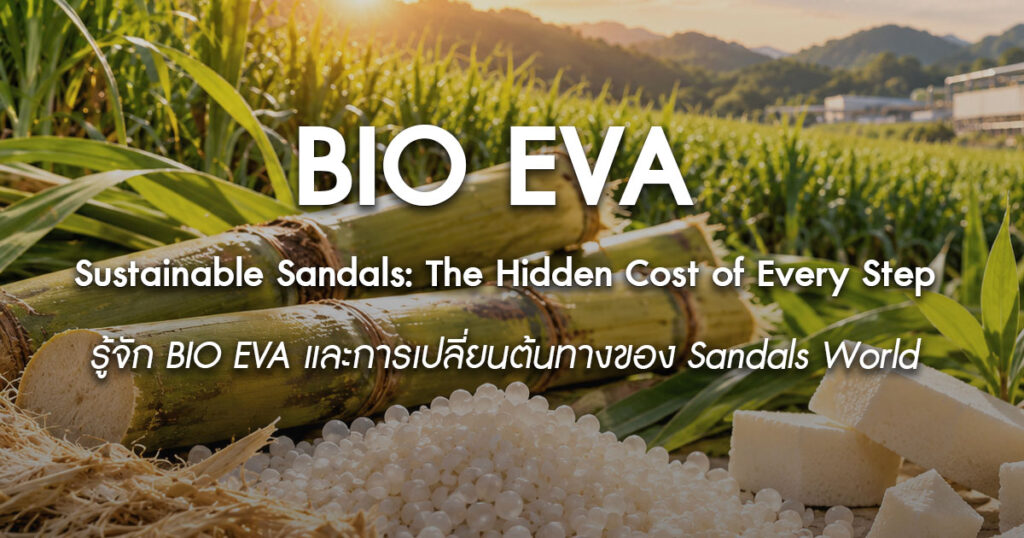
Are Your Sandals Harming the Planet Before You Even Wear Them? The BIO EVA Revolution
Oct
What if your favorite pair of sandals had already left an environmental footprint before you ever stepped outside?
Most people think about sustainability when they recycle packaging, reduce plastic waste, or choose products that last longer. Yet the environmental story of a product begins much earlier. It starts with the raw materials extracted, cultivated, and processed long before the finished item reaches a store.
For decades, footwear manufacturers have relied on petroleum-derived materials to create lightweight, flexible, and comfortable soles. These materials offer practical benefits, but their production also depends on finite fossil resources.
Today, an alternative is gaining attention: BIO EVA sustainable sandals made with sugarcane-based materials.
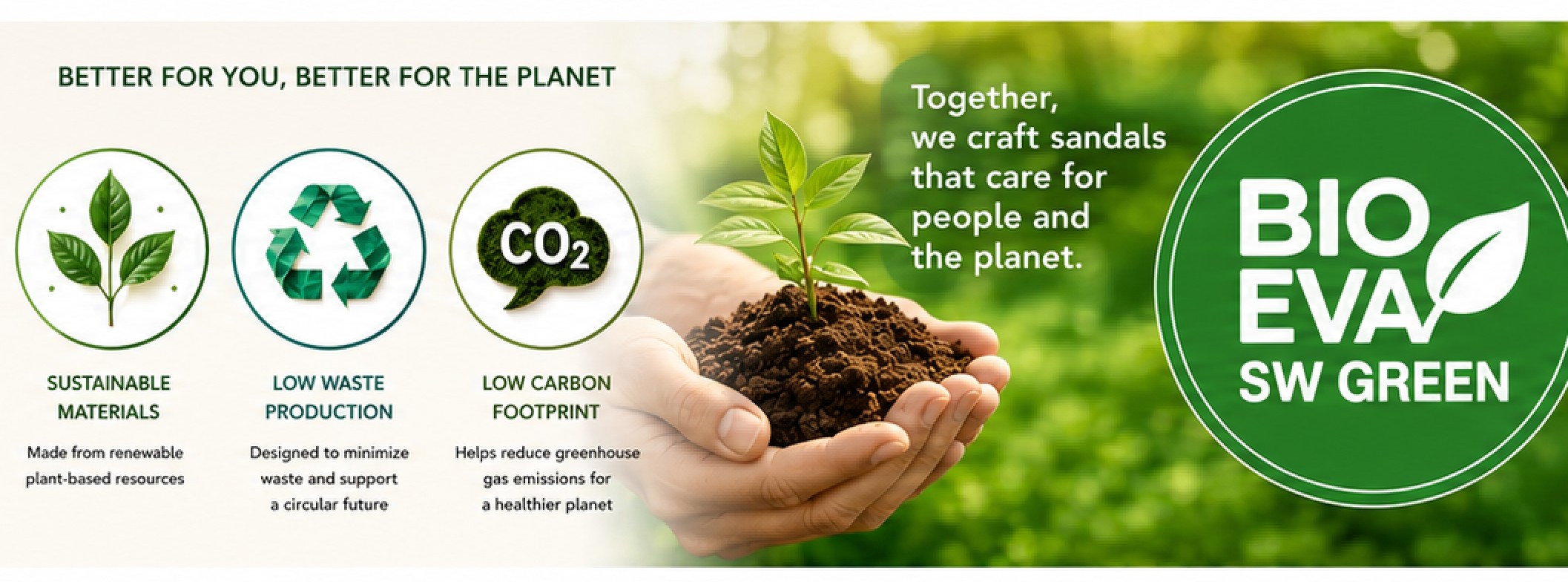
At Sandals World, this innovation represents an opportunity to rethink footwear from the beginning. Through its SW GREEN initiative, the brand is exploring how renewable materials, Thai craftsmanship, and thoughtful design can work together.
Could the future of sustainable footwear begin in a sugarcane field?
The Hidden Environmental Cost of Sandals
Every pair of sandals follows a journey before reaching its owner. Raw materials travel through industrial processes, manufacturing facilities, transportation networks, and retail channels.
Each stage consumes resources and may generate greenhouse gas emissions.
Traditional footwear often contains Ethylene Vinyl Acetate (EVA), a polymer widely used in foam soles. Manufacturers value EVA for its lightweight structure, flexibility, cushioning, and versatility.
However, conventional EVA typically relies on fossil-derived ethylene and other petrochemical ingredients.
Extracting fossil fuels, processing raw materials, and manufacturing polymers all contribute to the environmental footprint of footwear.
This creates an important challenge for the industry: How can manufacturers maintain comfort and durability while reducing dependence on fossil-based resources?
The answer requires more than changing a single material. It begins with understanding the entire product life cycle.
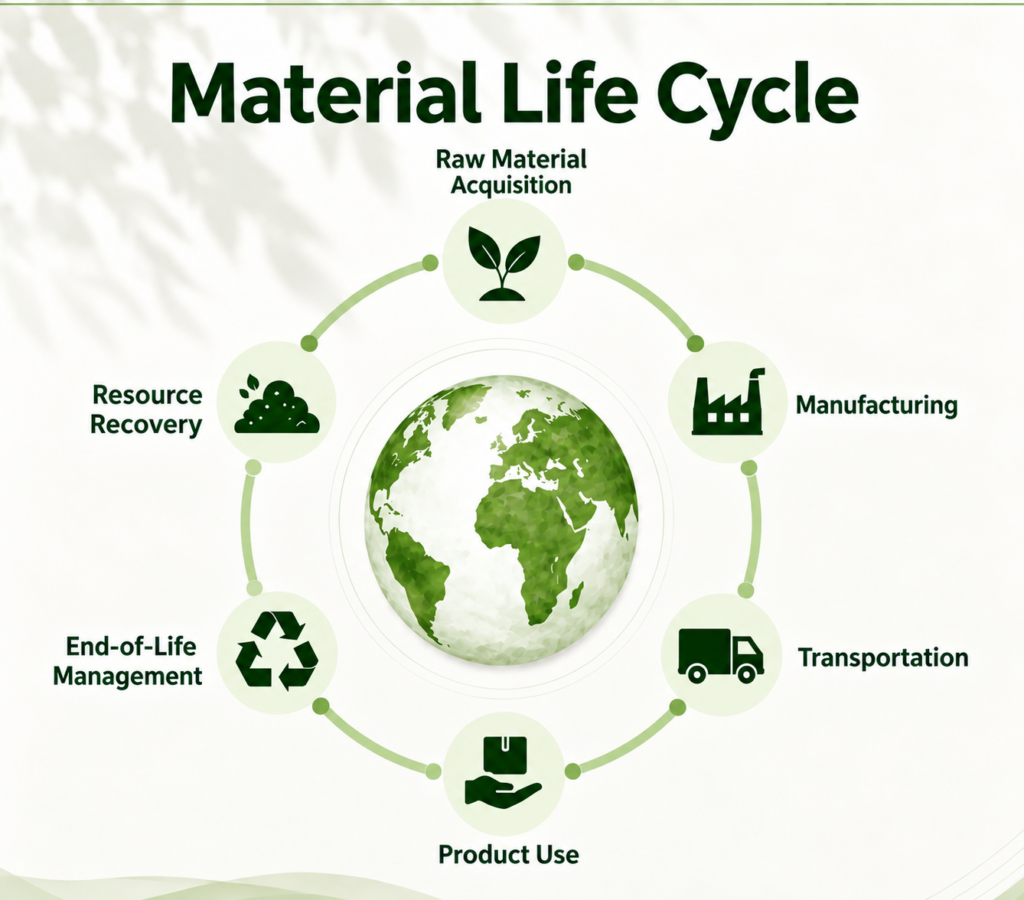
Understanding the Material Life Cycle: Sustainability Starts Before Production
The Material Life Cycle describes the journey of materials from their original source to their final disposal or recovery.
Life Cycle Assessment (LCA), guided by ISO 14040 and ISO 14044, provides a framework for evaluating environmental impacts throughout that journey.
1. Raw Material Acquisition
Every product begins with natural resources, including petroleum, natural gas, agricultural crops, or recycled materials.
These choices influence resource consumption, land use, and greenhouse gas emissions.
For Sandals World, raw material acquisition is a key priority. Selecting sugarcane-based BIO EVA offers a way to replace part of the fossil-derived feedstock traditionally used in foam production.
2. Manufacturing
Factories transform raw materials into finished products through processes that consume electricity, heat, water, and other inputs.
Efficient manufacturing can help reduce energy consumption, material waste, and unnecessary emissions.
3. Transportation
Materials and finished products move between suppliers, factories, warehouses, and retailers.
Transportation distances, vehicle efficiency, and shipping methods influence a product’s environmental footprint.
4. Product Use
Durability matters because products that remain useful for longer may reduce the need for frequent replacement.
Comfort, material quality, and careful construction therefore play important roles in responsible footwear design.
5. End-of-Life Management
After years of use, sandals may require repair, reuse, recycling, or disposal.
Responsible end-of-life planning aims to reduce waste and recover materials wherever practical systems exist.
6. Resource Recovery
A circular economy seeks to keep materials in productive use for longer.
Repair, reuse, and recycling can reduce demand for virgin resources. However, successful recovery depends on product construction and available recycling infrastructure.
Together, these stages demonstrate why sustainable footwear requires decisions that extend beyond appearance and marketing.
SW GREEN
What Is BIO EVA? Turning Sugarcane Into Footwear Foam
BIO EVA is a form of Ethylene Vinyl Acetate that uses renewable biological resources to produce part of its polymer ingredients.
One important source is sugarcane.
Unlike conventional EVA, which relies on fossil-derived ethylene, sugarcane-based BIO EVA uses bio-ethylene produced through an agricultural and chemical conversion process.
The production pathway follows several stages:
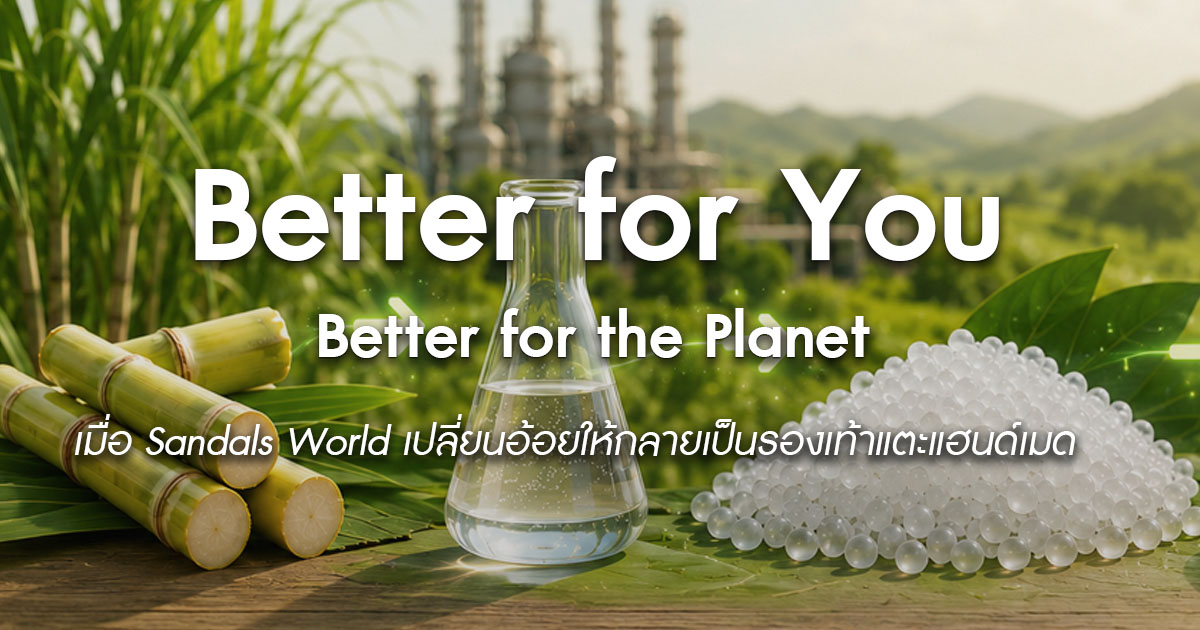
Sugarcane → Bio-Ethanol → Bio-Ethylene → BIO EVA Resin → BIO EVA Foam → Sandals
First, producers process sugarcane into fermentable sugars and produce bio-ethanol. Next, chemical processing converts ethanol into bio-ethylene.
Manufacturers then combine bio-ethylene with vinyl acetate to create BIO EVA resin. Finally, they formulate and process the resin into foam suitable for footwear applications.
The resulting material can retain the fundamental characteristics of conventional EVA while replacing part of its fossil-derived content.
Braskem, a major producer of bio-based polymers, offers sugarcane-based EVA grades with reported bio-based content ranging from 45% to 80%, depending on the specific grade and ASTM D6866 measurement.
However, these figures describe Braskem’s products, not necessarily the material formulation used by Sandals World.


How Sugarcane Captures Carbon From the Atmosphere
Sugarcane plays an interesting role in the carbon cycle.
Like other plants, it absorbs carbon dioxide (CO₂) from the atmosphere through photosynthesis.
Using sunlight, water, and CO₂, sugarcane produces sugars and other organic compounds needed for growth.
Consequently, atmospheric carbon becomes part of the plant’s biomass.
When manufacturers convert sugarcane into bio-ethanol and eventually bio-ethylene, some of that biogenic carbon can enter the molecular structure of BIO EVA.
This differs from conventional fossil-based production, which introduces carbon sourced from geological reserves.
Does Sugarcane Make BIO EVA Carbon Negative?
Not automatically.
Although sugarcane absorbs CO₂ while growing, agricultural operations and industrial production can still release greenhouse gases.
Fertilizer production, farming equipment, transportation, chemical processing, and electricity consumption all contribute to the material’s overall carbon footprint.
Land-use changes can also affect environmental outcomes.
Furthermore, carbon contained in BIO EVA does not necessarily remain stored permanently. Its eventual release depends on the product’s end-of-life treatment.
Therefore, a lower carbon footprint must be demonstrated through an appropriate Life Cycle Assessment rather than assumed from plant-based content alone.
The strongest environmental claim is not that sugarcane-based sandals eliminate carbon emissions, but that renewable feedstocks can reduce dependence on fossil resources and may lower emissions under suitable production conditions.
Art & Craft Sustainable Sandals
Can BIO EVA Deliver the Same Comfort as Conventional EVA?
One concern surrounding alternative materials is whether sustainability requires sacrificing product quality.
Fortunately, BIO EVA provides a promising solution.
Because bio-ethylene can function as the same chemical building block used in conventional EVA, manufacturers can produce polymers with comparable fundamental properties.
These include flexibility, low weight, cushioning potential, and suitability for foam processing.
However, final performance depends on the complete formulation, production methods, foam density, and quality testing.
For BIO EVA sustainable sandals, manufacturers must evaluate cushioning, compression recovery, flexibility, durability, and long-term comfort.
Sandals World recognizes that environmental responsibility should support product quality rather than replace it.
Customers should enjoy comfortable footwear while understanding the material choices behind its production.
Sandals World and SW GREEN: Rethinking Sustainable Thai Craft Sandals
Sustainability has several dimensions. Environmental responsibility matters, but so do cultural preservation, craftsmanship, and community opportunities.
Sandals World brings these ideas together through its commitment to Sustainable Thai Craft Sandals.
Its handmade collections celebrate traditional techniques such as macramé, crochet, and other craft-inspired designs.
These techniques reflect the creativity of local makers and the cultural identity of Thailand.
Meanwhile, SW GREEN introduces another dimension: considering the environmental implications of materials before production begins.
By incorporating sugarcane-based BIO EVA into its material development, Sandals World aims to reduce reliance on fossil-derived ingredients while maintaining the practical qualities customers expect.
Where Traditional Craft Meets Material Innovation
Handmade sandals carry stories that industrial production often overlooks.
Every knot, woven pattern, and carefully developed design can express the maker’s skills and cultural influences.
Yet traditional craftsmanship and modern materials do not need to compete.
Instead, they can complement each other.
Through Art & Craft Sandals, Sandals World can combine distinctive Thai design with material innovation.
Similarly, Artistic Handmade Sandals demonstrate how contemporary fashion can draw inspiration from traditional techniques without losing cultural character.
This approach creates a meaningful direction for Thailand sandals in international markets, where consumers increasingly consider product origin, materials, and responsible production.

The Truth About BIO EVA: Bio-Based Does Not Mean Biodegradable
One of the biggest misconceptions surrounding bio-based plastics is that they naturally disappear after disposal.
However, bio-based and biodegradable describe different characteristics.
Bio-based refers to where the raw materials originate. Biodegradable describes whether microorganisms can break down a material under specific conditions.
A plastic can contain renewable biological carbon without being biodegradable.
The European Commission specifically warns against treating these terms as interchangeable.
Therefore, sugarcane-based BIO EVA should not automatically be described as compostable, biodegradable, or harmless to ecosystems.
Like conventional EVA, it requires responsible waste management.
Recycling may be technically possible, but actual collection and processing depend on local facilities, product construction, and contamination.
For Sandals World, this distinction supports a more transparent sustainability strategy based on measurable improvements rather than exaggerated environmental promises.

Beyond Materials: What Comes Next for Sustainable Footwear?
Switching to renewable feedstocks is an important beginning, but it cannot solve every environmental challenge associated with footwear.
The next stage involves examining manufacturing efficiency, product durability, responsible sourcing, and waste management.
Brands can also investigate repairable designs, reduced packaging, and more effective material recovery systems.
Most importantly, they should measure progress.
For Sandals World, meaningful indicators could include renewable material content, fossil-feedstock replacement, product durability, manufacturing waste, and verified carbon footprint data.
Such measurements can help distinguish genuine environmental improvements from broad sustainability claims.
As the footwear industry evolves, the most valuable innovations will combine performance, transparency, craftsmanship, and responsible resource management.
A Better Future Begins With Better Materials
A pair of sandals may look simple, but its environmental story extends far beyond the finished product.
From agricultural fields and petrochemical facilities to workshops and retail stores, every material choice contributes to that story.
BIO EVA offers an opportunity to rethink one of its earliest chapters.
By introducing sugarcane-derived ingredients into EVA production, manufacturers can reduce reliance on fossil feedstocks while developing materials designed to deliver familiar footwear performance.
For Sandals World, SW GREEN represents a commitment to exploring this transition alongside Thai craftsmanship, contemporary design, and long-term product quality.
The goal is not to claim that any sandal is completely free of environmental impact.
Instead, it is to make better-informed decisions, measure improvements, and continuously explore more responsible alternatives.
Because the future of sustainable footwear will not be defined by appearance alone.
It will also be shaped by where materials come from, how products are made, and what happens after their final journey.
Better Materials. Same Comfort. A More Responsible Future.
Sandals World — Sustainable Thai Craft Sandals.

𝙎𝙖𝙣𝙙𝙖𝙡𝙨 𝙒𝙤𝙧𝙡𝙙 𝙞𝙨 𝙏𝙝𝙖𝙞𝙡𝙖𝙣𝙙’𝙨 𝙡𝙖𝙧𝙜𝙚𝙨𝙩 𝙝𝙪𝙗 𝙤𝙛 𝙖𝙧𝙩𝙞𝙨𝙩𝙞𝙘 𝙝𝙖𝙣𝙙𝙢𝙖𝙙𝙚 𝙨𝙖𝙣𝙙𝙖𝙡𝙨


ABOUT THE CONTENT CREATOR
BUNTHARIK INSIRI
(Content Writer)
Sandals World | Art & Craft Sandals | Sustainable Thai Craft Sandals Tags: handmade sandals, sandals world, foot health,
Thailand sandals, artistic handmade sandals, art & craft sandals, plantar fasciitis, bunion, sustainable sandals and BIO EVA ,SW GREEN
Are Your Sandals Harming the Planet Before You Even Wear Them? The BIO EVA Revolution
Post Views: 1 What if your favorite pair of sandals had already left an environmental [...]
Oct

The Ocean Is Heating Faster Than Ever: Why Low-Carbon Design Must Start Now
Post Views: 5 What if the ocean we know today no longer looks the same [...]
Oct

If Local Art Disappears, What Will the World Remember? From Mae Hong Son to D NICE MARKET with Sandals World
Post Views: 15 Imagine a future where traditional patterns disappear from local communities. Craft techniques [...]
Oct

VPADA Handmade Sandals: Where Thai Craft Blooms Into Modern Style
Post Views: 9 “Walk with nature, step with grace.” What if a small woven flower, [...]
Oct

Plastic Waste and Sustainable Sandals: Better Materials, Better Truth, Better Steps
Post Views: 19 Plastic has transformed modern life. Its lightweight structure, versatility, and low cost [...]
Oct

What’s Really Under Your Feet? From Plastic and EVA Foam to BIO EVA SW GREEN
Post Views: 19 Plastic is everywhere. We drink from it, carry food in it, build [...]
Sep

Only 9% Gets Recycled: Are We Solving the Plastic Crisis the Wrong Way?
Post Views: 17 Every time we drop a plastic bottle into a recycling bin, we [...]
Sep

Bangkok Flood 2026: Why Bangkok Flooded So Severely | Sandals World
Post Views: 28 At the end of September 2026, one question was on the minds [...]
Sep
SANDALS WORLD GUIDE


Artistic Handmade Sandals
BY
SANDALS WORLD THAILAND
The Largest Hub
of Artistic Handmade Sandals in Thailand.