

Brand Stories
Plastic Waste and Sustainable Sandals: Better Materials, Better Truth, Better Steps

Oct
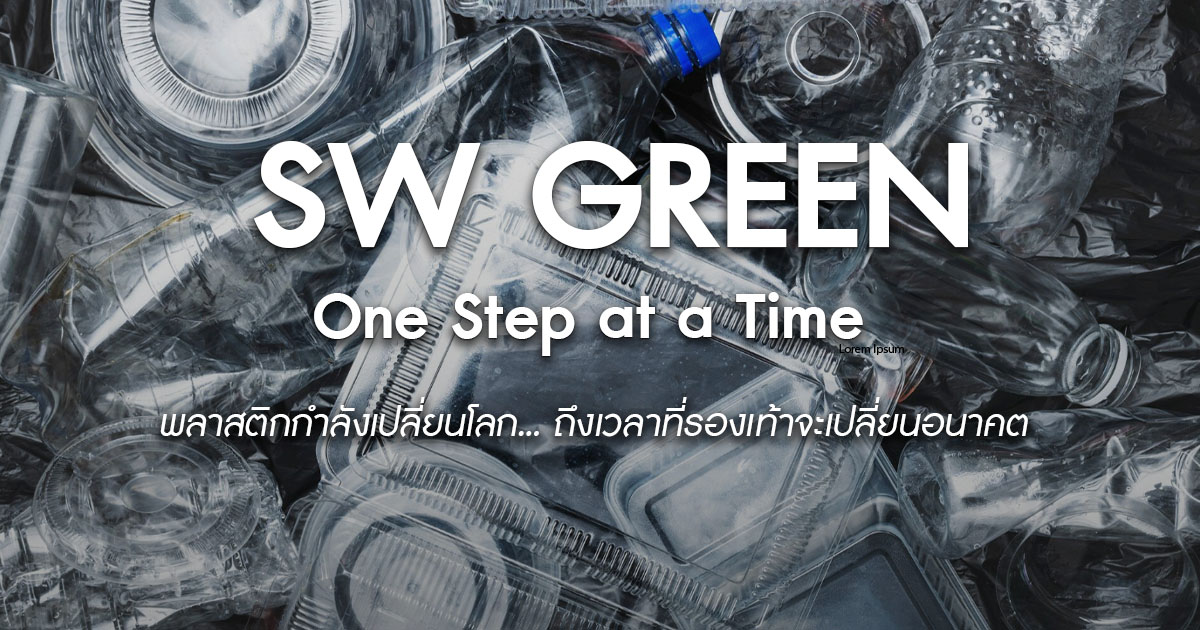
Plastic has transformed modern life. Its lightweight structure, versatility, and low cost make it useful across almost every industry. However, these advantages also contribute to one of the world’s biggest environmental challenges: plastic waste.
The world generates hundreds of millions of tonnes of plastic waste every year, yet only a small share returns to the economy through recycling. Packaging creates a particularly large waste stream because people often use it for only minutes, hours, or days before throwing it away.
The footwear industry faces another challenge. A single pair of sandals may combine EVA foam, rubber, textiles, adhesives, synthetic fibres, and coatings. Manufacturers often bond these materials together permanently, which makes separation and recycling much harder.
For this reason, sustainability should mean more than adding an “eco-friendly” label to a product. Brands need to understand where materials come from, how long they last, how they perform during use, and what happens when consumers no longer need them.
For Sandals World, this thinking can support a wider journey toward more responsible handmade sandals and a stronger vision for Sustainable Thai Craft Sandals.
Which Plastics Create the Most Waste?
Plastic waste comes from many different polymers. Some of the largest waste streams include polypropylene, or PP, and several types of polyethylene, including LDPE, LLDPE, and HDPE. PET, PVC, polystyrene, polyurethane, and other polymers also contribute to the global waste problem.
Manufacturers use PP in food containers, bottle caps, packaging, household products, and many everyday items. LDPE and LLDPE commonly appear in plastic bags, wrapping films, flexible packaging, and protective films. Meanwhile, HDPE serves as a common material for bottles, containers, and rigid packaging.
Many people recognize PET because of beverage bottles. However, the textile industry also uses PET extensively because polyester belongs to the same polymer family. Therefore, PET waste connects both packaging and fashion.
Product lifetime also matters. A plastic package may serve its purpose for less than a day, while its material can remain in the environment for decades or longer. This creates a major contradiction: society often uses highly durable polymers for products with extremely short useful lives.
Plastic Does Not Simply Disappear
People often use the words “decompose” and “degrade” as if they mean the same thing. In reality, most conventional plastics do not biodegrade quickly like food waste or untreated organic materials.
Sunlight, oxygen, heat, weather, and physical abrasion can weaken plastic over time. As the polymer loses strength, a large object may break into smaller fragments. Those fragments can eventually become microplastics and continue breaking into even smaller particles.
Therefore, claims such as “this plastic takes hundreds of years to decompose” need careful interpretation. The original product may disappear from sight, but the polymer does not necessarily vanish completely.
Footwear adds another dimension to this problem. Sandal soles constantly rub against concrete, asphalt, sand, tiles, and other surfaces. This friction gradually wears away the outsole and may release small particles during normal use.
A more responsible sustainability strategy should therefore consider not only disposal but also durability and material loss throughout a product’s life.
EVA: Excellent for Footwear, Challenging at End of Life
EVA, or Ethylene-Vinyl Acetate, plays an important role in modern footwear. It offers lightweight cushioning, flexibility, and comfort, which makes it suitable for midsoles, footbeds, and foam-based sandals.
However, footwear manufacturers often crosslink EVA foam to improve resilience, strength, and long-term performance. Crosslinking creates a network inside the material that helps the foam keep its shape during use.
That same structure creates challenges later. Manufacturers cannot simply heat and remelt many crosslinked EVA foams in the same way they process ordinary thermoplastics.
The challenge becomes even greater with handmade sandals. A handcrafted pair may combine EVA with woven uppers, textiles, natural rubber, decorative components, and adhesives. Once these materials form one permanent structure, recyclers may struggle to separate them into clean material streams.
This is why sustainable footwear design should begin before production, not after the consumer throws the product away.
BIO EVA: A Better Starting Point, Not a Complete Solution
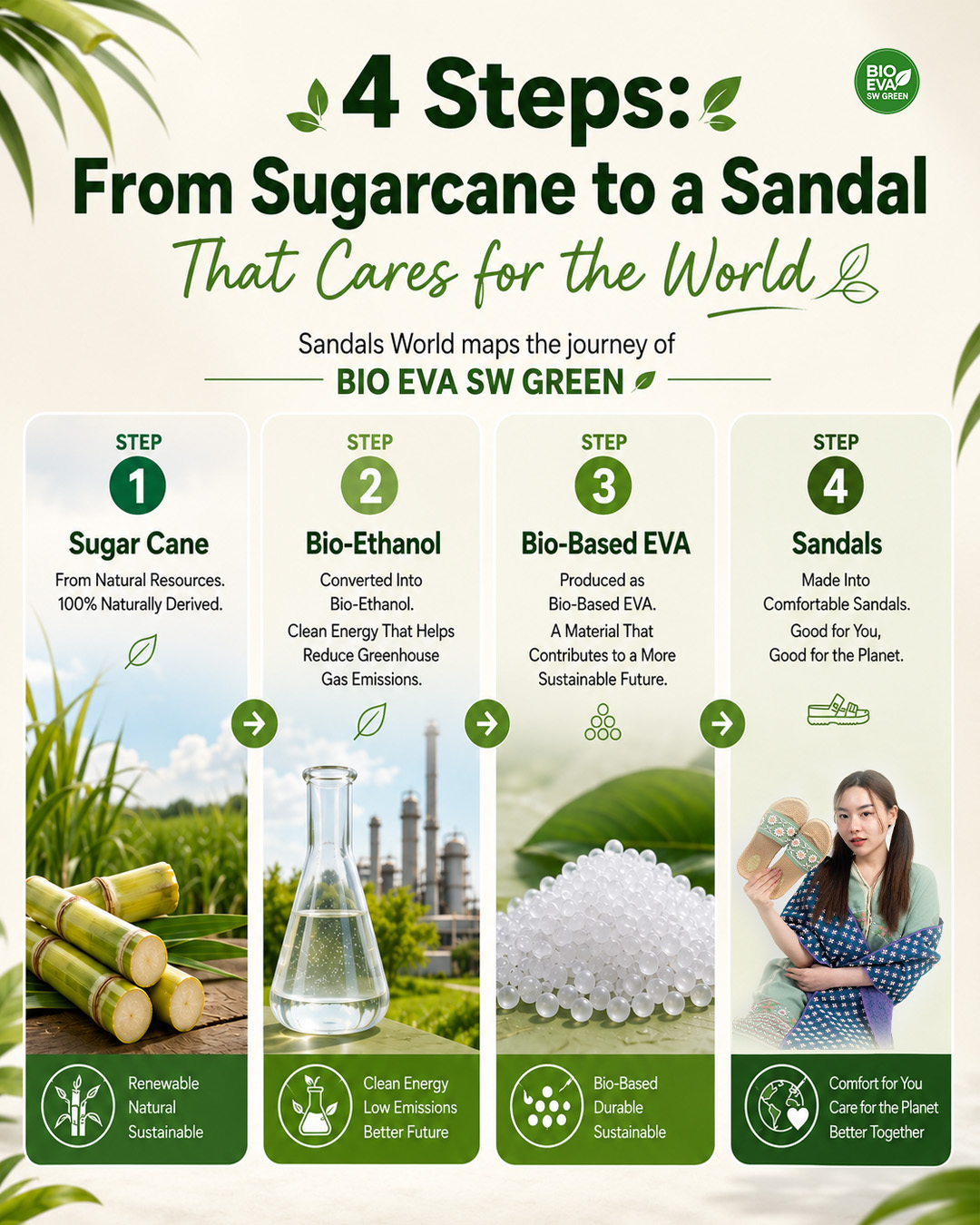
BIO EVA can address one important issue: the source of the raw material. Conventional EVA generally relies on ethylene from fossil resources. Bio-based EVA can use ethylene made from renewable feedstocks such as sugarcane.
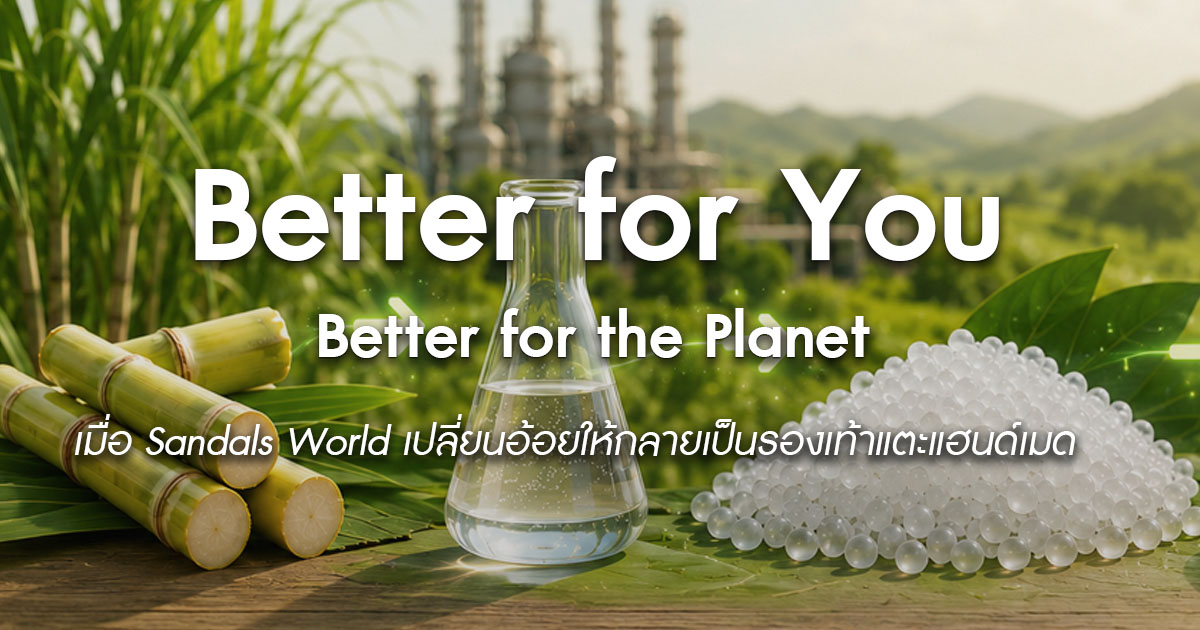
A simplified production pathway begins with sugarcane. Producers convert its sugars into bio-ethanol and then transform that ethanol into bio-ethylene. Manufacturers can then use bio-ethylene as part of EVA production.
This approach can reduce dependence on conventional fossil-derived feedstocks and introduce renewable carbon into the material supply chain.
However, one distinction remains essential: bio-based does not automatically mean biodegradable.
Bio-based describes the origin of the carbon used to make the material. Biodegradable describes whether microorganisms can break down that material under specific environmental conditions.
Therefore, sugarcane-based BIO EVA does not automatically disappear in soil or water. If manufacturers turn it into crosslinked footwear foam, it can still face recycling and end-of-life challenges similar to conventional EVA.
For this reason, Sandals World should focus on claims that clearly describe the material transition rather than suggesting that BIO EVA naturally biodegrades.
Sustainability Needs Better Language, Not Bigger Claims
Sustainable fashion faces a communication problem as well as a material problem. Brands often use broad phrases such as “eco-friendly,” “green,” “zero impact,” or “planet-friendly” because these terms sound simple and positive.
However, vague claims can confuse consumers when brands do not explain what actually changed.
A stronger message describes a specific improvement. Instead of saying, “These sandals save the planet,” a brand might explain: “We are introducing sugarcane-based BIO EVA to reduce our reliance on conventional fossil-derived raw materials.”
That statement sounds less dramatic, but it communicates more useful information.
This approach can also strengthen the international identity of Thailand sandals. Consumers increasingly want evidence, context, and transparency. A brand that clearly explains both its progress and its limitations can build deeper trust than one that relies on environmental buzzwords.

Why Carbon Negative Requires Strong Evidence
Sugarcane absorbs carbon dioxide while it grows. Nevertheless, this fact alone cannot prove that an entire pair of footwear has a negative carbon footprint.
A complete assessment needs to consider agriculture, fertilizers, processing, transportation, energy consumption, foam manufacturing, sandal assembly, packaging, distribution, and end-of-life management.
For that reason, brands should avoid calling an entire product “carbon negative” unless credible Life Cycle Assessment or Product Carbon Footprint data supports the claim within clearly defined boundaries.
More accurate language could include “reducing reliance on fossil-based materials,” “transitioning toward renewable feedstocks,” or “exploring lower-carbon material alternatives.”
Clear language does more than reduce greenwashing risk. It also helps customers understand exactly where the environmental improvement occurs.
Natural Rubber Is Renewable, but It Still Has an Impact
Natural rubber offers several advantages for footwear. Rubber trees provide a renewable biological source, while the material can offer flexibility, durability, and grip for sandal outsoles.
For Sandals World, Thai natural rubber also creates an opportunity to connect product design with domestic materials and local supply chains.
Still, renewable does not mean impact-free. Rubber cultivation requires land, while processing may use water, energy, transportation, and chemicals. Agricultural practices and land management can also influence the overall environmental footprint.
Brands should therefore avoid saying that natural rubber causes no environmental impact. Instead, they can explain its renewable origin, its functional benefits, and its connection to Thai resources.
This balanced approach supports a more credible sustainability story without overstating the material’s environmental performance.
Handmade Craft Can Support Circular Thinking
The future of handmade products does not need to separate traditional craftsmanship from modern environmental thinking. In fact, craft can become part of a more circular design strategy.
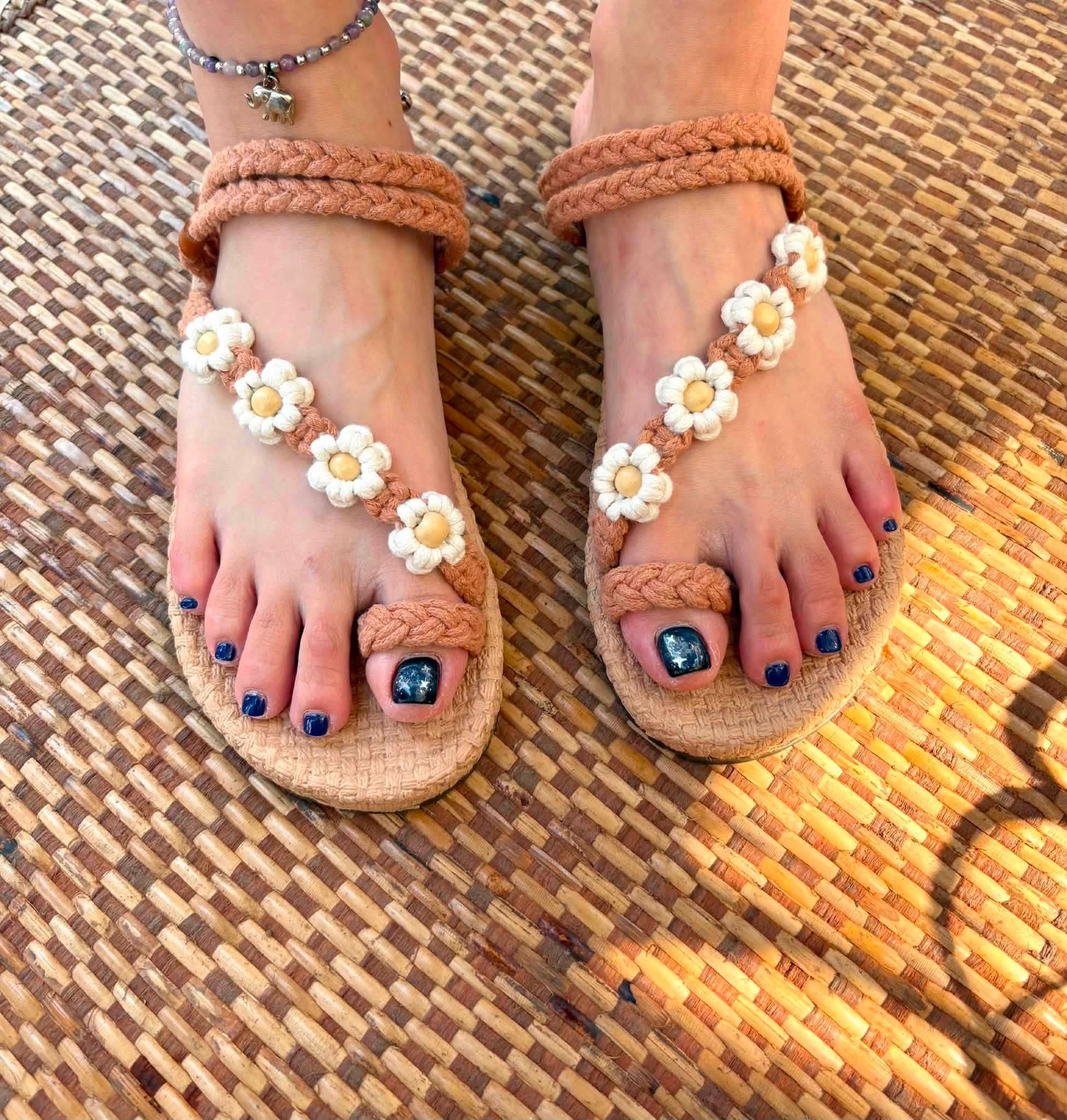
Art & Craft Sandals can combine cultural identity with durability, repairability, efficient material use, and longer product life. When customers value the craftsmanship and story behind an item, they may also keep and care for it longer.
That emotional value matters. A product that stays in use for several years can reduce the need for frequent replacement compared with a product that consumers quickly discard.
This idea gives Artistic Handmade Sandals a wider purpose. Designers can combine craftsmanship with renewable feedstocks, local materials, repairable components, and smarter construction.
Future designs could also reduce adhesive use, simplify material combinations, introduce replaceable parts, or recover clean production scraps before they become waste.

Sustainable Thai Craft Sandals Must Consider the Whole Life Cycle
The future of Sustainable Thai Craft Sandals should not depend on finding one “perfect” green material. Every material brings benefits, limitations, and trade-offs.
Instead, designers should ask a broader set of questions. Where does the material come from? How efficiently can manufacturers use it? How long will the finished product last? Can someone repair damaged parts? Can recyclers separate the materials later?
Manufacturers should also consider production waste. Clean EVA scraps generated inside a factory may offer better recovery opportunities than used footwear that contains dirt, glue, textiles, rubber, and several polymers.
For Sandals World, moving from conventional fossil-derived EVA toward BIO EVA can represent one step. The next steps could include reducing production scraps, increasing outsole durability, exploring recycled content, and designing future products for easier repair or separation.
When each improvement connects to the next, sustainability becomes a long-term design strategy rather than a single material claim.
From Plastic Waste to Better Steps
The global plastic waste crisis teaches us one important lesson: recycling alone cannot solve the entire problem. Many products combine useful materials in ways that make separation difficult after disposal.
Better solutions must therefore begin much earlier. Designers need to consider materials, construction, durability, repair, and end-of-life from the first stage of product development.
For Sandals World, this challenge also creates an opportunity. Modern Thailand sandals can combine beautiful design, local handmade craftsmanship, better material choices, and transparent environmental communication.
BIO EVA can help reduce reliance on conventional fossil-derived feedstocks without pretending to be biodegradable. Thai natural rubber can provide useful performance and connect footwear to local resources without claiming zero impact. Durable construction can help extend product life and reduce unnecessary replacement.
Most importantly, the brand does not need to claim that one pair of handmade sandals can “save the planet.”
A stronger story explains what has improved, why the change matters, what limitations remain, and what the next step will be.
In a market filled with environmental promises, transparency may become one of the most valuable forms of sustainability.
Better materials. Better design. Better information. Better steps forward.
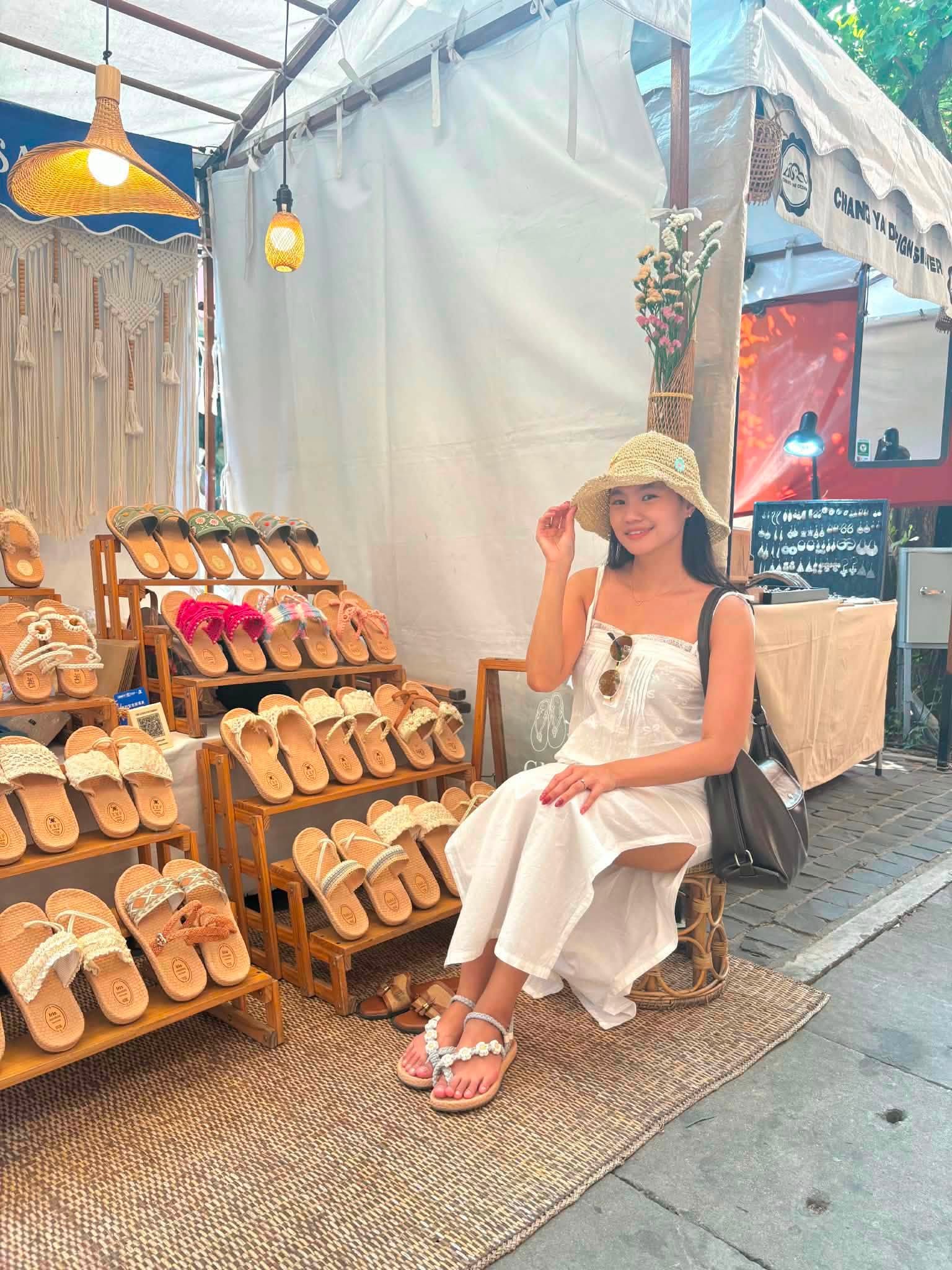
𝙎𝙖𝙣𝙙𝙖𝙡𝙨 𝙒𝙤𝙧𝙡𝙙 𝙞𝙨 𝙏𝙝𝙖𝙞𝙡𝙖𝙣𝙙’𝙨 𝙡𝙖𝙧𝙜𝙚𝙨𝙩 𝙝𝙪𝙗 𝙤𝙛 𝙖𝙧𝙩𝙞𝙨𝙩𝙞𝙘 𝙝𝙖𝙣𝙙𝙢𝙖𝙙𝙚 𝙨𝙖𝙣𝙙𝙖𝙡𝙨


ABOUT THE CONTENT CREATOR
BUNTHARIK INSIRI
(Content Writer)
#Sandalsworld #รองเท้าartandcraft #รองเท้าแตะสานแฮนด์เมด #handmade #artandcraft #sandals #รองเท้าแฮนด์เมด #รองเท้าแตะใส่แล้วไม่ลื่น #รองเท้ายางพารา #ใส่ไปไหนก็ได้
Sandals World | Art & Craft Sandals | Sustainable Thai Craft Sandals Tags: handmade sandals, sandals world, foot health,
Thailand sandals, artistic handmade sandals, art & craft sandals, plantar fasciitis, bunion, sustainable sandals and BIO EVA ,SW GREEN

Plastic Waste and Sustainable Sandals: Better Materials, Better Truth, Better Steps
Post Views: 3 Plastic has transformed modern life. Its lightweight structure, versatility, and low cost [...]
Oct

What’s Really Under Your Feet? From Plastic and EVA Foam to BIO EVA SW GREEN
Post Views: 6 Plastic is everywhere. We drink from it, carry food in it, build [...]
Sep
Only 9% Gets Recycled: Are We Solving the Plastic Crisis the Wrong Way?
Post Views: 7 Every time we drop a plastic bottle into a recycling bin, we [...]

Bangkok Flood 2026: Why Bangkok Flooded So Severely | Sandals World
Post Views: 17 At the end of September 2026, one question was on the minds [...]
Sep
El Niño 2026 and Sustainable Thai Craft Sandals: Why Every Step Matters
Post Views: 18 The climate is changing in ways that are becoming harder to ignore. [...]
Sep
Circular Fashion: Why Your Sandals Deserve a Second Life
Post Views: 14 What happens to your favorite pair of sandals when you stop wearing [...]
Sep

Chic Handmade: From Fingertips to Every Step The Story Behind Artistic Handmade Sandals from Thailand
Post Views: 14 In a world where factories can produce thousands of shoes every day, [...]
Sep

From Thai Craft to BIO EVA: How Sandals World Is Rethinking the Future of Sandals
Post Views: 13 When people think about sandals, they often think about comfort, summer, travel, [...]
Sep
SANDALS WORLD GUIDE

Artistic Handmade Sandals
BY
SANDALS WORLD THAILAND
The Largest Hub
of Artistic Handmade Sandals in Thailand.