

Brand Stories
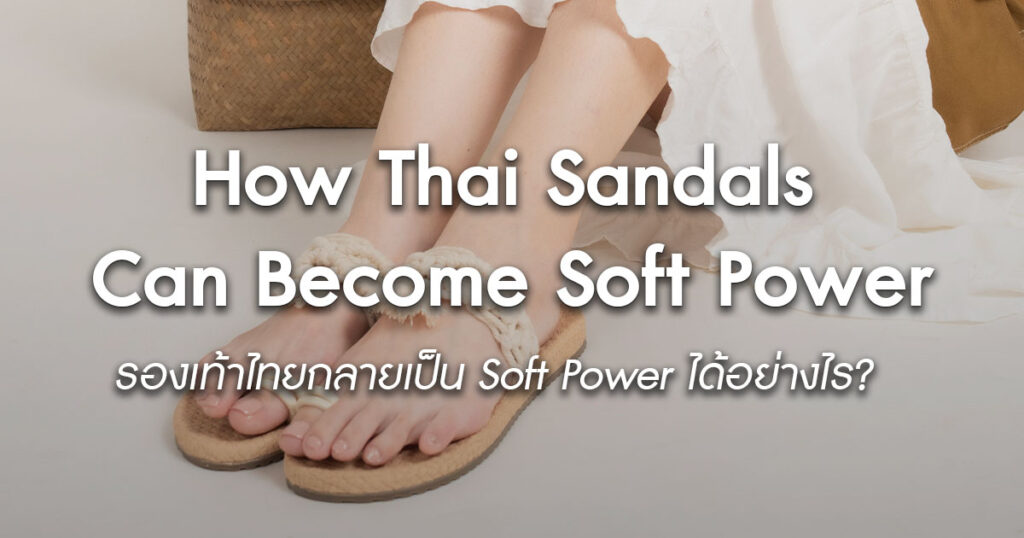
From Footsteps to Global Influence: How Thai Sandals Can Become Soft Power
Aug
When people think about Thai Soft Power, they often picture Thai food, Muay Thai, films, music, or festivals. However, a pair of sandals can tell the story of Thailand just as powerfully.
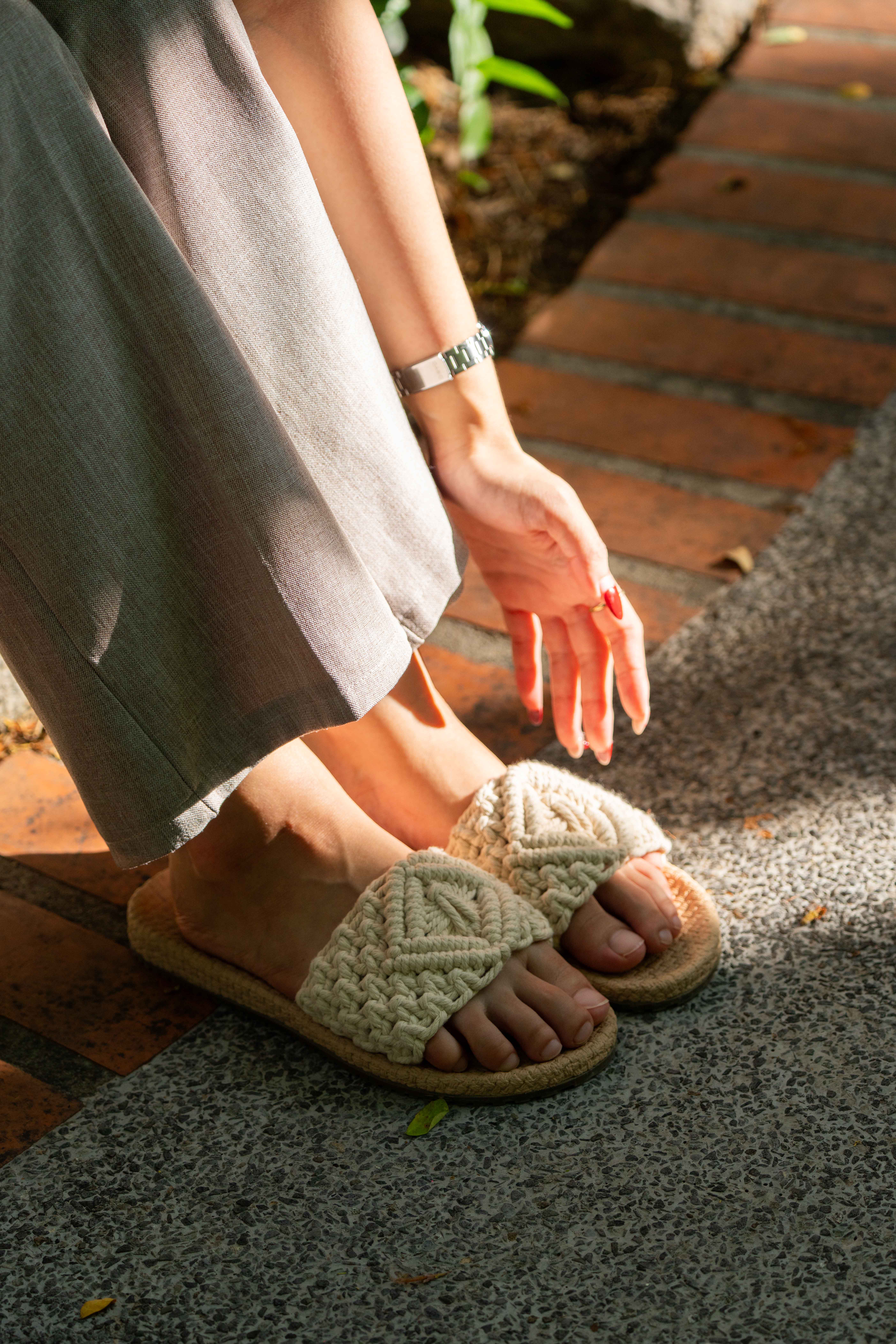
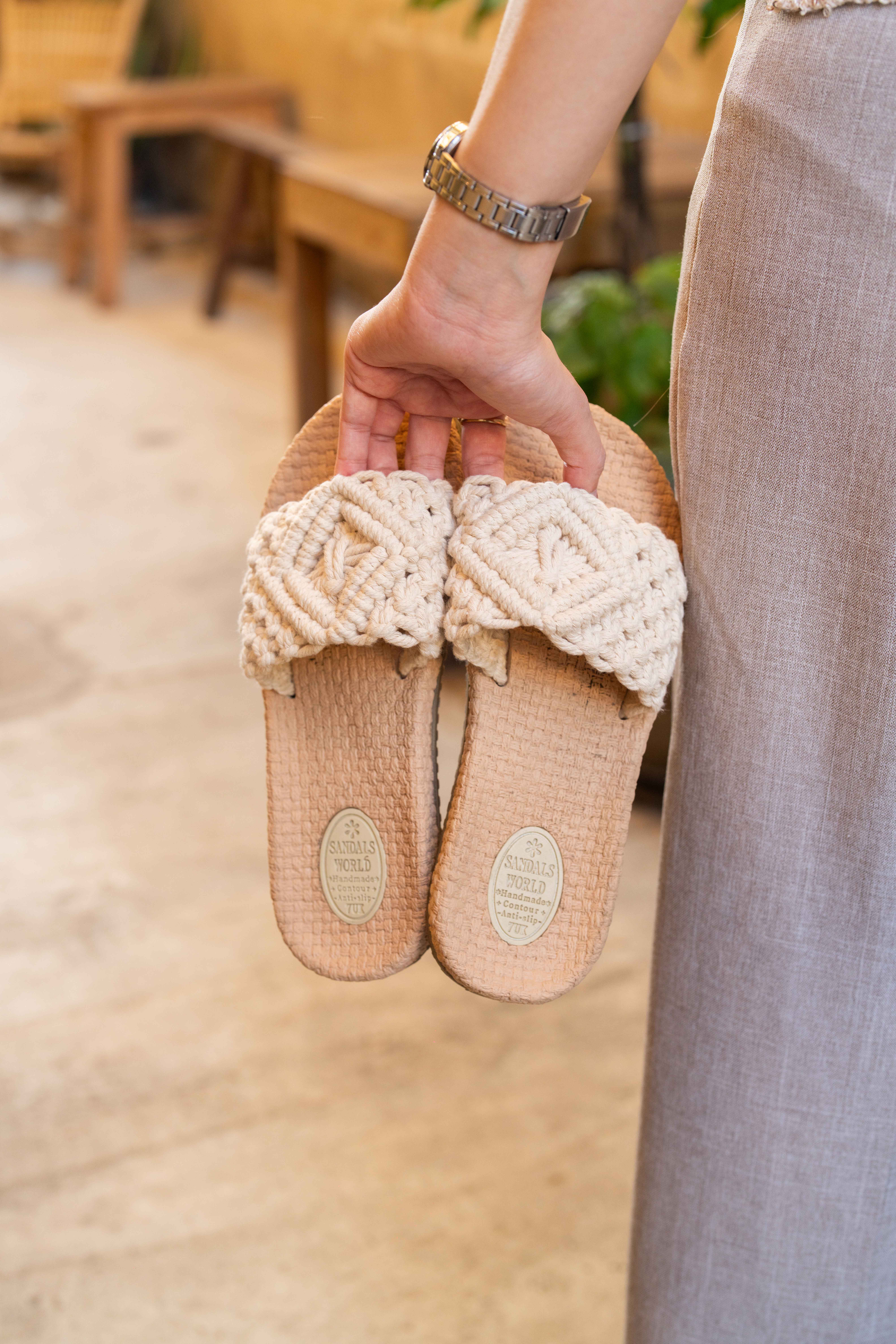
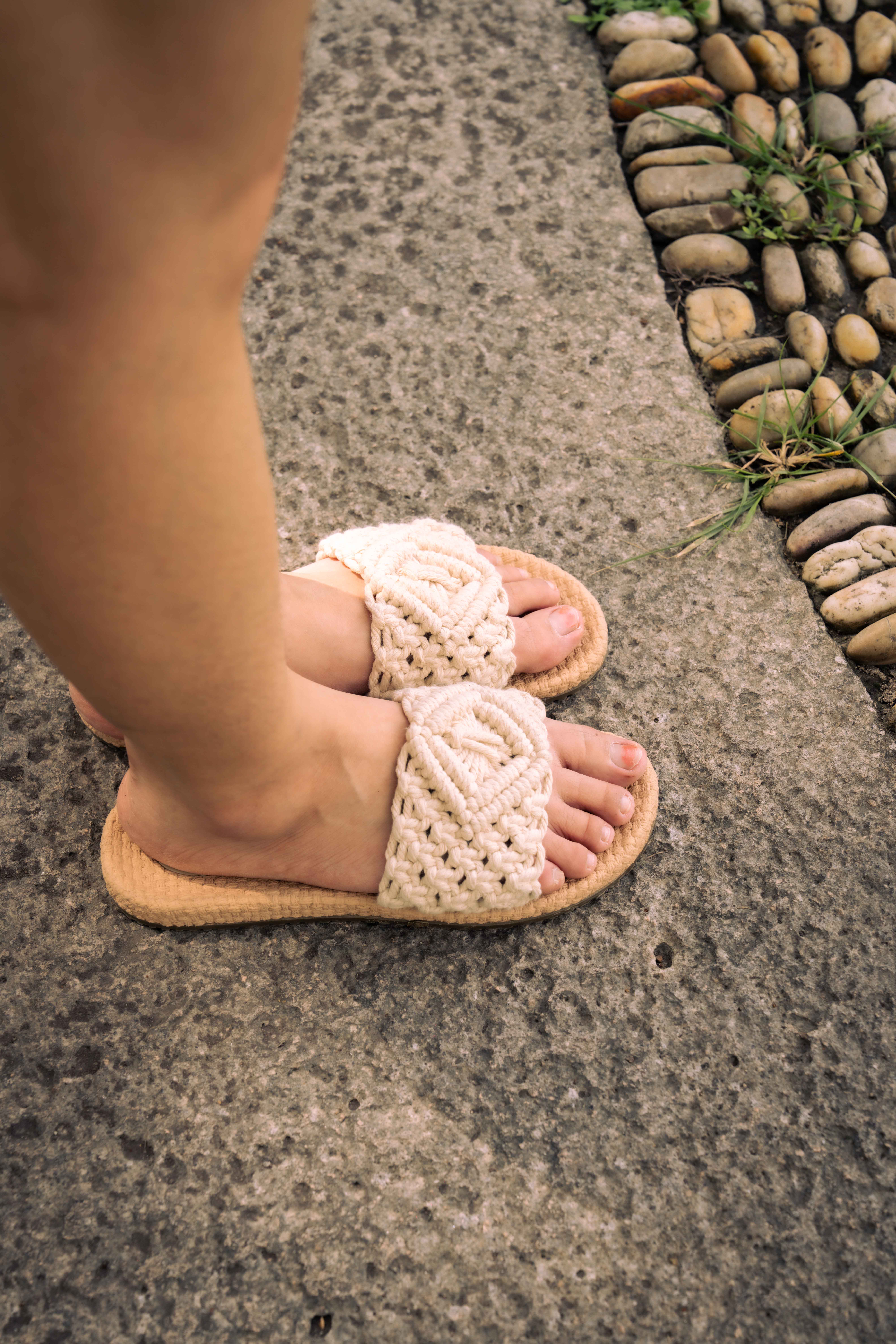
Footwear can carry community craftsmanship, local materials, creative design, and everyday Thai culture around the world. Macramé knots can represent the skills of local artisans. Northern Thai patterns can preserve community memories. Meanwhile, Thai natural rubber and sugarcane-based foam can present a modern image of material innovation.
Still, adding a Thai pattern to sandals does not automatically turn them into Soft Power. A product must attract people, inspire curiosity, and encourage them to learn more about its origin.
When that happens, footwear can move beyond the label “Made in Thailand.” It can become part of a larger category of Sustainable Thai Craft Sandals that communicate Thai culture through beauty, comfort, and responsible production.
Soft Power refers to the ability to influence people through attraction rather than force. It encourages others to appreciate a country’s culture, values, ideas, and way of life.
The Creative Economy Agency, or CEA, explains that Soft Power is a process rather than a cultural object. Therefore, a country cannot create influence simply by exporting traditional products. It needs creativity, technology, communication, and a strong supporting system to turn cultural assets into long-term value (Creative Economy Agency).
For this reason, a sandal becomes Soft Power when it changes how people see Thailand. A customer may admire the skill of a Thai artisan. Another may become curious about the community behind a woven pattern. Someone else may trust Thailand as a source of thoughtful and sustainable design.
Fashion also plays an official role in Thailand’s creative economy. CEA’s 2024 annual report lists design and fashion among Thailand’s targeted creative culture industries (CEA Annual Report 2024).
Therefore, footwear can become more than a commercial product. It can support national identity, creative employment, tourism, and international recognition.
Sandals Can Become Travelling Cultural Media
Sandals have one clear advantage: they travel with people.
A painting may remain on a wall, while a craft object may stay on a shelf. In contrast, footwear appears on streets, at airports, in cafés, at festivals, and across social media.
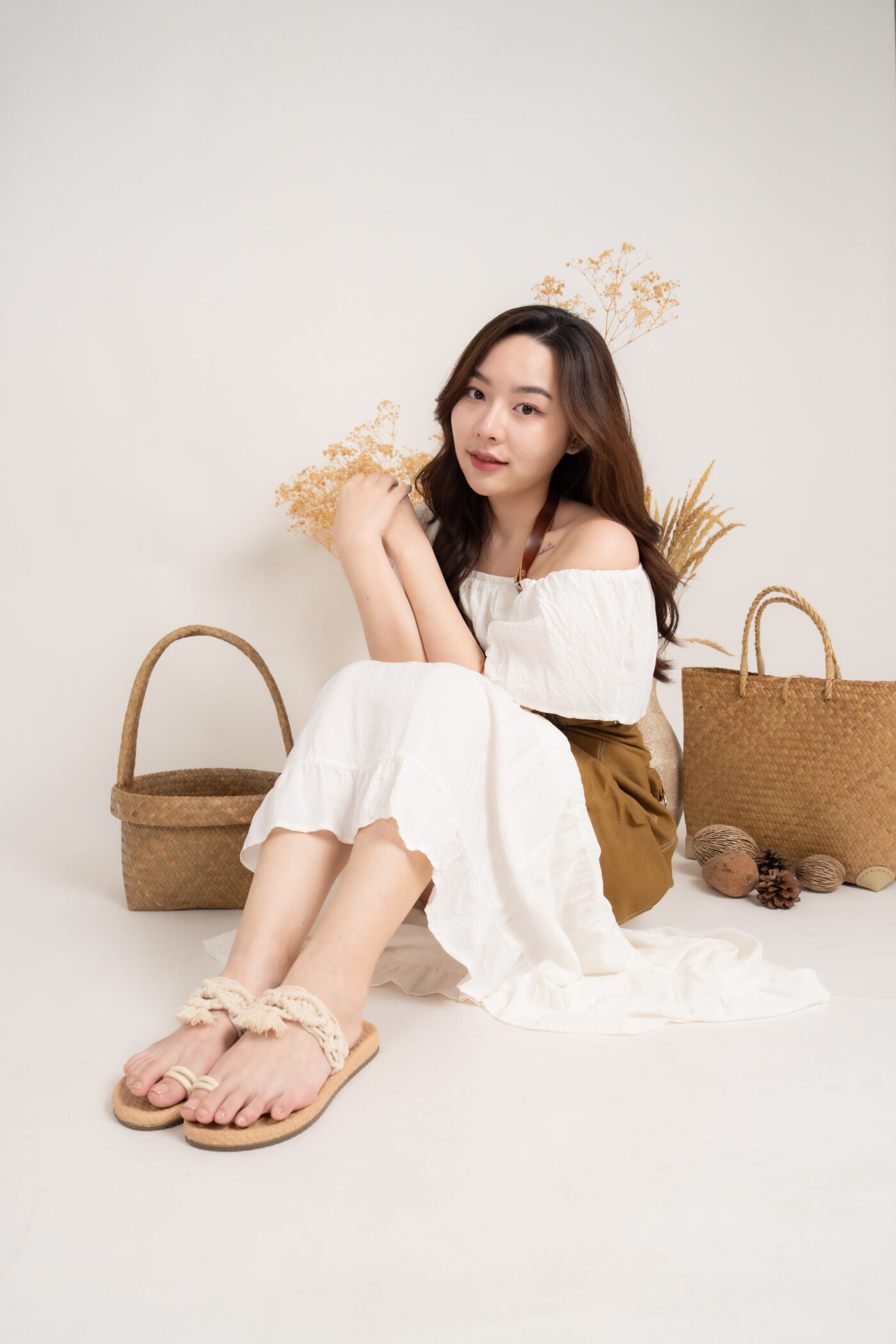
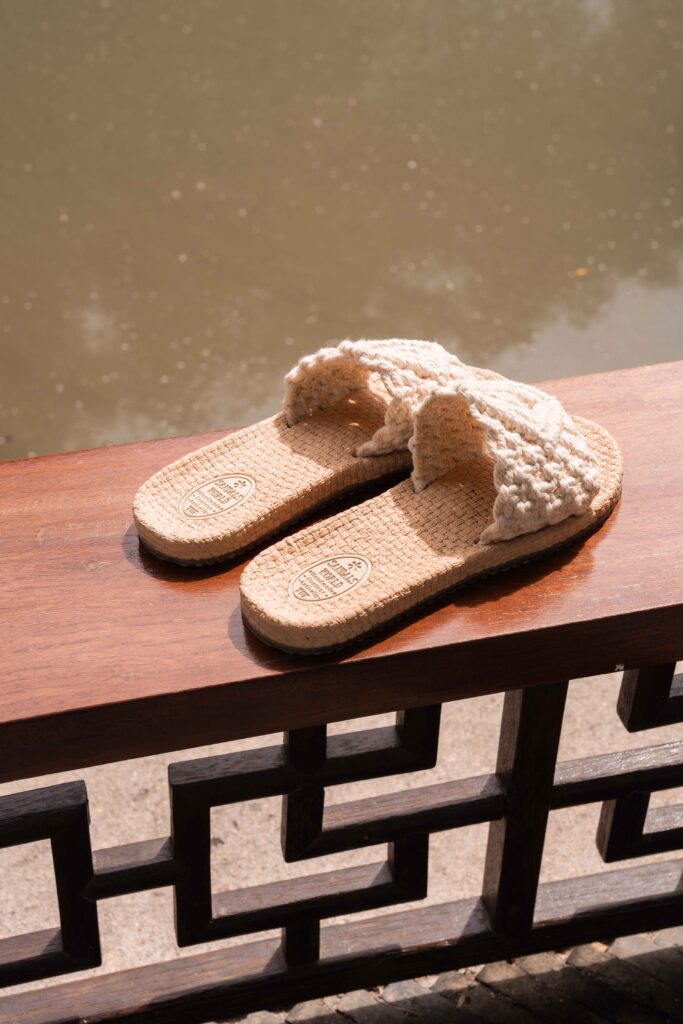
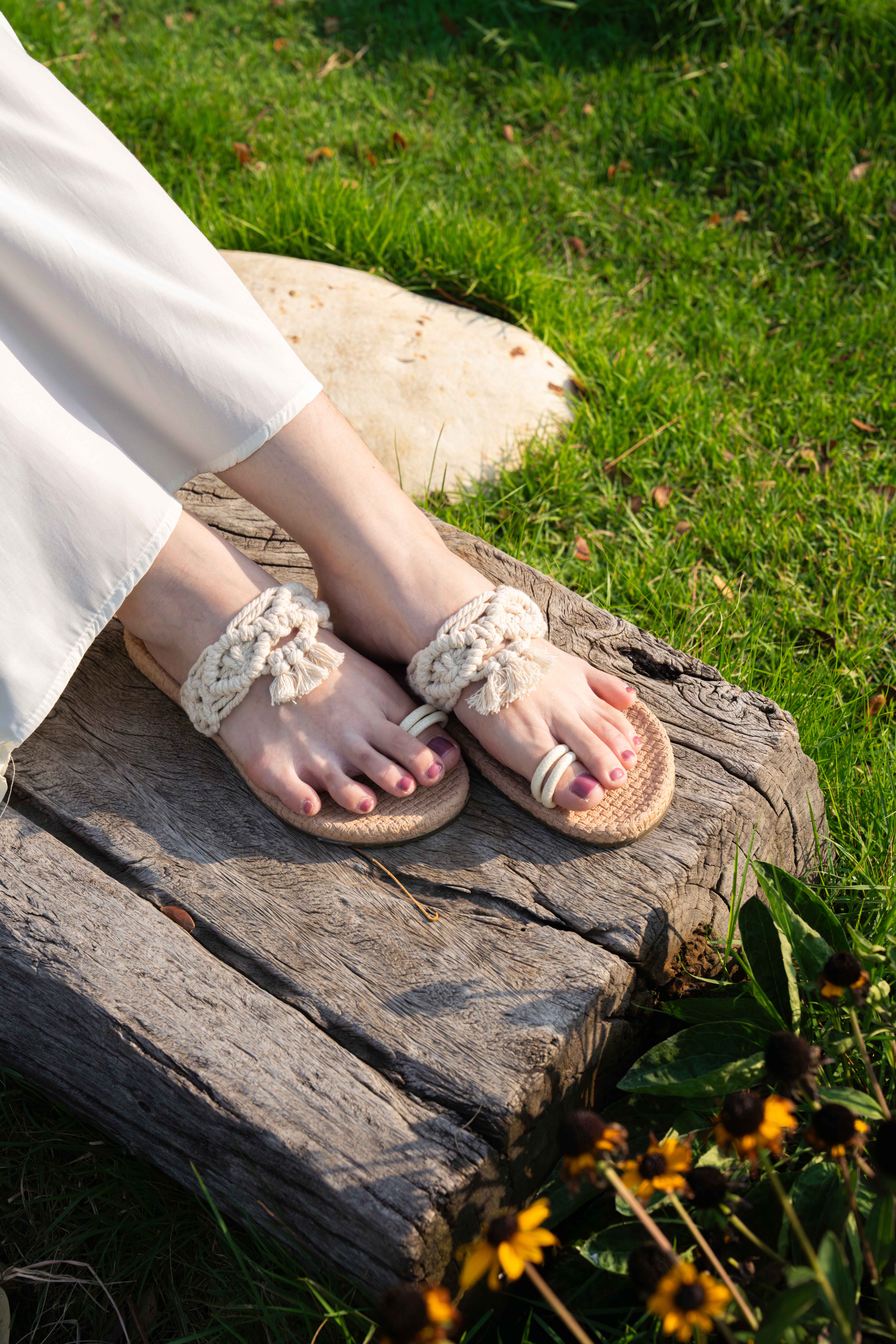
Artistic Handmade Sandals can easily start a conversation. Someone may notice a woven detail and ask where the sandals came from. They may also want to know who made them or what the pattern means.
These small moments create opportunities for cultural influence. Thailand does not need to explain its identity through an official campaign every time. Instead, culture can travel naturally from one person to another.
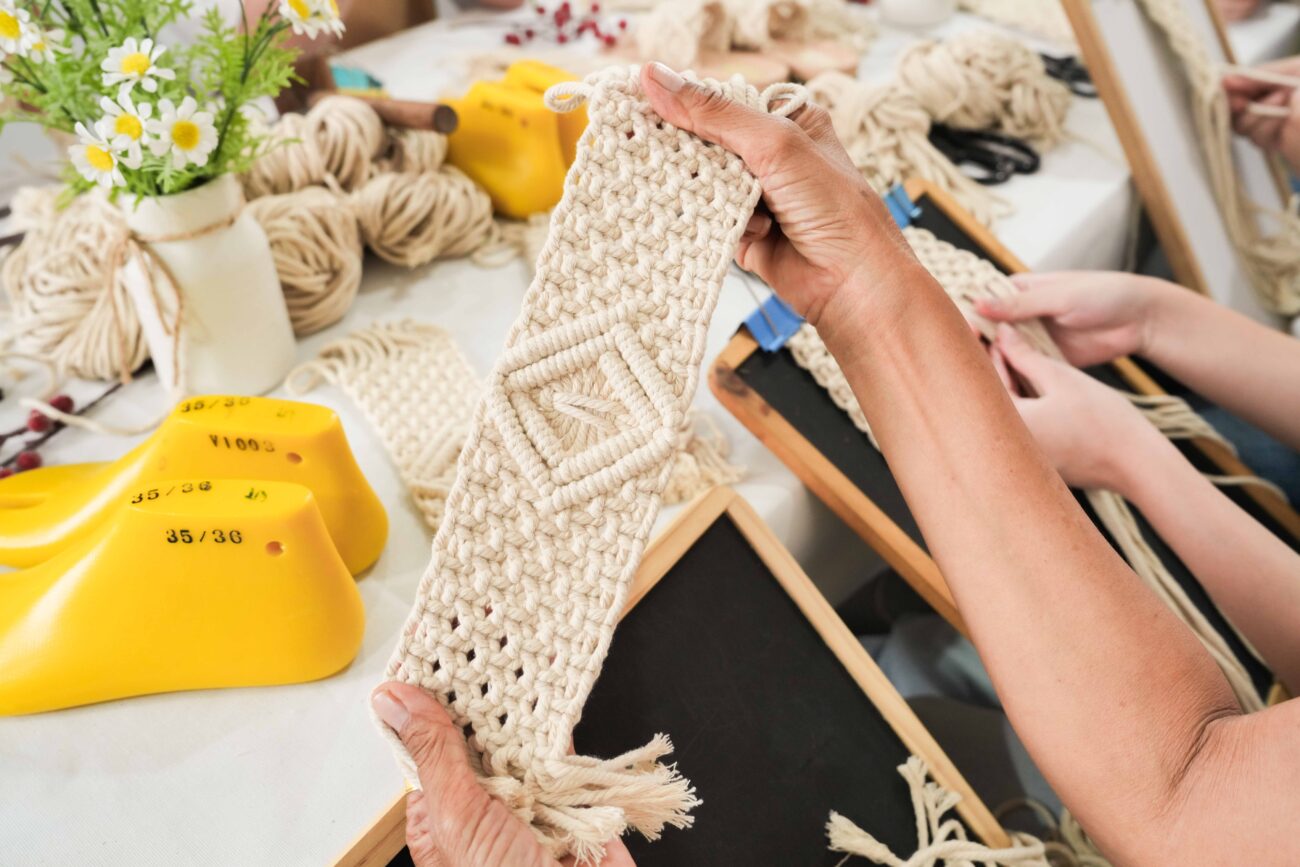
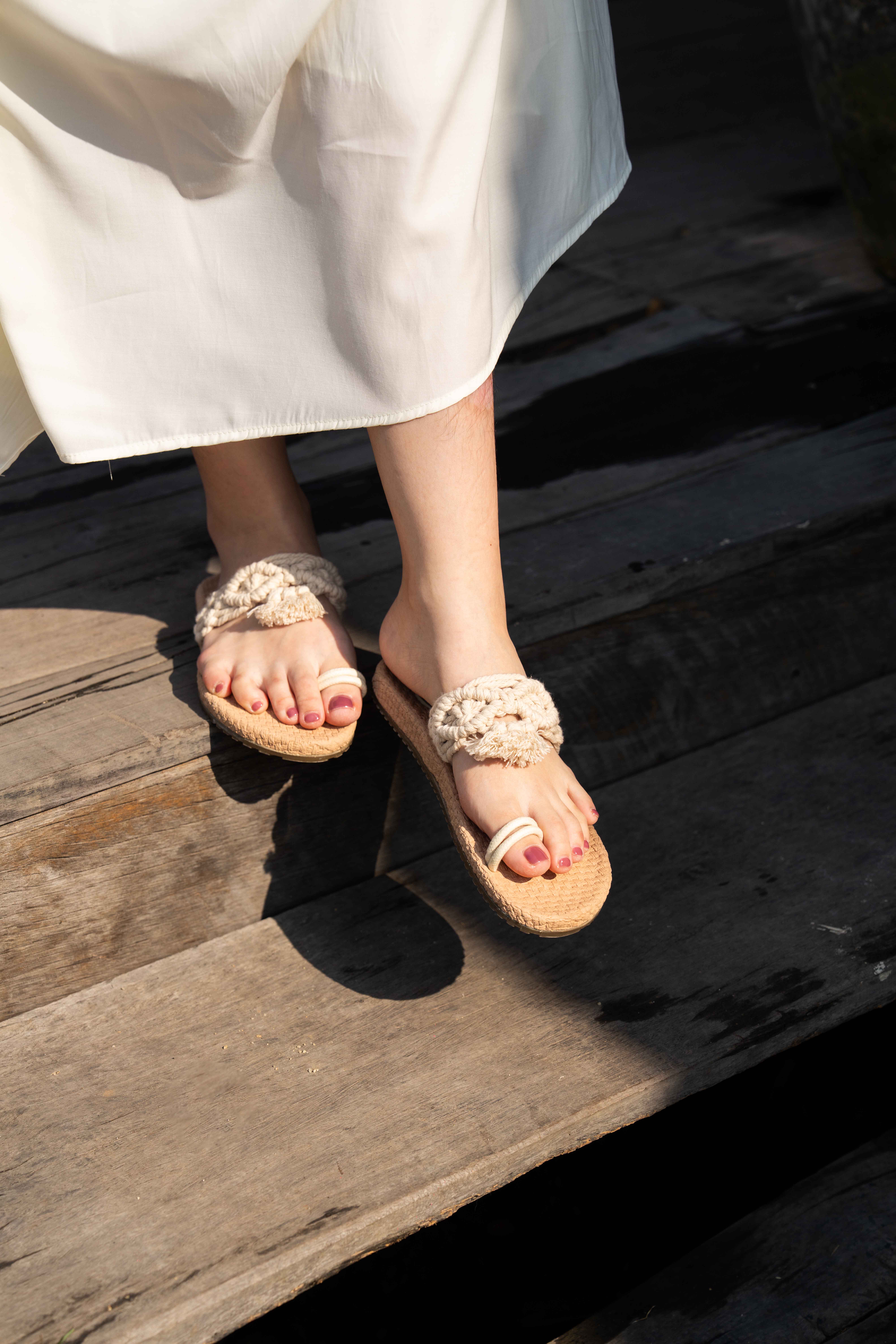
Art & Craft Sandals can function as wearable artworks. Colours, knots, materials, and textures can carry memories of a place. As a result, the wearer experiences Thai culture without entering a museum or reading a history book.
Handmade Work Reveals the People Behind the Product
Mass production can create thousands of identical products. Handmade work, however, carries signs of human decisions.
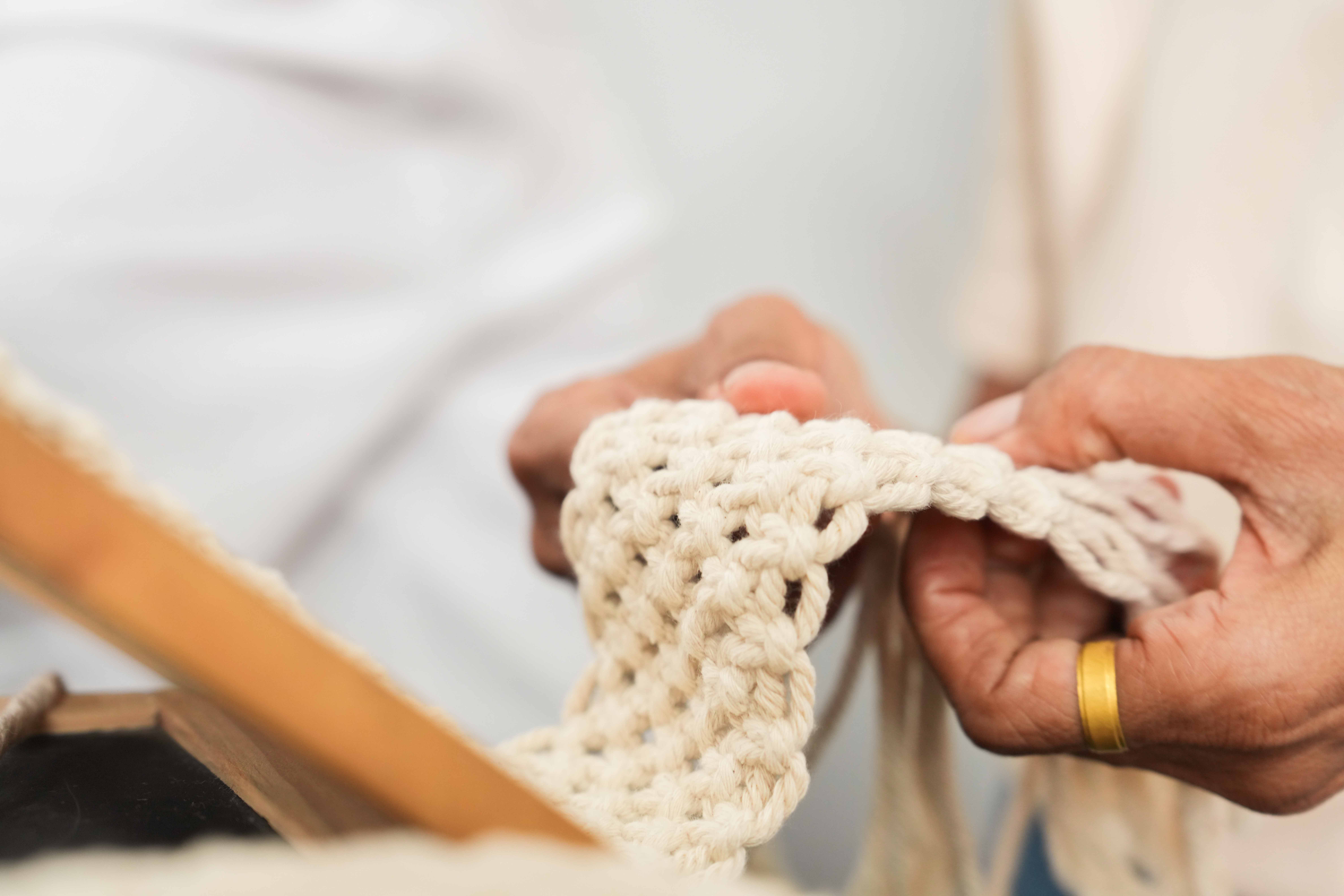
Each artisan controls the tension of a knot, the position of a decorative element, and the balance of different colours. Small variations may appear between pairs. Yet these differences often give handmade sandals their distinctive character.
A customer does not only purchase a beautiful object. They also receive the time, experience, and creative judgment of the maker.
Nevertheless, brands must work with community culture respectfully. They should identify participating communities, explain the origin of each technique, and credit the artisans whenever possible.
Fair compensation also matters. If a brand uses a local pattern without sharing value with its community, the design may become a marketing decoration rather than meaningful cultural collaboration.
By contrast, a fair partnership allows artisans to contribute ideas and develop new skills. It also gives them a voice in how the brand presents their cultural identity.
Traditional Roots Need Contemporary Design
Soft Power cannot depend on preserving culture in an unchanged form forever. Culture must continue to develop if it wants to connect with new generations and international audiences.
Traditional patterns may hold deep meaning within a community. However, customers in another country may not understand that meaning immediately. Designers must act as cultural translators.
For example, a designer can adapt traditional colours for contemporary fashion. They may simplify a pattern, reduce the weight of a handcrafted upper, or adjust the strap structure for daily use.
Good design does not erase the original identity. Instead, it creates a balance between cultural respect and modern function.
Customers should not buy Thailand sandals only because they feature Thai symbols. They should choose them because the footwear looks attractive, feels comfortable, works well, and fits their lifestyle.
At that point, Thai identity becomes part of a desirable product rather than an added decoration.
Comfort Creates a Universal Language
A strong cultural story may attract attention. However, poor comfort can quickly damage the customer’s experience.
Comfort acts as a universal language because everyone understands how it feels to walk in a supportive pair of sandals. Brands do not need to translate that feeling.
Thai footwear designers can study heel position, arch shape, forefoot width, cushioning, flexibility, and strap placement. Moreover, accurate size charts can help international customers choose the correct fit when shopping online.
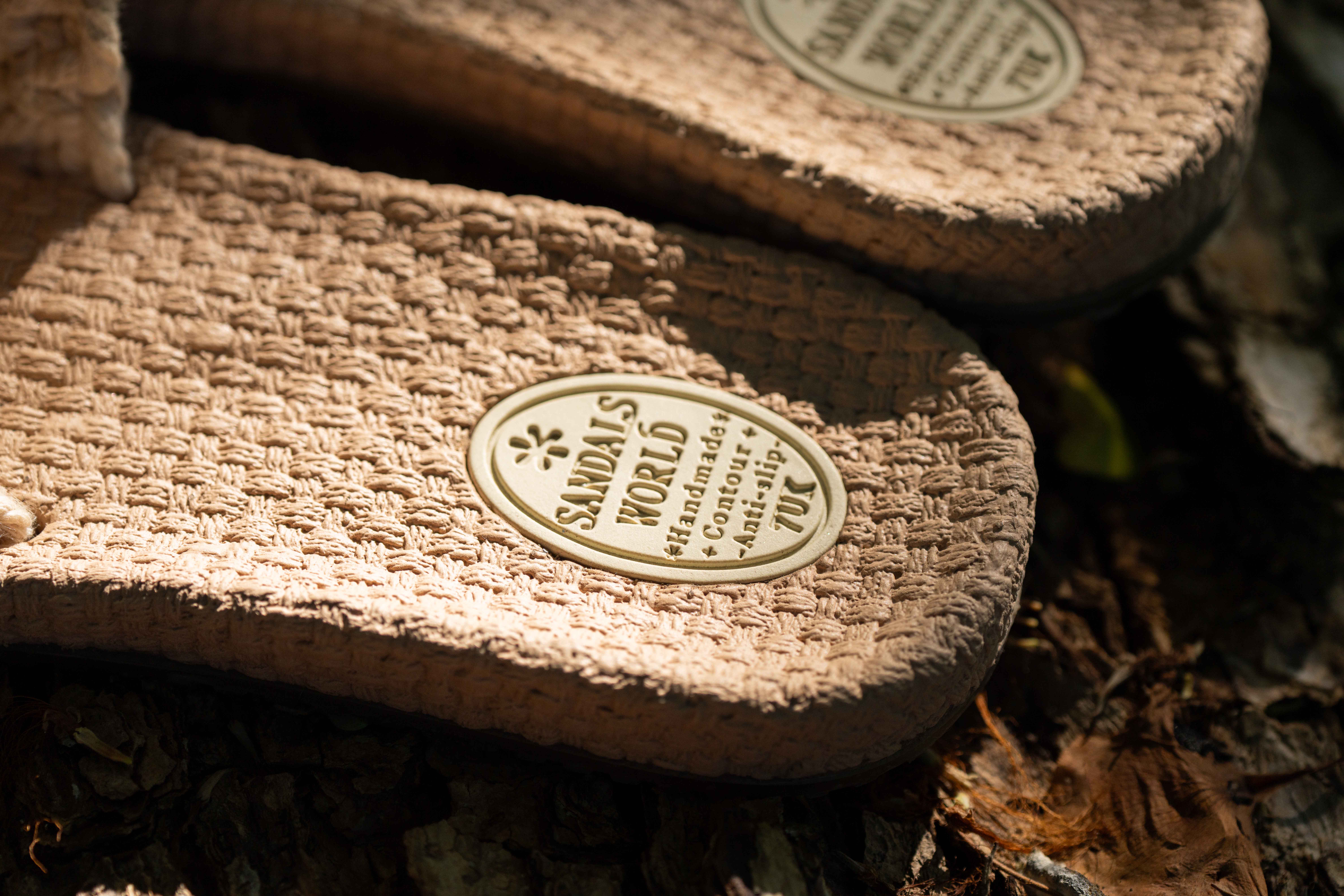
A contoured footbed may increase contact with the foot and improve stability. Meanwhile, lightweight foam can make everyday movement feel easier.
When customers enjoy wearing a product, they will probably wear it more often. Repeated use can also strengthen their emotional connection with the brand and the story behind the product.
Thai Materials Can Present a Modern National Image
Thai Soft Power should not represent the country only through its past. It can also present Thailand as a source of innovation and sustainability.
Thai natural rubber offers a useful example. The material connects agriculture with industrial design. Footwear makers can use rubber to create flexible outsoles that help provide grip and durability.
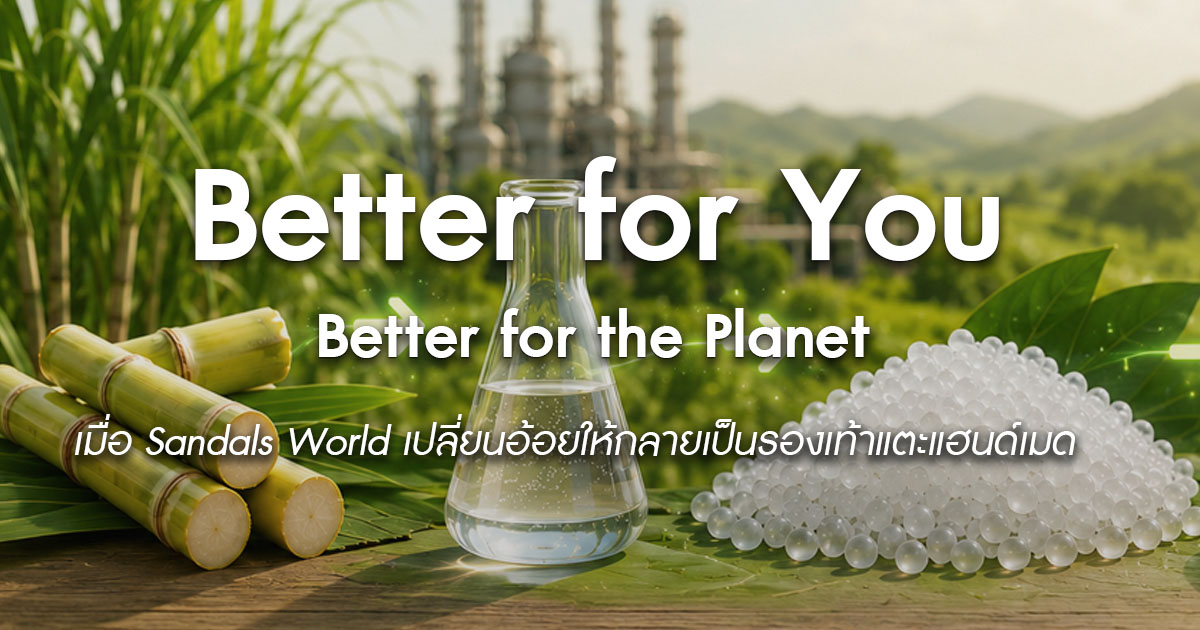
Sugarcane-based BIO EVA adds another layer to the story. Producers use bio-based ethylene from sugarcane to replace part of the fossil-derived material in conventional EVA. Consequently, this innovation can reduce dependence on petroleum.
A combination of Thai natural rubber and BIO EVA allows a brand to connect local resources with modern material technology. This approach shows that Thai design can respect cultural roots while responding to global environmental concerns.
However, brands must support environmental claims with evidence. A test such as ASTM D6866 can measure bio-based carbon content, but it does not prove the carbon footprint of a finished sandal.
Likewise, bio-based does not always mean biodegradable or compostable. A brand should only use those terms when the exact material passes an appropriate test.
Clear communication supports sustainability better than exaggerated promises. More importantly, transparency can build international trust in Thai products.
Soft Power Should Return Value to Communities
International sales alone do not prove that a Soft Power strategy has succeeded. The benefits should also reach the people who provide the cultural knowledge and craft skills.
A responsible footwear ecosystem can create work, improve artisan income, support skill development, and inspire younger generations to continue local crafts.
Thailand’s OFOS fashion development direction highlights design skills, sustainable production, digital marketing, international brand positioning, and circular economic growth. These priorities show that Soft Power requires skilled people and strong business systems, not cultural imagery alone (OFOS Fashion).
Therefore, brands should measure more than sales. They can track the number of participating artisans, income returned to communities, training opportunities, and the length of each partnership.
Long-term collaboration matters because cultural value cannot grow through one short campaign. Communities need continuity, fair planning, and opportunities to develop alongside the market.
Sandals Can Connect Fashion with Creative Tourism
Modern travellers often want more than beautiful photographs. Many visitors want to meet local people, learn practical skills, and understand the culture of a destination.
Footwear can connect these interests through creative tourism. For example, a visitor might join a macramé workshop, learn about traditional weaving, explore a rubber-growing community, or customise a pair of sandals.
The finished product would serve several purposes. It would become useful footwear, a travel souvenir, and a personal memory of Thailand.
Moreover, the visitor could share that experience online. One workshop could then reach a much larger audience through photos, videos, and personal recommendations.
This type of Soft Power feels natural because visitors participate in the story instead of simply receiving a sales message.

What Could Weaken Thai Footwear Soft Power?
A cultural product can lose its influence when storytelling becomes stronger than the product itself. Therefore, Thai footwear brands should avoid several common mistakes:
- Using too many Thai symbols until the product becomes difficult to wear
- Presenting a community story without explaining who receives the benefits
- Making environmental claims without supporting evidence
- Ignoring international sizing and different foot shapes
- Allowing quality to decline when production increases
- Following every trend until the brand loses its identity
- Treating artisans as background images rather than creative partners
Soft Power requires consistency. People form a lasting impression through repeated experience

Every Step Can Carry Thailand Further
Sandals become Soft Power when people see more than an attractive product. They should also recognise the artisan’s skill, the community’s identity, the quality of Thai materials, and the creativity behind the design.
The goal is not to make international customers buy handmade products because they feel sorry for local makers. Instead, customers should choose them because they admire the design, trust the quality, enjoy the comfort, and value the story.
Sandals World can connect handmade craftsmanship with innovation. It can also connect Thai culture with contemporary lifestyles and return value to local communities.
When every part works together, a pair of sandals can travel much further than the distance beneath the wearer’s feet.
It can carry the image of Thailand into the world—gently, memorably, and meaningfully.
How Can Sandals World Build Thai Soft Power?
Sandals World has the opportunity to act as more than a footwear brand. It can become a creative platform that connects artisans, communities, designers, material producers, and handmade sandal brands across Thailand.
First, Sandals World can document the identity of each product. Information may include the maker, community, technique, material origin, care instructions, and repair options.
Next, the brand could make this information available through a QR code or Digital Product Passport. International customers could then discover the complete story by scanning the product.
Quality standards will also support international growth. Sandals World can develop shared guidelines for comfort, sizing, material communication, durability, and environmental claims. At the same time, each partner brand can keep its individual style.
Digital storytelling should introduce the people behind the products. Interviews, workshop videos, community maps, and bilingual articles can help customers understand the value behind each pair.
In addition, Sandals World can connect online content with real experiences. Workshops, community visits, pop-up events, and international exhibitions can turn a product story into a cultural relationship.
Through these actions, Sustainable Thai Craft Sandals can become more than an SEO keyword. The term can represent a recognisable category of contemporary Thai footwear.
𝙎𝙖𝙣𝙙𝙖𝙡𝙨 𝙒𝙤𝙧𝙡𝙙 𝙞𝙨 𝙏𝙝𝙖𝙞𝙡𝙖𝙣𝙙’𝙨 𝙡𝙖𝙧𝙜𝙚𝙨𝙩 𝙝𝙪𝙗 𝙤𝙛 𝙖𝙧𝙩𝙞𝙨𝙩𝙞𝙘 𝙝𝙖𝙣𝙙𝙢𝙖𝙙𝙚 𝙨𝙖𝙣𝙙𝙖𝙡𝙨


ABOUT THE CONTENT CREATOR
BUNTHARIK INSIRI
(Content Writer)
Sandals World | Art & Craft Sandals | Sustainable Thai Craft Sandals Tags: handmade sandals, sandals world, foot health,
Thailand sandals, artistic handmade sandals, art & craft sandals, plantar fasciitis, bunion, sustainable sandals and BIO EVA ,SW GREEN

Are Your Sandals Harming the Planet Before You Even Wear Them? The BIO EVA Revolution
Post Views: 11 What if your favorite pair of sandals had already left an environmental [...]
Oct

The Ocean Is Heating Faster Than Ever: Why Low-Carbon Design Must Start Now
Post Views: 8 What if the ocean we know today no longer looks the same [...]
Oct
If Local Art Disappears, What Will the World Remember? From Mae Hong Son to D NICE MARKET with Sandals World
Post Views: 18 Imagine a future where traditional patterns disappear from local communities. Craft techniques [...]
Oct

VPADA Handmade Sandals: Where Thai Craft Blooms Into Modern Style
Post Views: 10 “Walk with nature, step with grace.” What if a small woven flower, [...]
Oct

Plastic Waste and Sustainable Sandals: Better Materials, Better Truth, Better Steps
Post Views: 20 Plastic has transformed modern life. Its lightweight structure, versatility, and low cost [...]
Oct

What’s Really Under Your Feet? From Plastic and EVA Foam to BIO EVA SW GREEN
Post Views: 20 Plastic is everywhere. We drink from it, carry food in it, build [...]
Sep
Only 9% Gets Recycled: Are We Solving the Plastic Crisis the Wrong Way?
Post Views: 18 Every time we drop a plastic bottle into a recycling bin, we [...]
Sep

Bangkok Flood 2026: Why Bangkok Flooded So Severely | Sandals World
Post Views: 29 At the end of September 2026, one question was on the minds [...]
Sep
SANDALS WORLD GUIDE

Artistic Handmade Sandals
BY
SANDALS WORLD THAILAND
The Largest Hub
of Artistic Handmade Sandals in Thailand.