

Brand Stories, COMMUNITY, SANDALS JOURNEY, Sandals World News, Sustainability
SW GREEN: Sustainable Thai Craft Sandals from Sugarcane
Aug
What if a pair of sandals could carry a story from a sugarcane field to a local artisan’s hands—and finally to your feet?
This idea lies at the heart of SW GREEN by Sandals World. The collection combines sugarcane-based BIO EVA foam, Thai natural rubber, community craftsmanship, and foot-friendly design. Together, these elements create Sustainable Thai Craft Sandals that connect everyday comfort with cultural and environmental value.
Modern consumers no longer choose footwear by appearance alone. They also want to know where materials come from, who makes the product, how long it will last, and what impact it may leave behind.
Sandals World responds to these questions through three main values: beauty created by local artisans, materials that reduce reliance on fossil resources, and practical comfort for daily wear. As a result, each pair offers more than fashion. It carries a story of Thai creativity, material innovation, and responsible design.
For many years, people viewed sandals as simple footwear for the beach, home, or casual activities. Today, however, sandals have become part of a much wider conversation about responsible consumption.
Fast production can make footwear affordable and widely available. Yet it may also encourage short product cycles, excessive consumption, and growing waste. When a product wears out quickly or feels uncomfortable, people often replace it instead of repairing it.
A more thoughtful approach begins with better questions. Can the maker choose renewable materials? Can local artisans participate in production? Will people enjoy wearing the product long enough to justify the resources behind it?
SW GREEN explores these questions by combining modern material technology with handmade techniques. This approach positions Sandals World within a growing movement toward products that balance beauty, function, culture, and sustainability.
What Is BIO EVA?
EVA stands for Ethylene Vinyl Acetate. Footwear manufacturers often use this material for midsoles and footbeds because it offers flexibility, cushioning, and a lightweight feel.
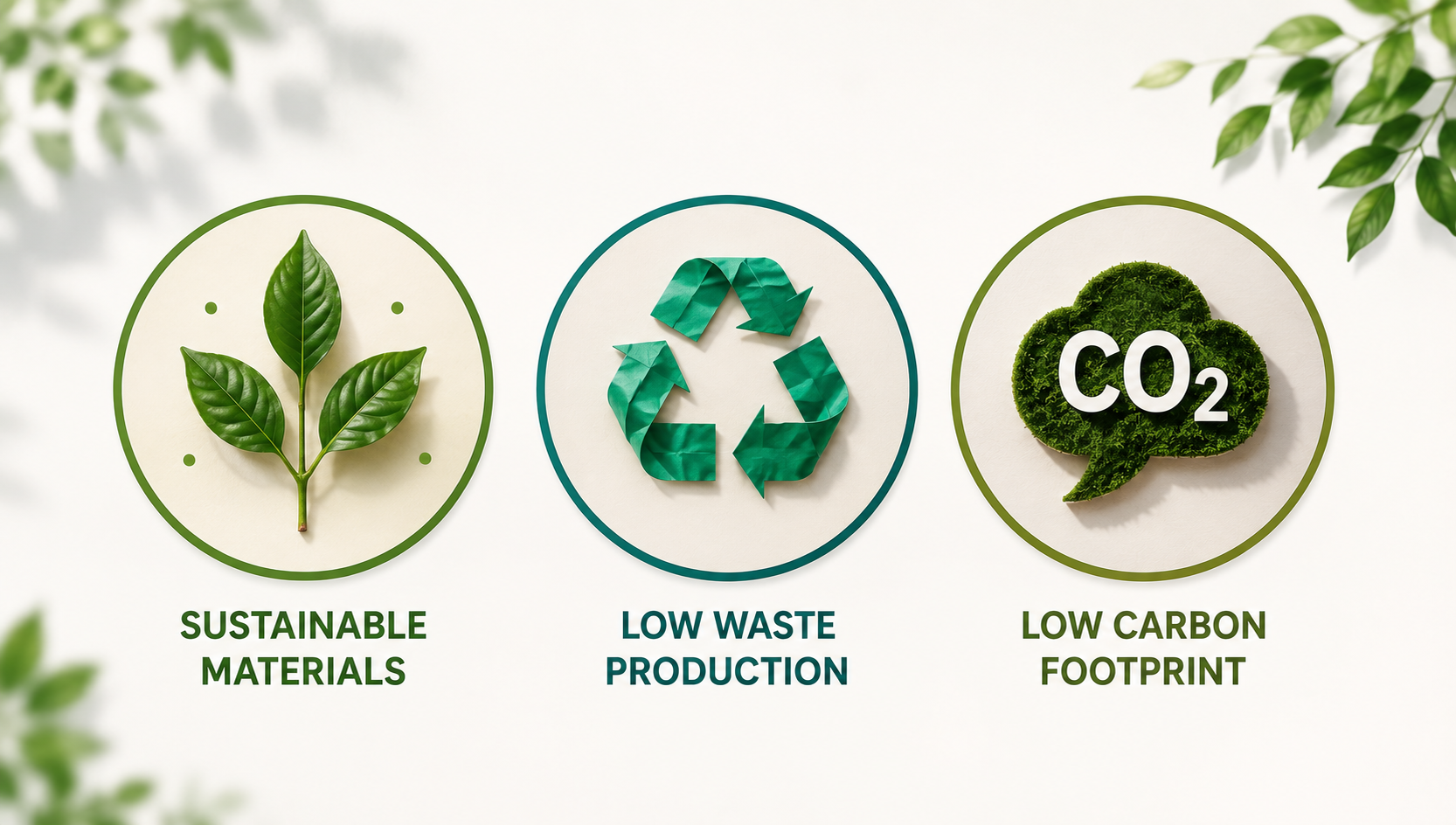
Conventional EVA normally uses ethylene derived from petroleum. In contrast, bio-based EVA replaces part of that fossil-derived ethylene with ethylene made from a renewable biological source, such as sugarcane.
The process begins when producers turn sugarcane into bioethanol. They then convert the bioethanol into bio-based ethylene. Finally, manufacturers combine that ethylene with other components to produce EVA foam.
Therefore, the phrase “BIO EVA made from sugarcane” does not necessarily mean that the finished foam contains 100% sugarcane. It means that renewable plant-based carbon replaces part of the fossil-based carbon in the material.
Bio-based content can vary according to the formulation and material grade. For example, some commercial bio-based EVA grades contain approximately 45–80% bio-based material when measured under ASTM D6866, according to Braskem’s technical information.


How Does Sugarcane Become a Sandal Footbed?
The journey from a sugarcane field to a pair of handmade sandals involves several steps.
First, sugarcane grows by using sunlight, water, and carbon dioxide from the atmosphere. A producer then processes the harvested sugarcane into bioethanol. Next, the production facility converts bioethanol into bio-based ethylene. Finally, a material manufacturer uses that ethylene to produce BIO EVA foam.
Sandals World uses SW GREEN BIO EVA in the cushioning area of its footwear, according to the brand’s published material information. The foam provides the lightweight and flexible properties that people expect from everyday sandals while reducing dependence on fossil-based raw materials.
Sugarcane can grow again after each agricultural cycle, while petroleum takes millions of years to form. This renewable quality gives bio-based materials an important advantage. However, the total environmental impact still depends on farming practices, energy use, transport, production efficiency, durability, and end-of-life management.
BIO EVA represents one useful step toward sustainability, but no single material can solve every environmental challenge.


1. Beauty Created by Local Communities
The first strength of SW GREEN comes from the hands and imagination of local artisans.
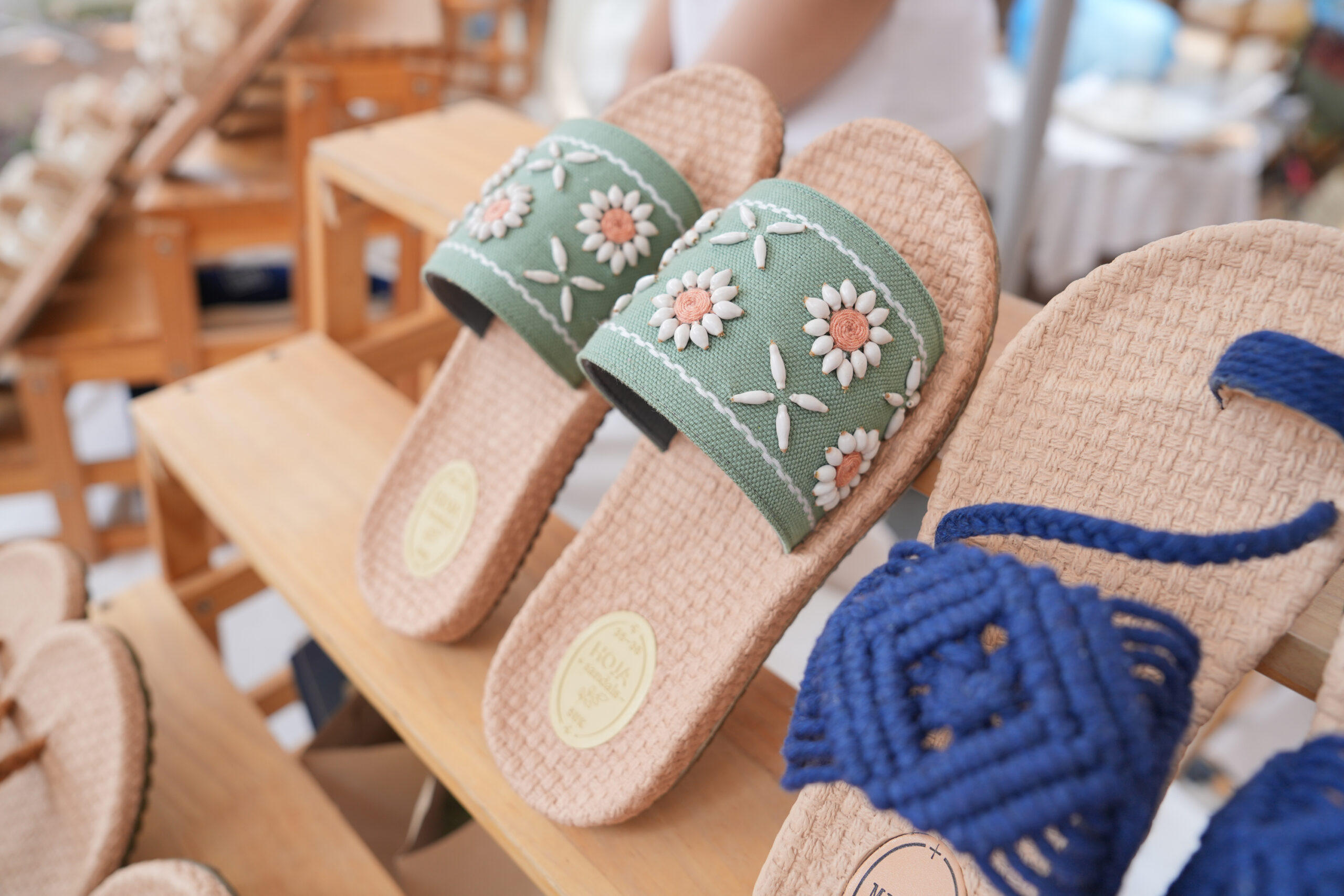
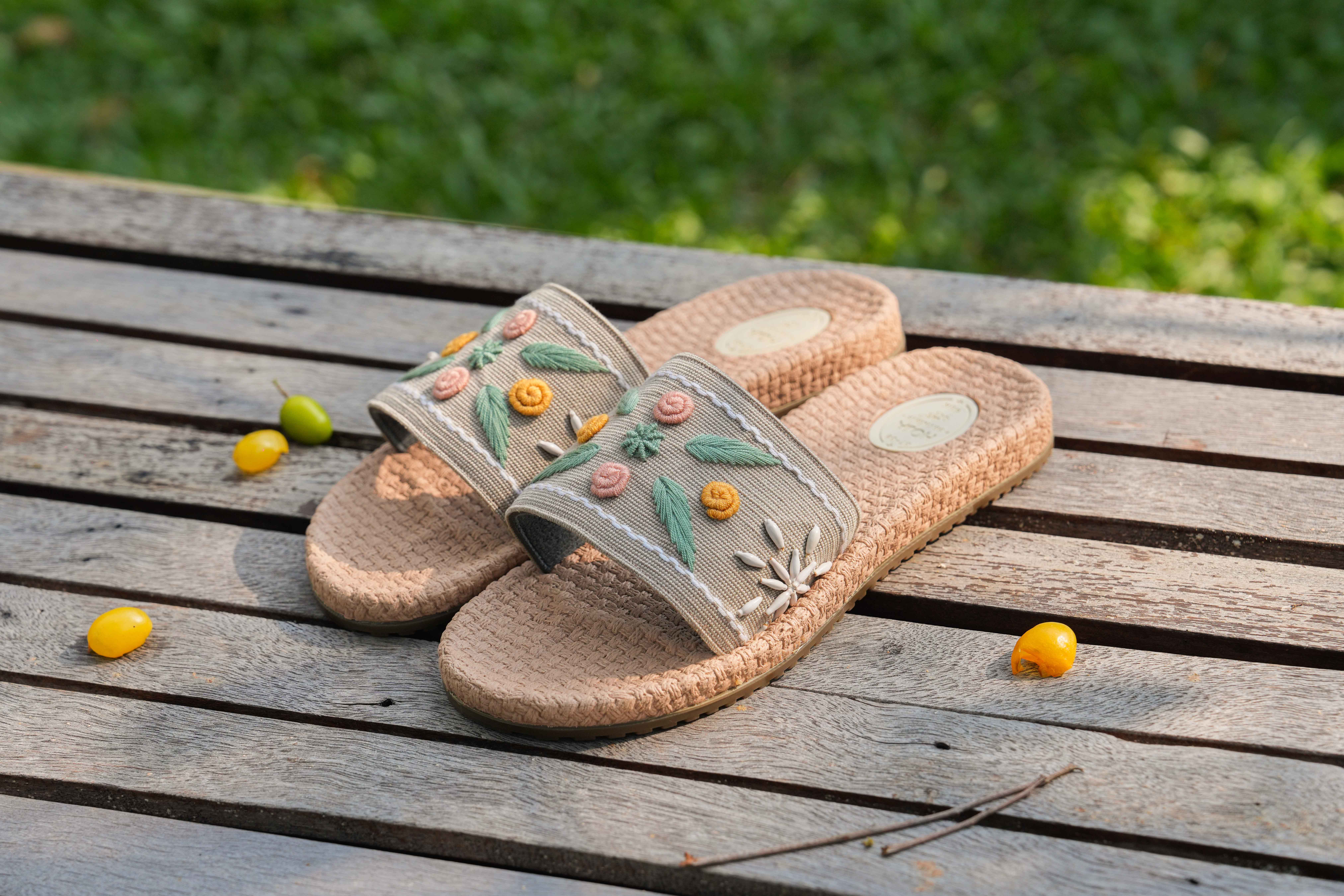
Sandals World draws inspiration from macramé, crochet, handwoven textures, and traditional Northern Thai patterns. Artisans use knots, loops, colors, and carefully controlled tension to create details that machines cannot copy perfectly.
Small variations may appear from one pair to another. Instead of treating these differences as defects, buyers can view them as signs of authentic handmade work. Each knot reflects the artisan’s touch, experience, and creative judgment.
This human quality gives handmade sandals a distinct identity. It also transforms footwear into a small, wearable space for cultural expression.
Artistic Handmade Sandals allow customers to carry local colors, patterns, and stories wherever they go. Meanwhile, Art & Craft Sandals bring traditional techniques into modern life rather than limiting them to exhibitions or decorative objects.
However, meaningful community design requires more than borrowing a traditional pattern. A responsible brand should recognise the makers, explain the cultural origin of the designs, and provide fair value to participating artisans. Transparency protects cultural identity while helping customers understand the people behind the product.
2. Sugarcane-Based Foam Meets Thai Natural Rubber
A sandal needs different materials for different functions. The cushioning layer should feel light and flexible, while the bottom layer must handle friction and contact with the ground.
SW GREEN combines BIO EVA foam with Thai natural rubber. The BIO EVA forms the soft, lightweight foundation beneath the foot. In contrast, the rubber outsole adds flexibility, durability, and traction.
This combination connects two forms of innovation. Sugarcane-based foam introduces renewable biological content, while natural rubber connects the product to one of Thailand’s important agricultural resources.
The material story also strengthens the identity of Thailand sandals in the international market. Thai footwear does not need to compete through low prices alone. Instead, brands can highlight local resources, specialised craftsmanship, original design, and traceable production.
Nevertheless, material claims should remain specific. If a product uses natural rubber, the brand should provide supplier documentation or test results that confirm its composition. Clear evidence turns an attractive marketing message into lasting consumer trust.
3. Easy Comfort Through a Contoured Footbed
Environmental responsibility only creates value when people continue using the product. Even the most innovative sandal will not reduce waste if the owner finds it uncomfortable and stops wearing it.
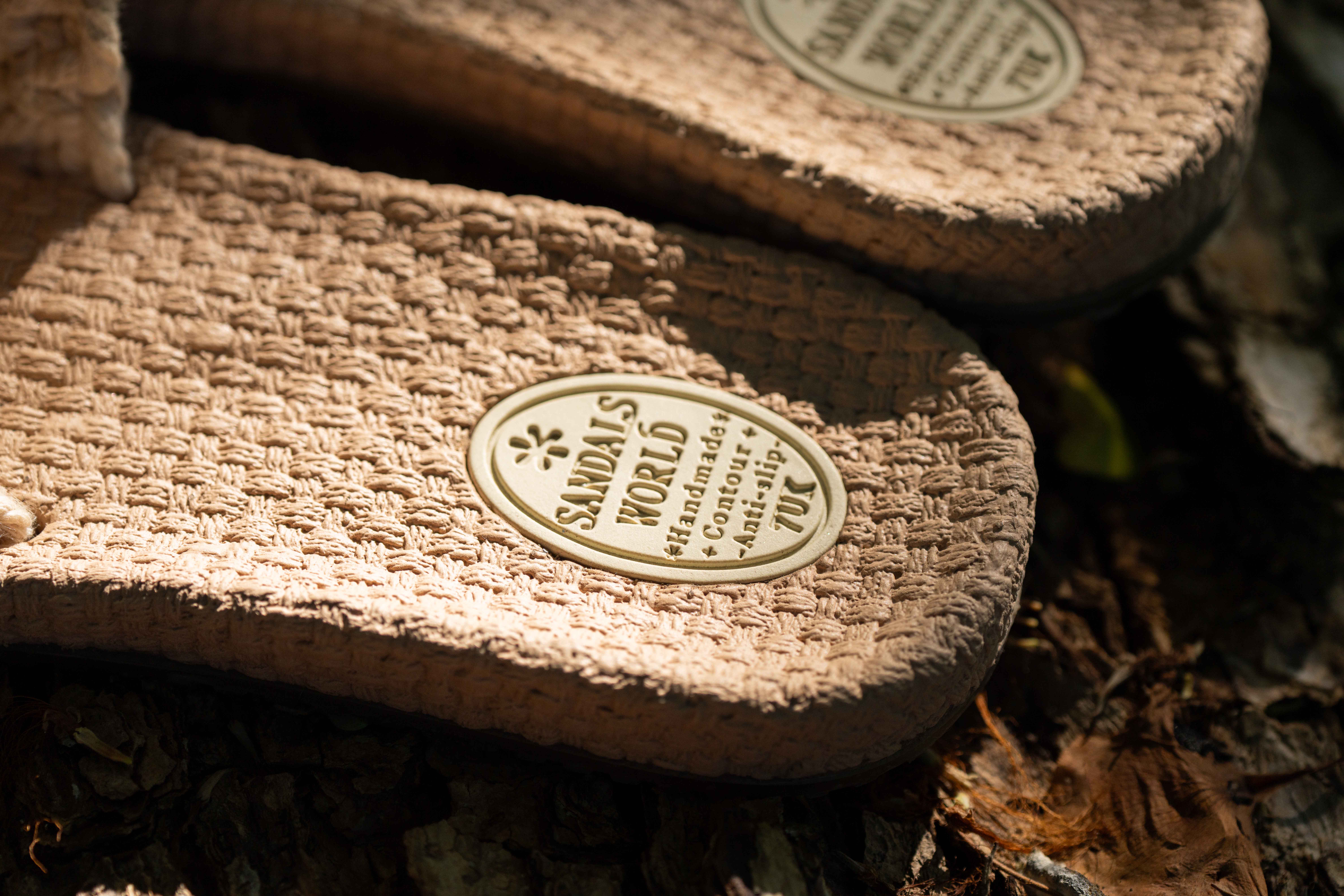
For this reason, SW GREEN focuses on ease of use as well as material selection. Its contoured footbed follows key areas of the foot, including the heel, arch, and forefoot.
A well-shaped footbed increases contact between the foot and the sandal. It can also help distribute pressure more evenly and keep the foot in a stable position. Meanwhile, flexible BIO EVA reduces the hard feeling that people may experience with flat or rigid soles.
The Thai rubber outsole also helps create traction. However, a brand should only use a formal “slip-resistant” claim when a product-specific test supports it. Grip can change according to the rubber formula, tread pattern, water, contaminants, and floor type.
The ISO 13287 footwear test, for example, evaluates slip resistance under controlled conditions. Until a model passes an appropriate test, wording such as “designed to enhance grip” offers a more accurate description.
Likewise, a contoured footbed should not automatically carry medical claims. Comfort-focused design may support the natural shape of the foot, but treating pain or correcting a foot condition requires separate clinical evidence.
Does ASTM D6866 Prove That a Product Is Low Carbon?
ASTM D6866 measures the proportion of modern biological carbon in a material through radiocarbon analysis. In simple terms, the test can distinguish recently renewable carbon from ancient fossil carbon.
This standard can confirm that part of a BIO EVA formulation comes from biomass. However, it does not measure the complete carbon footprint of a sandal. It also does not confirm product performance, biodegradability, compostability, or overall environmental impact. ASTM International explains this testing purpose in its guidance.
Therefore, a brand should not rely on ASTM D6866 alone to claim that an entire pair of footwear has a low carbon footprint.
A complete carbon claim requires a Life Cycle Assessment, or LCA. The assessment should examine raw materials, energy, manufacturing, transport, packaging, product life, and end-of-life treatment. Standards such as ISO 14040 provide a recognised framework for this process.
Some BIO EVA suppliers have published LCAs that show a lower cradle-to-gate carbon footprint than fossil-based EVA. However, Sandals World should only apply those figures when the supplier, material grade, data boundaries, and chain of custody match the actual SW GREEN product.
This level of accuracy does not weaken the sustainability story. On the contrary, transparent claims can make it more credible.

Bio-Based Does Not Always Mean Biodegradable
Consumers often assume that a plant-based product will naturally disappear after disposal. Yet three common environmental terms have different meanings.
“Bio-based” means that a product contains material from a biological and renewable source. “Biodegradable” means that microorganisms can break down the material under specified conditions. “Compostable” means that the material meets defined requirements for decomposition in a composting system.
As a result, sugarcane-based BIO EVA does not automatically biodegrade or turn into compost. The exact formulation must pass a relevant test before a brand can make either claim.
A safer and more accurate message would state that SW GREEN BIO EVA uses renewable sugarcane-based content to reduce reliance on fossil resources. This wording gives consumers useful information without promising an unsupported environmental outcome.
Can Handmade Production Support a Circular Economy?
A linear economy follows a simple pattern: take resources, make a product, sell it, use it, and throw it away. A circular economy aims to keep products and materials valuable for longer through maintenance, repair, reuse, refurbishment, and recycling.
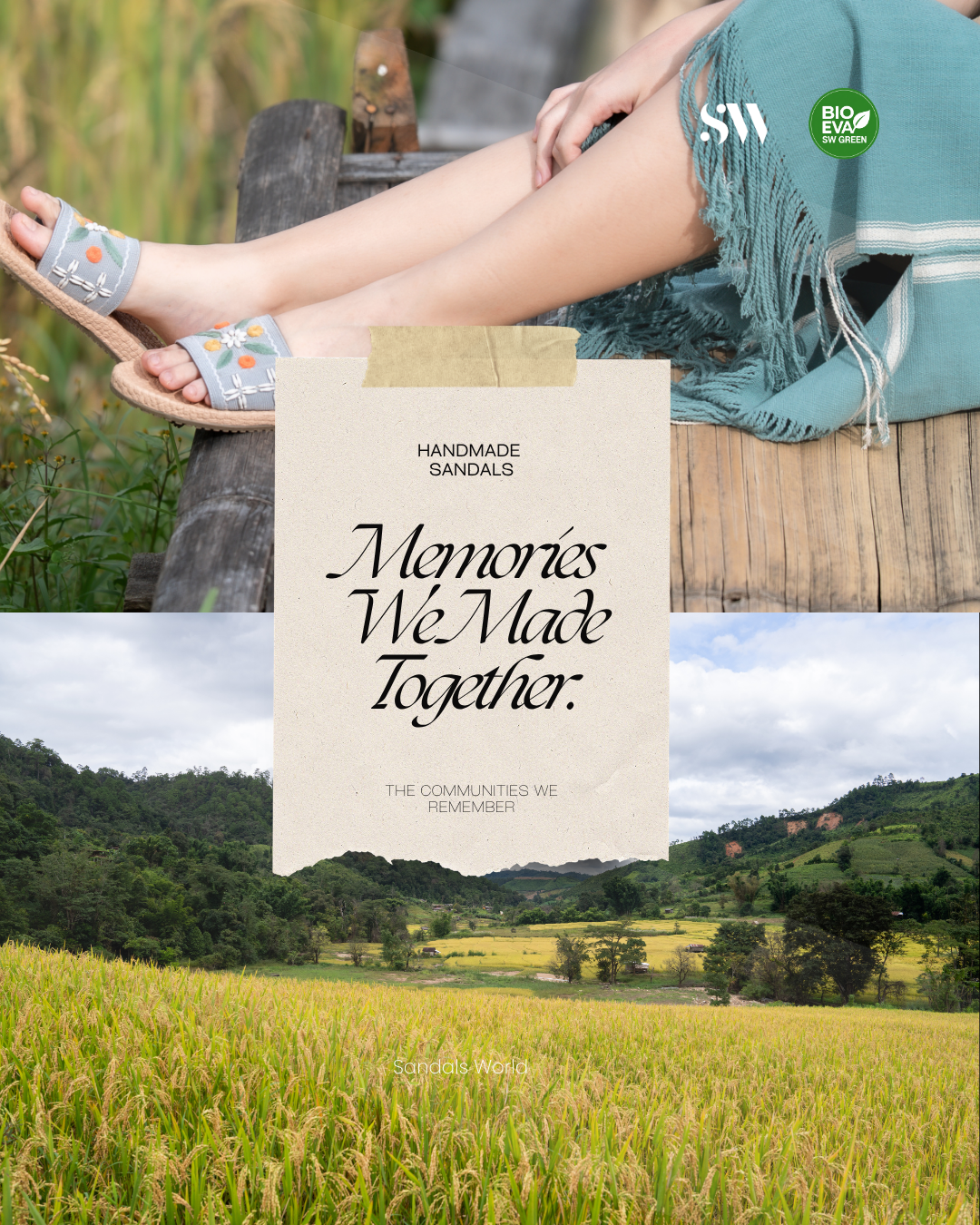
Handmade production can support this idea when makers design products for durability and repair. For example, an experienced artisan may replace damaged decorative straps or restore handcrafted details instead of discarding an entire pair.
However, handmade production does not automatically make a product sustainable. Designers must still consider adhesives, mixed materials, replaceable components, durability, packaging, and end-of-life options.
Sandals World could develop this approach further through repair services, care guides, replacement parts, or a footwear take-back programme. These services would extend product life while creating continued work for skilled community artisans.
Such actions would move Sustainable Thai Craft Sandals beyond material innovation and closer to a circular business model.
What Should Responsible Shoppers Ask Before Buying?
A green label should begin a conversation rather than end it. Before purchasing sandals, shoppers can ask several practical questions.
How much bio-based content does the material contain? Which test confirms that percentage? Does the company provide carbon-footprint or LCA information? Can the sandal last through regular use, and can anyone repair it?
Comfort also matters. Buyers should check the width, arch shape, heel position, strap fit, and outsole grip. A sandal that suits the wearer’s feet will probably remain in use longer than an uncomfortable alternative.
Finally, customers can investigate the social value behind the product. Who makes the handcrafted details? Does the brand identify the community? How does it recognise traditional knowledge, and do artisans receive fair compensation?
True sustainability considers materials, environmental impact, product life, cultural respect, and human wellbeing together.
Sandals World: Turning Every Step into a Cultural Story
The strongest part of the sandals world concept does not come from sugarcane alone. Its potential comes from the connection between community craft, Thai natural materials, modern foam technology, and everyday comfort.
Macramé celebrates the skills of local makers. Northern Thai patterns preserve cultural inspiration. Natural rubber supports a Thai material story, while SW GREEN BIO EVA presents an alternative to fully fossil-based foam.
Together, these elements give handmade sandals a deeper purpose. They allow customers to enjoy design while learning about the people, resources, and production choices behind each pair.
The future of Sustainable Thai Craft Sandals will depend on clear evidence as much as creative design. If Sandals World continues to verify its bio-based content, measure carbon impact, test durability, communicate material origins, and explore repair options, it can set a stronger example for responsible Thai footwear.
SW GREEN represents a journey from the sugarcane field to the artisan’s hands and, finally, to every step of the wearer. It shows how innovation and tradition can move forward together.
After all, good sandals should do more than take us to our destination. They should also help us understand what every step leaves behind.
𝙎𝙖𝙣𝙙𝙖𝙡𝙨 𝙒𝙤𝙧𝙡𝙙 𝙞𝙨 𝙏𝙝𝙖𝙞𝙡𝙖𝙣𝙙’𝙨 𝙡𝙖𝙧𝙜𝙚𝙨𝙩 𝙝𝙪𝙗 𝙤𝙛 𝙖𝙧𝙩𝙞𝙨𝙩𝙞𝙘 𝙝𝙖𝙣𝙙𝙢𝙖𝙙𝙚 𝙨𝙖𝙣𝙙𝙖𝙡𝙨


ABOUT THE CONTENT CREATOR
BUNTHARIK INSIRI
(Content Writer)
Sandals World | Art & Craft Sandals | Sustainable Thai Craft Sandals Tags: handmade sandals, sandals world, foot health,
Thailand sandals, artistic handmade sandals, art & craft sandals, plantar fasciitis, bunion, sustainable sandals and BIO EVA ,SW GREEN