

Knowledge & Insights
With Every Step You Take, What Are You Leaving Behind?

Jul
With Every Step You Take, What Are You Leaving Behind? The Truth About Microplastics From Sandals and the Answer Sandals World Chose

An Invisible Enemy Is Hiding Beneath Your Feet Every Day
Something happens every time you take a step and you neither feel it nor see it.
The sole of your shoe is wearing down. With each moment of wear, it releases microscopic plastic particles into the environment. These particles are many times smaller than a human hair. Nevertheless, the impact they leave on the world is far greater than most people ever consider.
This is the story of Microplastics from footwear a problem living beneath our feet every single day, yet still largely overlooked.
What Are Microplastics? Explained in Two Minutes
Microplastics are plastic particles smaller than five millimetres, produced through the wear, tear, and breakdown of larger plastic products.
A growing body of scientific research demonstrates that microplastics are essentially everywhere in the oceans, soils, atmosphere, in living organisms, and even in human faeces.</cite>
One of the most consistently overlooked sources of microplastics is the sandals sole.
An estimated 170 trillion plastic particles float on the surface of the world’s oceans and a portion of those particles come from the shoes we wear every day.
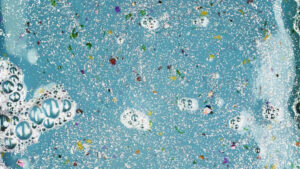
How Much Microplastic Do Shoes Actually Release? Numbers That Should Stop You in Your Tracks
Today’s sandals production relies on highly specialised plastic compounds. EVA, or Ethylene Vinyl Acetate, is the dominant material for the midsoles of modern sports shoes, while polyurethane and various synthetic rubber compounds are used extensively for outsoles.
Trail running shoes, which use soft rubber soles for better grip, release 77 to 343% more microplastic particles than shoes with harder rubber soles.
And the most striking figure comes from a 2024 research study: at the Olympic Marathon held in Tokyo in 2024, 35,443 athletes ran 42.195 kilometres releasing 52.3 kilograms of microplastics from shoe abrasion alone, from a single event.
If one sporting event generates that much microplastic pollution from shoes alone, imagine what billions of people walking and running daily produce across an entire year.
How Do Microplastics Travel From Sandals to the Ocean?
The journey of microplastics from a sandals sole to the marine ecosystem takes several routes.
Route 1 — From road to drain Microplastic particles shed from shoe soles land on roads and pavements. When it rains, those particles wash into drainage systems and flow toward rivers.
Route 2 — From rivers to sea The migration of terrestrial microplastics into aquatic environments has been shown to negatively affect aquatic ecosystems.Rivers carry microplastics into the sea and oceans, where currents distribute them across the globe.
Route 3 — From the ocean into the food chain Small marine organisms ingest microplastic particles. Larger animals consume those organisms. Ultimately, these particles travel up the food chain until they reach the human plate.
This is why microplastics are found even in the Arctic, in Antarctica, and as far as the Galapagos Islands.

The Impact of Microplastics on Human Health and Ecosystems
Microplastics are not solely an environmental issue. They have become a direct human health concern.
For marine life: Plastic particles block the digestive systems of marine animals, creating a false sense of fullness without nutritional value. Chemicals adhering to microplastics also accumulate in animal tissue across the food chain.
For ocean ecosystems: The concentration of microplastics in surface waters across all five oceans ranges from 0.002 to 62.50 particles per cubic metre, with a mean abundance of 2.76 particles per cubic metre.
For humans: Microplastics have been detected in human blood, in lung tissue, and even in the placenta of unborn children. The long-term health consequences remain under active investigation and the signals emerging from that research are deeply concerning.
Footwear and Microplastics: A Problem Solvable Through Material Choice
The good news is this: polymer stability and wear resistance vary considerably between materials. That means choosing the right material is one genuinely practical part of the solution.
Synthetic shoes made from petroleum-based EVA release microplastics with every step. Sandals made with natural rubber outsoles and BIO EVA from bio-based raw materials as the midsole carry a clear advantage.
Natural rubber biodegrades naturally. Unlike synthetic rubber, it does not persist in ecosystems the way petrochemical materials do. BIO EVA from sugarcane also carries a lower carbon manufacturing footprint from its very first stage of production.
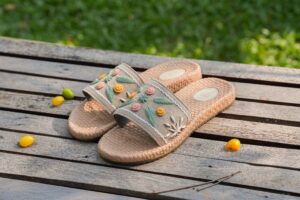
How Sandals World Chooses Materials to Reduce Microplastic Impact
Sandals World does not simply claim to care about the planet. It demonstrates that care through the material choice in every layer of every Art & Craft Sandals pair.
Layer 1 — BIO EVA SW GREEN: Foam From Sugarcane, Not Oil
The midsole and footbed of Sandals World use BIO EVA under the SW GREEN grade, produced from sugarcane and verified against the international ASTM D6866 standard. Bio EVA from sugarcane carries a high bio-based content, releases significantly less carbon than petroleum EVA, and crucially the sugarcane used to produce it absorbs CO₂ from the atmosphere as it grows, making this material genuinely low carbon under internationally recognised benchmarks.
Layer 2 — Pure Natural Rubber From Thailand: Anti-Slip Grip That Nature Created
The outsole of every Sandals World pair is made from natural rubber a material produced domestically in Thailand. Natural rubber biodegrades naturally and does not persist as microplastics the way synthetic rubber does. Additionally, it provides excellent grip, significantly reducing slipping on a wide range of surfaces encountered in daily life.
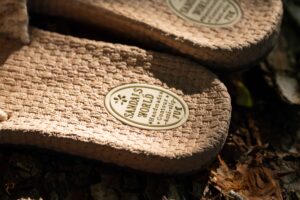
3 Defining Strengths of Artistic Handmade Sandals From Sandals World
Beyond eco-conscious materials, Artistic Handmade Sandals from Sandals World carry three strengths that set them apart from any mass-produced alternative.
Strength 1 — Design From Community: Beauty With an Origin
Every pattern on Thailand sandals from Sandals World does not originate in a design office. It comes from local communities with their own wisdom and distinct identity.
Macramé craft traditional knotting and cord weaving techniques reimagined on sandal design, producing detail and character that no factory can replicate.
Northern Thai community designs patterns inherited from the indigenous traditions of highland communities in northern Thailand. Each motif carries meaning and history. Every pair is therefore not simply a sandal but a handmade work that tells the story of the community behind it.
Strength 2 — Traceable Materials at Every Layer
Nothing in a Sandals World sandal has an unknown origin.
BIO EVA SW GREEN is verified under ASTM D6866 by independent laboratories. Natural rubber comes from Thai sources with traceable provenance. Every additional material is selected to minimise environmental impact across the entire production process.
Strength 3 — Contour Footbed Designed for the Natural Foot
Sandals World designs its footbed with a contoured form that supports the natural structure of the foot. This distributes body weight evenly, reduces pressure on the heel and arch, and creates genuine all-day comfort from the very first step without any break-in period.
Combined with a natural rubber outsole that grips securely, every pair provides confidence across different surfaces from indoor tiles to wet outdoor terrain.
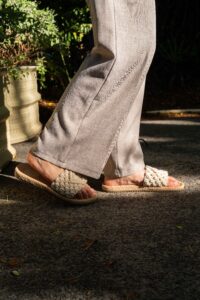
Why Choosing Sandals World Is Part of the Answer to the Microplastics Problem
When all these elements are brought together, Sustainable Thai Craft Sandals from Sandals World address the microplastics problem from multiple directions simultaneously.
BIO EVA SW GREEN from sugarcane replaces petroleum EVA. Natural rubber replaces synthetic rubber that sheds microplastics. The handmade production process makes only what is needed — not millions of pairs chasing a seasonal trend. Moreover, design with lasting value means longer wear, fewer replacements, and less waste reaching the environment.
Every step you take in Art & Craft Sandals from Sandals World is therefore not just a comfortable one. It is a step that releases meaningfully fewer microplastics into the world than any conventional synthetic sandal.
Every Step You Choose Carries Meaning for the World
Microplastics from shoes are a problem that happens every day, with every step largely unnoticed. Yet they accumulate in oceans, in marine life, and in our own bodies.
Sandals World chose to be part of the solution with natural rubber that biodegrades, with BIO EVA SW GREEN that meets international low-carbon standards, and with community-sourced designs that are beautiful and meaningful.
Because the finest handmade sandals are not simply the ones that feel good on your feet. They are the ones that, when worn, leave you feeling good about the world you share with everyone else.

ทุกก้าวที่คุณเดิน คุณกำลังทิ้งอะไรไว้บนโลก? ความจริงเรื่อง Microplastics จากรองเท้า และทางออกที่ Sandals World เลือก
ศัตรูที่มองไม่เห็น ซ่อนอยู่ใต้ฝ่าเท้าคุณทุกวัน
มีสิ่งหนึ่งที่เกิดขึ้นทุกครั้งที่คุณก้าวเดิน โดยที่คุณไม่รู้สึกและมองไม่เห็น
พื้นรองเท้าของคุณกำลังสึกหรอ และทุกการสึกหรอนั้นปล่อยอนุภาคพลาสติกขนาดเล็กมากออกสู่สิ่งแวดล้อม อนุภาคเหล่านี้เล็กกว่าเส้นผมมนุษย์หลายเท่า แต่ผลกระทบที่พวกมันทิ้งไว้บนโลกใหญ่กว่าที่ใครจะนึกถึง
นี่คือเรื่องของ Microplastics จากรองเท้า ปัญหาที่อยู่ใต้ฝ่าเท้าเราทุกวัน แต่ยังคงถูกมองข้ามอยู่มาก
Microplastics คืออะไร? อธิบายให้เข้าใจใน 2 นาที
Microplastics คืออนุภาคพลาสติกขนาดเล็กกว่า 5 มิลลิเมตร เกิดขึ้นจากการสึกหรอและการแตกตัวของผลิตภัณฑ์พลาสติกขนาดใหญ่กว่า
งานวิจัยทางวิทยาศาสตร์จำนวนมากพิสูจน์แล้วว่า Microplastics มีอยู่ทุกหนแห่ง ทั้งในมหาสมุทร ดิน บรรยากาศ ในสิ่งมีชีวิต และแม้แต่ในอุจจาระของมนุษย์
และหนึ่งในแหล่งที่มาของ Microplastics ที่ถูกมองข้ามมากที่สุดคือ พื้นรองเท้า
อนุภาคพลาสติกประมาณ 170 ล้านล้านชิ้นลอยอยู่บนผิวมหาสมุทรทั่วโลก และส่วนหนึ่งของมันมาจากรองเท้าที่เราสวมใส่อยู่ทุกวัน

รองเท้าปล่อย Microplastics มากแค่ไหน? ตัวเลขที่น่าตกใจ
การผลิตรองเท้าในปัจจุบันพึ่งพาสารประกอบพลาสติกเฉพาะทางสูงมาก โดย EVA หรือ Ethylene Vinyl Acetate คือวัสดุหลักสำหรับ midsole ของรองเท้ากีฬาสมัยใหม่ ขณะที่ Polyurethane และยางสังเคราะห์หลายชนิดถูกใช้สำหรับ outsole
รองเท้า trail running ที่ใช้ยางพื้นนุ่มเพื่อเพิ่มแรงยึดเกาะ ปล่อย Microplastics มากกว่ายางพื้นแข็งถึง 77–343%
และตัวเลขที่น่าตกใจที่สุดมาจากงานวิจัยล่าสุดปี 2024 ในการแข่งขัน Olympic Marathon ที่จัดขึ้นในกรุงโตเกียวปี 2024 นักวิ่ง 35,443 คน วิ่งระยะทาง 42.195 กิโลเมตร ซึ่งปล่อย Microplastics ออกมาถึง 52.3 กิโลกรัม จากแค่การแข่งขันเดียว
ลองคิดดูว่าถ้าแค่นักวิ่งในการแข่งขันหนึ่งครั้งปล่อย Microplastics ได้ขนาดนี้ แล้วคนทั้งโลกที่เดินและวิ่งทุกวันตลอดทั้งปีจะปล่อยออกมาเท่าไหร่?
Microplastics เดินทางจากรองเท้าสู่มหาสมุทรได้อย่างไร?
กระบวนการเดินทางของ Microplastics จากพื้นรองเท้าสู่ระบบนิเวศทางทะเลมีหลายเส้นทาง
1. จากถนนสู่ท่อระบายน้ำ อนุภาค Microplastics ที่หลุดจากพื้นรองเท้าตกอยู่บนถนนและทางเท้า เมื่อฝนตก น้ำฝนพัดพาอนุภาคเหล่านี้ลงท่อระบายน้ำ และไหลลงสู่แม่น้ำในที่สุด
2 จากแม่น้ำสู่ทะเล การเคลื่อนตัวของ Microplastics จากบนบกสู่สภาพแวดล้อมทางน้ำส่งผลกระทบเชิงลบต่อระบบนิเวศทางน้ำอย่างชัดเจน แม่น้ำพัดพา Microplastics ลงสู่ทะเลและมหาสมุทร ซึ่งกระแสน้ำกระจายพวกมันออกไปทั่วโลก
3 จากทะเลสู่ห่วงโซ่อาหาร สัตว์น้ำขนาดเล็กกินอนุภาค Microplastics เข้าไป จากนั้นถูกสัตว์ขนาดใหญ่กินต่อ และในที่สุดก็ขึ้นมาถึงจานอาหารของมนุษย์
นั่นเป็นเหตุผลที่พบ Microplastics ในแม้แต่บริเวณขั้วโลก แอนตาร์กติกา และหมู่เกาะกาลาปากอส
ผลกระทบของ Microplastics ต่อสุขภาพมนุษย์และระบบนิเวศ
Microplastics ไม่ใช่แค่ปัญหาของสิ่งแวดล้อม มันกลายเป็นปัญหาของสุขภาพมนุษย์โดยตรง
ต่อสัตว์ทะเล: อนุภาคพลาสติกอุดตันระบบทางเดินอาหารของสัตว์ทะเล ทำให้พวกมันรู้สึกอิ่มโดยไม่ได้รับสารอาหาร และสารเคมีที่ติดมากับ Microplastics สะสมในเนื้อเยื่อสัตว์
ต่อระบบนิเวศ: ความเข้มข้นของ Microplastics ในน้ำผิวทะเลของมหาสมุทรทั้ง 5 อยู่ระหว่าง 0.002 ถึง 62.50 ชิ้นต่อลูกบาศก์เมตร โดยมีค่าเฉลี่ย 2.76 ชิ้นต่อลูกบาศก์เมตร</cite>
ต่อมนุษย์: Microplastics ถูกพบในเลือดมนุษย์ ในปอด และแม้แต่ในรกของทารกในครรภ์ ผลกระทบระยะยาวต่อสุขภาพยังอยู่ระหว่างการศึกษา แต่สัญญาณที่ออกมาล้วนน่าเป็นห่วง
รองเท้าแตะกับ Microplastics: ปัญหาที่แก้ได้ด้วยการเลือกวัสดุ
ข่าวดีคือ ความเสถียรของพอลิเมอร์และความทนทานต่อการสึกหรอแตกต่างกันอย่างมีนัยสำคัญ นั่นหมายความว่าการเลือกวัสดุที่ถูกต้องคือหนึ่งในทางออกที่ทำได้จริง
รองเท้าสังเคราะห์จาก EVA ปิโตรเลียมปล่อย Microplastics ทุกก้าวที่เดิน แต่รองเท้าแตะที่ใช้ ยางพาราธรรมชาติ เป็น outsole และ BIO EVA ที่มาจากวัตถุดิบชีวภาพเป็น midsole มีข้อได้เปรียบที่ชัดเจน
ยางพาราธรรมชาติย่อยสลายได้ตามธรรมชาติ ไม่สะสมในระบบนิเวศในลักษณะเดียวกับยางสังเคราะห์ และ BIO EVA จากอ้อยมีกระบวนการผลิตที่ low carbon ตั้งแต่ต้น

Sandals World เลือกวัสดุอย่างไร เพื่อลดปัญหา Microplastics?
Sandals World ไม่ได้แค่บอกว่า “รักษ์โลก” แต่แสดงให้เห็นผ่านการเลือกวัสดุในทุกชั้นของ Art & Craft Sandals แต่ละคู่
ชั้นที่ 1 — BIO EVA SW GREEN: โฟมจากอ้อย ไม่ใช่น้ำมัน
Midsole และ footbed ของ Sandals World ใช้ BIO EVA เกรด SW GREEN ที่ผลิตจากอ้อยตามมาตรฐานสากล ASTM D6866 Bio EVA จากอ้อยมี bio-based content สูง ปล่อย carbon ต่ำกว่า EVA ปิโตรเลียมอย่างมีนัยสำคัญ และที่สำคัญ ในระหว่างที่อ้อยเติบโต มันดูดซับ CO₂ จากบรรยากาศ ทำให้ carbon footprint รวมของวัสดุนี้เป็น low carbon ตามมาตรฐานสากล
ชั้นที่ 2 — ยางพาราแท้จากไทย: พื้นกันลื่นที่ธรรมชาติสร้าง
Outsole ของ Sandals World ทำจาก ยางพาราธรรมชาติ ซึ่งเป็นวัสดุที่ไทยผลิตได้ในประเทศ ยางพาราธรรมชาติย่อยสลายได้ตามธรรมชาติ ต่างจากยางสังเคราะห์ที่ปล่อย Microplastics ทุกก้าวที่เดิน นอกจากนี้ยางพาราธรรมชาติยังให้แรงยึดเกาะที่ดีเยี่ยม ลดการลื่นไถล เหมาะกับทุกพื้นผิวในชีวิตประจำวัน
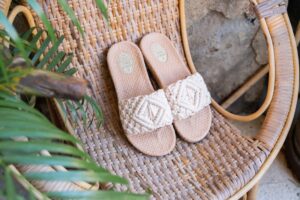
3 จุดเด่นของ Artistic Handmade Sandals จาก Sandals World
นอกจากวัสดุที่รักษ์โลก Artistic Handmade Sandals ของ Sandals World ยังมีจุดเด่น 3 ประการที่ทำให้แตกต่างจากรองเท้าแตะทั่วไปอย่างสิ้นเชิง
จุดเด่นที่ 1 — ดีไซน์จากชุมชน: ความงามที่มีที่มา
ทุกลวดลายบน Thailand sandals ของ Sandals World ไม่ได้ถูกสร้างขึ้นโดยทีมดีไซน์ในออฟฟิศ แต่มาจากชุมชนท้องถิ่นที่มีภูมิปัญญาและอัตลักษณ์เป็นของตัวเอง
งาน Macramé การถักเงื่อนและสายด้ายในแบบดั้งเดิมที่ถูกนำมาออกแบบบนรองเท้าแตะ ให้รายละเอียดที่งดงามและเป็นเอกลักษณ์ที่ไม่มีในโรงงาน
ดีไซน์จากชุมชนชาวเหนือ ลวดลายที่สืบทอดมาจากภูมิปัญญาดั้งเดิมของชุมชนบนพื้นที่สูงในภาคเหนือของไทย แต่ละลายมีความหมายและเรื่องราวของตัวเอง ทุกคู่จึงไม่ใช่แค่รองเท้า แต่คือชิ้นงาน handmade ที่เล่าเรื่องราวของชุมชน
จุดเด่นที่ 2 — วัสดุที่ตรวจสอบได้ทุกชั้น
ไม่มีวัสดุที่ “ไม่รู้ที่มา” ใน Sandals World
BIO EVA SW GREEN ผ่านมาตรฐาน ASTM D6866 ตรวจสอบได้ด้วยห้องแล็บอิสระ ยางพาราธรรมชาติจากไทยที่รู้แหล่งที่มา และวัสดุอื่น ๆ ที่คัดสรรมาเพื่อลดผลกระทบต่อสิ่งแวดล้อมในทุกขั้นตอน
จุดเด่นที่ 3 — Contour Footbed ที่รองรับโครงสร้างเท้า
Sandals World ออกแบบ footbed ให้มีรูปทรง contour ที่รองรับโครงสร้างตามธรรมชาติของเท้า ช่วยกระจายน้ำหนักอย่างสม่ำเสมอ ลดแรงกดทับที่ส้นและอุ้งเท้า และทำให้สวมใส่ได้สบายตั้งแต่ก้าวแรกโดยไม่ต้องฝืนหรือปรับตัวนาน
ผสมกับ พื้นยางพาราธรรมชาติที่กันลื่น ให้ความมั่นใจทุกก้าวบนพื้นผิวต่าง ๆ ตั้งแต่กระเบื้องในบ้านไปจนถึงพื้นเปียกชื้น
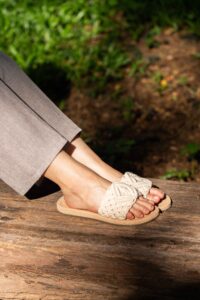
ทำไมการเลือก Sandals World จึงเป็นคำตอบของปัญหา Microplastics?
เมื่อนำทุกองค์ประกอบมารวมกัน Sustainable Thai Craft Sandals จาก Sandals World ตอบปัญหา Microplastics ได้จากหลายทิศทางพร้อมกัน
BIO EVA SW GREEN จากอ้อยแทนที่ EVA ปิโตรเลียม ยางพาราธรรมชาติแทนยางสังเคราะห์ที่ปล่อย Microplastics กระบวนการ handmade ที่ผลิตในปริมาณพอดี ไม่ใช่การผลิตล้านคู่เพื่อตามเทรนด์ และดีไซน์ที่มีคุณค่าทำให้อยู่นานกว่า ซื้อน้อยกว่า ทิ้งน้อยกว่า
ทุกก้าวที่คุณเดินบน Art & Craft Sandals จาก Sandals World จึงไม่ใช่แค่ก้าวที่สบาย แต่คือก้าวที่ทิ้ง Microplastics น้อยกว่ารองเท้าสังเคราะห์ทั่วไปอย่างมีนัยสำคัญ
ทุกก้าวที่คุณเลือก มีความหมายต่อโลก
Microplastics จากรองเท้าคือปัญหาที่เกิดขึ้นทุกวัน ทุกก้าว โดยที่ส่วนใหญ่ไม่รู้ตัว แต่มันสะสมในมหาสมุทร ในสัตว์ทะเล และในร่างกายของเราเอง
Sandals World เลือกที่จะเป็นส่วนหนึ่งของทางออก ด้วยยางพาราธรรมชาติที่ย่อยสลายได้ ด้วย BIO EVA SW GREEN ที่มี low carbon ตามมาตรฐานสากล และด้วยดีไซน์จากชุมชนที่สวยงามและมีความหมาย
เพราะ handmade sandals ที่ดีที่สุดคือคู่ที่เมื่อสวมใส่แล้ว คุณรู้สึกดีทั้งต่อเท้าของคุณ และต่อโลกที่เราทุกคนอยู่ร่วมกัน
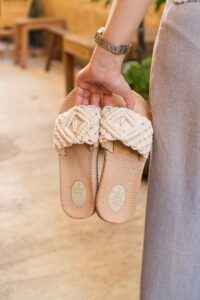
#Sandalsworld#รองเท้าartandcraft#รองเท้าแตะสานแฮนด์เมด #artandcraftsandals #artistichandmadesandals#handmade#artandcraft#sandals#รองเท้าแฮนด์เมด#รองเท้าแตะใส่แล้วไม่ลื่น#รองเท้ายางพารา#ใส่ไปไหนก็ได้ #BIOEVA #SWGREEN #BIOBASED #BIOEVATHAILAND
บทความโดย
Sandals World | Art & Craft Sandals | Sustainable Thai Craft Sandals Tags: handmade sandals, sandals world, foot health,
Thailand sandals, artistic handmade sandals, art & craft sandals, plantar fasciitis, bunion, sustainable sandals and BIO EVA ,SW GREEN

ABOUT THE CONTENT CREATOR
BUNTHARIK INSIRI
(Content Writer)
Brand Partner News Sustainability Knowledge & Insights Sandals World News Community Brand Stories Travel & Destinations Events

Plastic Waste and Sustainable Sandals: Better Materials, Better Truth, Better Steps
Post Views: 10 Plastic has transformed modern life. Its lightweight structure, versatility, and low cost [...]
Oct

What’s Really Under Your Feet? From Plastic and EVA Foam to BIO EVA SW GREEN
Post Views: 12 Plastic is everywhere. We drink from it, carry food in it, build [...]
Sep
Only 9% Gets Recycled: Are We Solving the Plastic Crisis the Wrong Way?
Post Views: 11 Every time we drop a plastic bottle into a recycling bin, we [...]

Bangkok Flood 2026: Why Bangkok Flooded So Severely | Sandals World
Post Views: 21 At the end of September 2026, one question was on the minds [...]
Sep
El Niño 2026 and Sustainable Thai Craft Sandals: Why Every Step Matters
Post Views: 20 The climate is changing in ways that are becoming harder to ignore. [...]
Sep
Circular Fashion: Why Your Sandals Deserve a Second Life
Post Views: 15 What happens to your favorite pair of sandals when you stop wearing [...]
Sep

Chic Handmade: From Fingertips to Every Step The Story Behind Artistic Handmade Sandals from Thailand
Post Views: 16 In a world where factories can produce thousands of shoes every day, [...]
Sep

From Thai Craft to BIO EVA: How Sandals World Is Rethinking the Future of Sandals
Post Views: 15 When people think about sandals, they often think about comfort, summer, travel, [...]
Sep
SANDALS WORLD GUIDE

The Largest HubArtistic Handmade Sandals
BY
SANDALS WORLD THAILAND
of Artistic Handmade Sandals in Thailand.