

Brand Stories
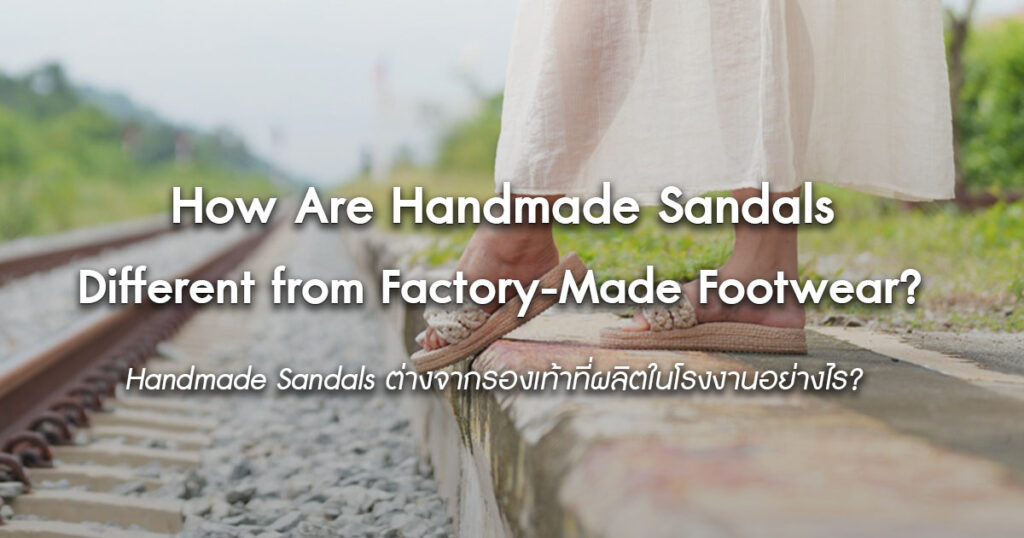
They May Look Alike, but Their Stories Are Different: How Are Handmade Sandals Different from Factory-Made Footwear?
Aug
From a distance, handmade sandals and factory-made footwear may not appear very different. Look beyond the finished shape, however, and you will discover two distinct approaches to production, design, and the people behind each pair.
The real question is not which type is “better” in every situation. It is which type best matches what you need. If you want speed, accessible pricing, and products that look highly consistent across large quantities, factory-made footwear may be the practical choice. If you value detail, individuality, craftsmanship, and a meaningful story, handmade sandals may bring something more personal to every journey.
Different Starting Points: Repeating a Standard or Creating a Character
Factory production often begins with efficiency. Manufacturers define each design clearly and divide the process into repeatable stages. This structure helps them produce large quantities quickly and consistently while controlling costs. Machinery, molds, standardized specifications, and quality checks help thousands of pairs maintain similar dimensions, shapes, colors, and details.
By contrast, handmade work often begins with a designer’s idea and the maker’s skill. An artisan may knot, weave, embroider, cut, shape, or assemble each detail by hand. The movement of the fingers, the tension applied to a cord, and the placement of a color can create subtle differences from one pair to another. Even when artisans follow the same pattern, each result may differ by a few millimeters—and that individuality is part of the appeal.
Time and Labor You Can See in Every Detail
Speed is one of the most important advantages of factory production. After production teams organize the machinery and assembly lines, manufacturers can produce large quantities within a predictable period. This system works well for markets that need substantial inventory, regular restocking, or simultaneous distribution across many locations.
For handcrafted sandals, time is more than a cost; it is part of the product’s value. A woven detail that looks simple at first may contain many knots requiring concentration, consistency, and experience. When a mistake occurs, the artisan may need to undo part of the work and rebuild it by hand. The process takes longer, but it also allows the maker to observe and refine details closely.
The price of Art & Craft Sandals therefore reflects more than materials. It can also include the artisan’s time, accumulated skills, prototype development, and the care invested in each stage.

Consistency Is a Standard; Variation Is a Signature
Factory-made footwear has a clear strength in consistency. Customers purchasing the same model generally expect its color, form, size, and finishing to match the sample as closely as possible. This predictability supports quality control, inventory management, and repeat purchasing.
Artistic Handmade Sandals, on the other hand, may show small variations between pairs. These could appear in the rhythm of a knot, the placement of a thread, or the intensity of a hand-applied color. As long as the product meets appropriate functional standards, such differences are not necessarily defects. Instead, they can reveal the genuine involvement of human hands.
However, the word handmade does not automatically guarantee good quality. Skilled makers still need clear standards for structure, durability, finishing, and inspection before their products reach customers. The human touch should enhance reliable function, not excuse faults that affect quality or wearability.

Greater Freedom to Explore Design
Factory production must consider machinery, molds, minimum quantities, and the cost-effectiveness of every production run. This method particularly suits clearly defined models that manufacturers reproduce at scale. Even a small change in color, material, or construction may require adjustments across the system.
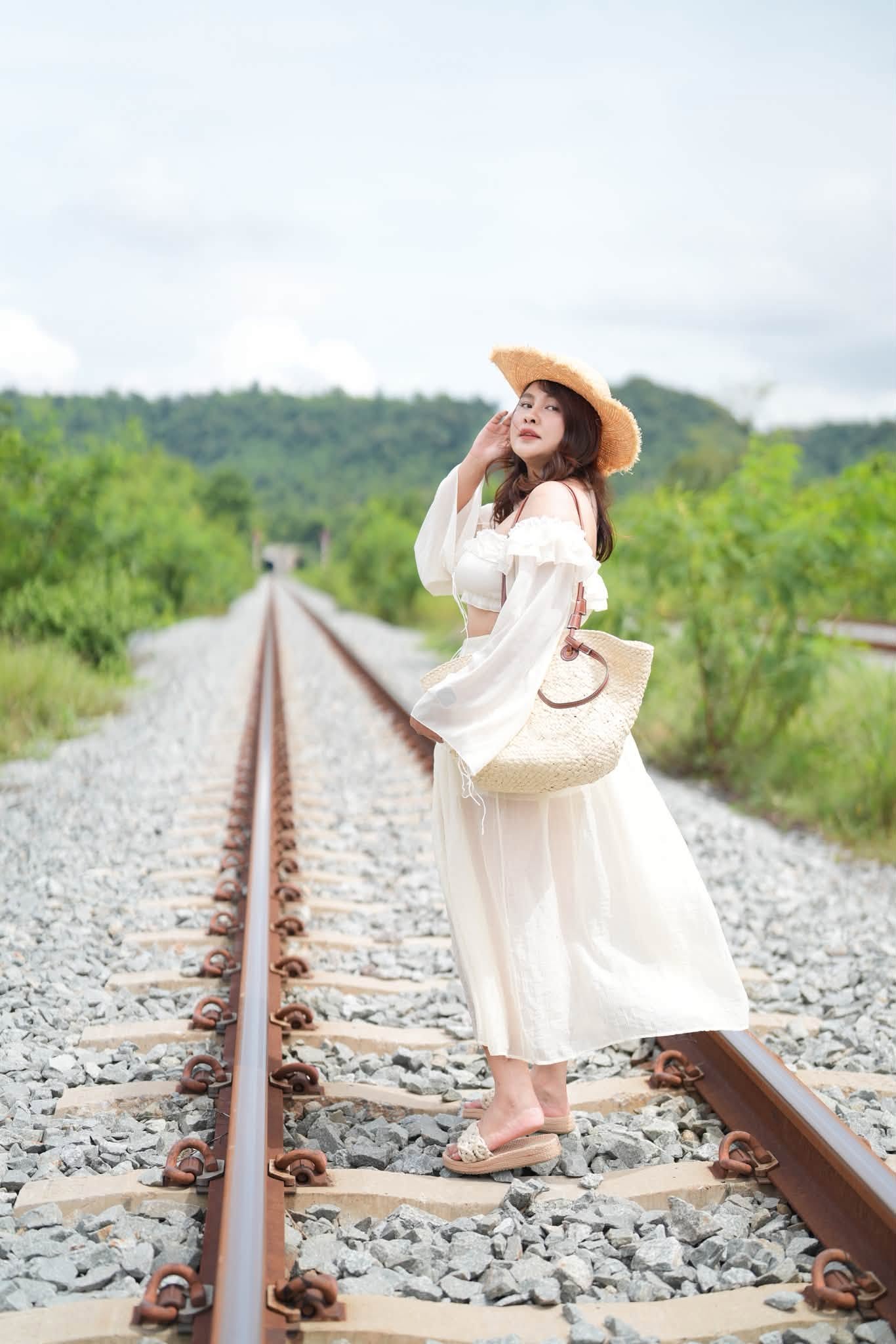
Handcrafted production can offer greater flexibility in certain details. Designers may test new color combinations, modify knotting patterns, or transform a community technique into a small collection without beginning with enormous quantities. This flexibility creates room for specialized designs and allows fresh ideas to develop gradually.
At Sandals World, this variety comes from more than 10 partner brands, each with its own creative direction. Some brands specialize in macramé, while others reinterpret weaving, embroidery, tie-dye, or contemporary forms. Customers can therefore discover sandals with many personalities in one hub and choose a pair that expresses more than a preferred color or size.
Factory-Made Footwear Offers Accessibility; Handmade Work Creates Connection
Factory systems allow large quantities to reach the market quickly while reducing the cost per unit. These products are generally easy to find and can suit shoppers who prioritize convenience, availability, or a limited budget. We should recognize these genuine benefits.
Handmade work can create a different kind of emotional connection. When customers understand who made a product, how the artisan applied a technique, and what inspired the design, the footwear often becomes more meaningful than a functional object. Its story may encourage the owner to wear it with pride, care for it properly, and keep it for longer.
For Thailand sandals, this value can also express Thai identity through patience, precision, local knowledge, and the adaptation of traditional skills for contemporary life. Customers receive not only a product but also an introduction to the creativity and human effort behind it.






Does Handmade Always Mean Sustainability?
The honest answer is no. Making a product by hand does not automatically make it sustainable. We must also consider material origins, waste volumes, chemical use, transport distances, working conditions, product durability, and end-of-life outcomes.
Likewise, not every factory-made product is automatically unsustainable. A factory that manages energy, materials, waste, and labor responsibly can improve its environmental and social performance. Evaluating sustainability therefore requires a life-cycle perspective rather than a judgment based only on the words “factory-made” or “handmade.”
Craft-based production can nevertheless build on several strengths. It may operate at an appropriate scale, create work for artisans and communities, preserve local skills, and encourage a stronger emotional attachment between people and products. Sustainable Thai Craft Sandals gain meaning when brands consider design, materials, production, durability, and the well-being of makers together.
Sandals World combines handcrafted straps with practical components such as EVA top soles and natural-rubber outsoles. This approach shows that makers can combine handcrafting with other production methods and still create value. Craftsmanship can work alongside standardized production processes when brands clearly communicate the components and product qualities, helping customers make informed decisions.
Which Type of Footwear Should You Choose?
Before buying, begin with a few simple questions. Where will you wear the sandals? Do you want something expressive or understated? How important are price, speed, story, and individuality? Are you prepared to care for the product according to its materials?
Choose factory-made footwear when you need accessible pricing, a standardized design, broad availability, or a quick replacement. By contrast, handmade sandals may offer a more meaningful choice when you value distinctive design, skilled work, and support for designers or local artisans.
For sustainability, look beyond the label. Consider the materials, durability, care instructions, production location, working practices, and transparency of the brand. Evaluate each product through real information rather than an attractive description alone.
The best choice does not always have to come from only one side. A person may use factory-made footwear for certain activities and choose handcrafted designs for moments that call for something special. Understanding the differences helps us make thoughtful decisions instead of relying on assumptions.
Different Processes, but the Value Depends on What We Choose to Support
Factory-made footwear demonstrates the power of systems, standards, and the ability to produce for large numbers of people. Handmade sandals demonstrate the power of skill, creative expression, and the details that human hands can bring to an object. Both approaches have their own strengths and limitations.
For Sandals World, the world of Artistic Handmade Sandals is not about rejecting technology or modern production. It is about creating space for Thai craftsmanship to work alongside contemporary design and practical standards. Each partner brand can preserve its own signature while offering customers a wider variety of meaningful choices.
The production method alone does not define a good pair of footwear. We should also judge it by suitability, quality, transparency, durability, and the relationship it creates between the product, its maker, and its wearer. When we understand these dimensions, we are not simply purchasing another pair of sandals. We are choosing which values will walk with us in every step.
𝙎𝙖𝙣𝙙𝙖𝙡𝙨 𝙒𝙤𝙧𝙡𝙙 𝙞𝙨 𝙏𝙝𝙖𝙞𝙡𝙖𝙣𝙙’𝙨 𝙡𝙖𝙧𝙜𝙚𝙨𝙩 𝙝𝙪𝙗 𝙤𝙛 𝙖𝙧𝙩𝙞𝙨𝙩𝙞𝙘 𝙝𝙖𝙣𝙙𝙢𝙖𝙙𝙚 𝙨𝙖𝙣𝙙𝙖𝙡𝙨

#Sandalsworld #รองเท้าartandcraft #รองเท้าแตะสานแฮนด์เมด #handmade #artandcraft #sandals #รองเท้าแฮนด์เมด #รองเท้าแตะใส่แล้วไม่ลื่น #รองเท้ายางพารา #ใส่ไปไหนก็ได้
Thailand sandals, artistic handmade sandals, art & craft sandals, plantar fasciitis, bunion, sustainable sandals and BIO EVA ,SW GREEN

ABOUT THE CONTENT CREATOR
BUNTHARIK INSIRI
(Content Writer)
Brand Partner News Sustainability Knowledge & Insights Sandals World News Community Brand Stories Travel & Destinations Events
Bangkok Flood 2026: Why Bangkok Flooded So Severely | Sandals World
Post Views: 3 At the end of September 2026, one question was on the minds [...]
Sep

El Niño 2026 and Sustainable Thai Craft Sandals: Why Every Step Matters
Post Views: 15 The climate is changing in ways that are becoming harder to ignore. [...]
Sep
Circular Fashion: Why Your Sandals Deserve a Second Life
Post Views: 12 What happens to your favorite pair of sandals when you stop wearing [...]
Sep
Chic Handmade: From Fingertips to Every Step The Story Behind Artistic Handmade Sandals from Thailand
Post Views: 12 In a world where factories can produce thousands of shoes every day, [...]
Sep

From Thai Craft to BIO EVA: How Sandals World Is Rethinking the Future of Sandals
Post Views: 11 When people think about sandals, they often think about comfort, summer, travel, [...]
Sep
Bangkok Just Became Asia’s #2 Most Repeat-Visited City in 2026 Here’s Why It’s Time to Walk the City in Handmade Sandals from Thailand
Post Views: 15 Give Bangkok another round of applause! Agoda, the world’s leading digital travel [...]
Sep

Chiang Mai, a World-Class City and the Art & Craft Sandals Behind Its Charm
Post Views: 15 Chiang Mai is no longer just a beloved destination for Thai travelers [...]
Sep

From Oil Wells to Sugarcane Fields: How Sandals World Turns Handmade Sandals Into a Climate Solution
Post Views: 19 Every year, we burn fossil fuels for energy and manufacturing. As a [...]
Sep
SANDALS WORLD GUIDE




Artistic Handmade Sandals
BY
SANDALS WORLD THAILAND
The Largest Hub
of Artistic Handmade Sandals in Thailand.