

Brand Stories
Bangkok Flood 2026: Why Bangkok Flooded So Severely | Sandals World
Sep
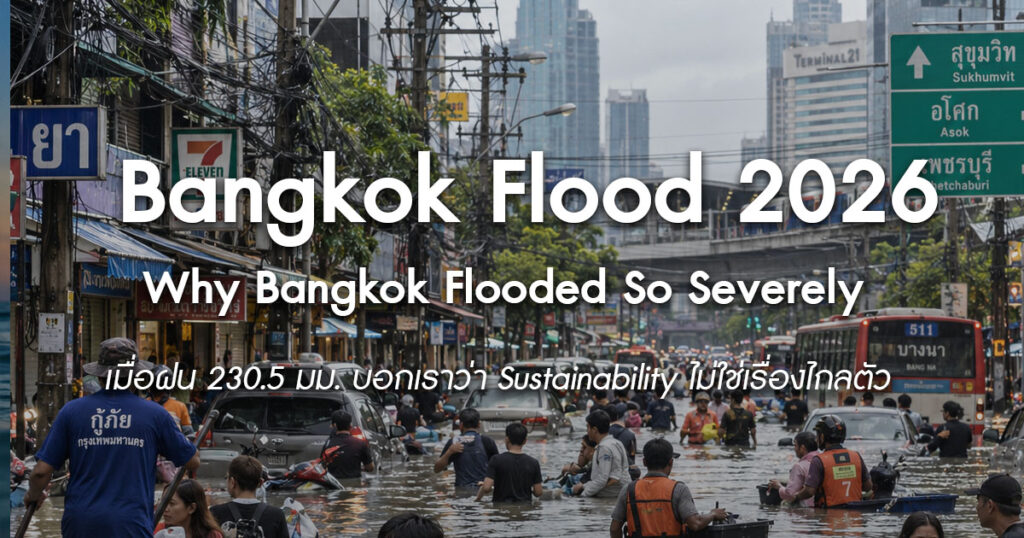
At the end of September 2026, one question was on the minds of many people across Bangkok:
Why was the flooding so severe this time?
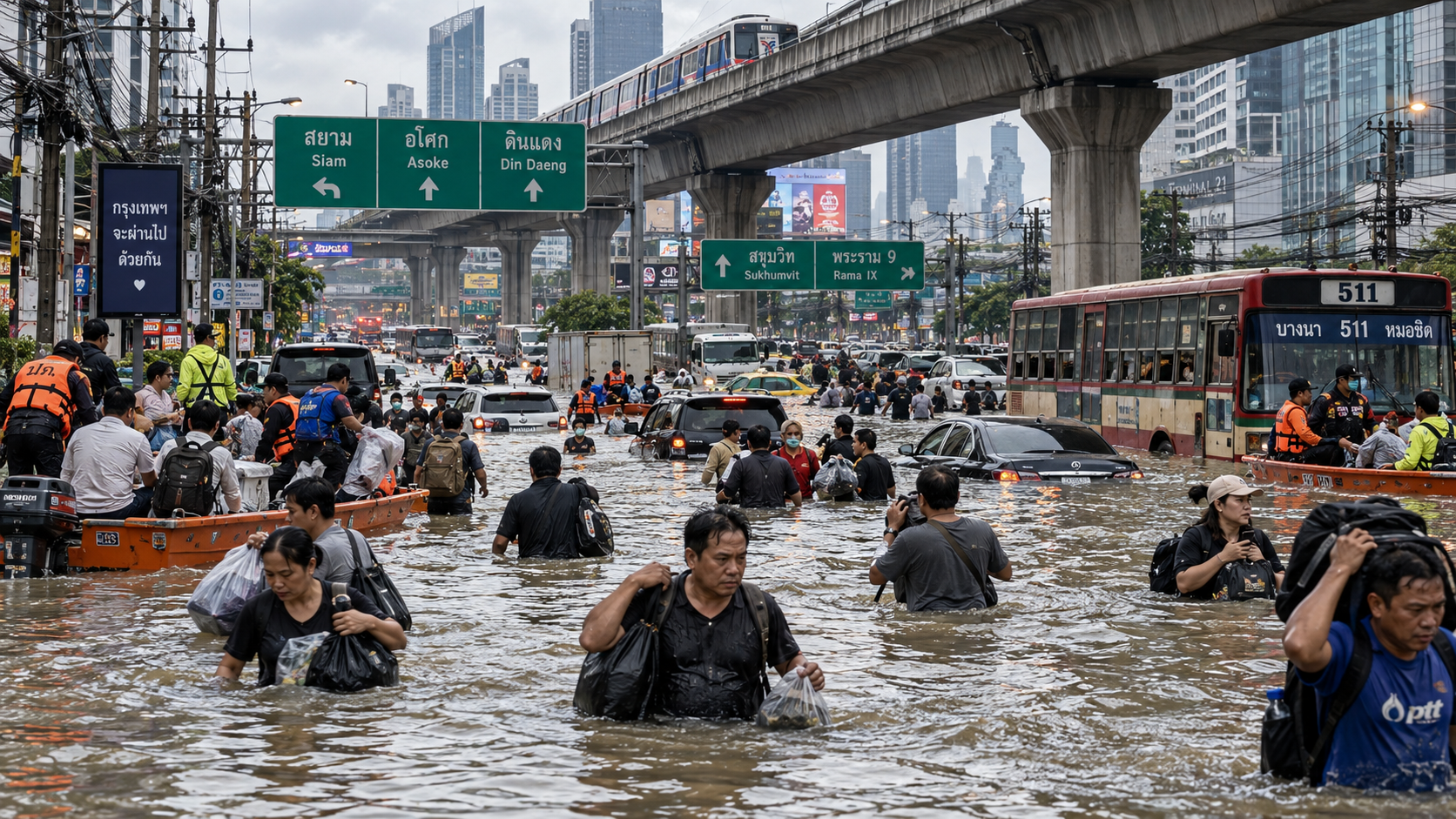
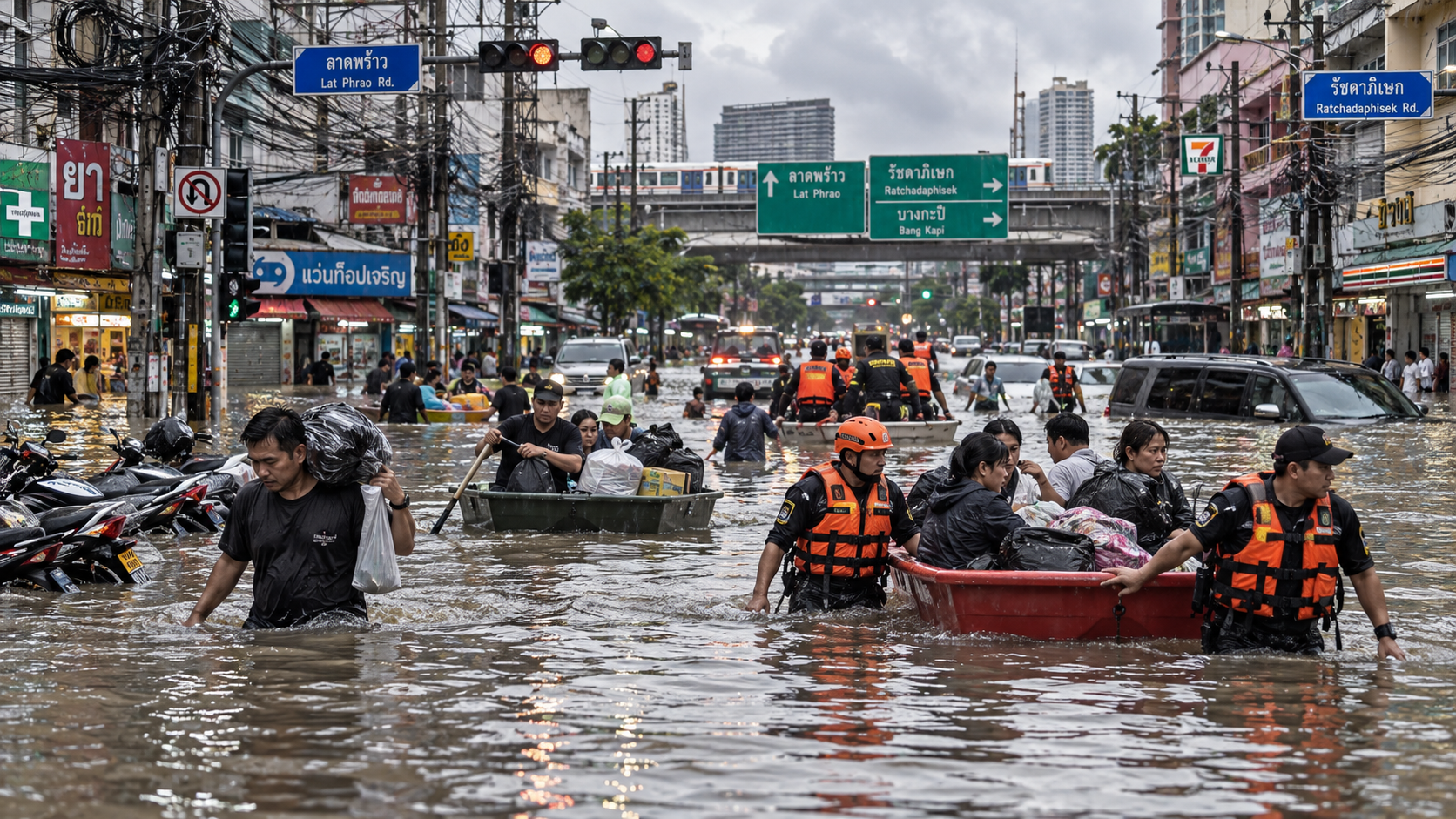
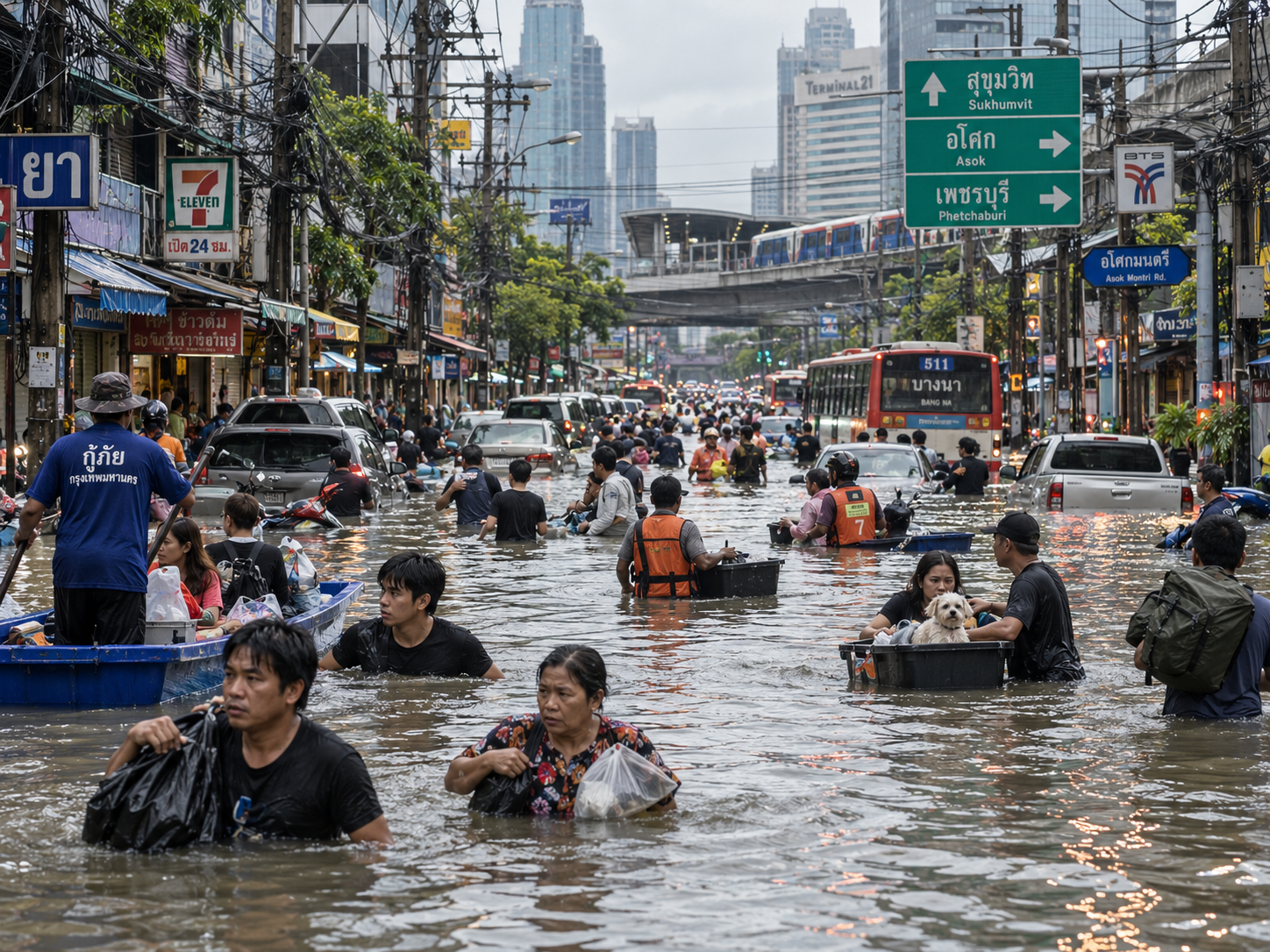
Roads used every day suddenly turned into waterways. Traffic came to a standstill. Canals remained unusually high, while some neighborhoods continued to experience flooding long after the rain had stopped.
The answer is more complicated than simply saying, “It rained a lot.”
Bangkok’s September 2026 flooding reveals how extreme rainfall, rapid urbanization, limited water-retention space, drainage capacity, land subsidence, and climate change can interact at the same time.
For Sandals World, this is also a reminder that sustainability goes far beyond choosing environmentally conscious materials or producing sustainable products.
The cities we build, the materials we consume, the products we manufacture, and the resources we depend on are all connected to the same environmental system.
230.5 mm of Rain in One Day: How Much Water Is That?
According to the Thai Meteorological Department, rainfall at Khlong Kum School in Bueng Kum District reached approximately 230.5 millimeters on September 25, 2026.
Across Bangkok and its metropolitan area, rainfall covered more than 90% of the region during much of the week, with heavy to very heavy rain recorded in multiple locations.
But what does 230.5 millimeters actually mean?
One millimeter of rainfall equals approximately one liter of water falling on one square meter.
Therefore, 230.5 millimeters means roughly:
230.5 liters of water falling on every square meter of land.
Over an area of just one square kilometer, that would equal more than 230 million liters of water.
And the problem did not end after a single day.
From the evening of September 24 onward, some parts of Bangkok accumulated more than 300 millimeters of rain within roughly a day and a half, particularly in areas such as Min Buri and Khlong Sam Wa.
Heavy rainfall also affected surrounding provinces, including Nonthaburi, Pathum Thani, Chachoengsao, and Samut Prakan.
This created the perfect conditions for urban flooding:
Heavy rain + prolonged rain + repeated rainfall + a very large affected area.
That combination can overwhelm even a city equipped with pumps, tunnels, canals, and drainage infrastructure.
Why Did Floodwater Remain After the Rain Stopped?
Imagine Bangkok as a giant basin.
Rainwater falling on roofs, roads, buildings, parking areas, and other hard surfaces must travel through a chain of infrastructure:
Road → Drainage pipe → Local canal → Main canal → Pumping station → River or external drainage area
Normally, this system continuously moves water away from the city.
However, problems begin when almost every part of that system reaches capacity at the same time.
During the September flooding, Bangkok authorities estimated that around 223 million cubic meters of rainfall entered the Phra Nakhon side of Bangkok.
The city’s overall pumping capacity was estimated at approximately 1,000–1,200 cubic meters per second.
Even with pumping systems operating continuously, authorities estimated that, without additional rainfall or incoming water from surrounding areas, removing the accumulated water could still require approximately two to three days.
That helps explain one of the biggest questions Bangkok residents often ask:
“Bangkok has pumping stations and drainage tunnels. Why does it still flood?”
Because pumps cannot instantly remove water from every street.
Water must first travel through drainage pipes and canals before reaching pumping stations.
When major canals are already full, water from smaller drains cannot flow into them efficiently. If another storm arrives before enough water has been discharged, the entire system begins filling again.
As a result, flooding may continue even when there is no rain overhead.
Bangkok Is Becoming a City Where Water Has Fewer Places to Go
Several decades ago, large areas surrounding Bangkok consisted of canals, agricultural land, orchards, wetlands, ponds, and open soil.
These landscapes acted like natural sponges.
Instead of sending rainwater immediately into drainage infrastructure, they temporarily absorbed and stored water.
Urban development changed that relationship.
Roads, buildings, concrete surfaces, rooftops, shopping districts, and parking lots increasingly replaced absorbent landscapes.
Rain that once entered the soil now becomes surface runoff, often reaching drainage systems within minutes.
Research assessing flood risks across Bangkok’s 50 districts and projecting conditions toward 2033, 2043, and 2053 has identified urban expansion and declining vegetation cover among the factors increasing future flood vulnerability.
Therefore, the key question is no longer simply:
“Will Bangkok receive more rain?”
It should also be:
“When the rain arrives, where can the water go?”
Bangkok Is Low, Flat—and Still Sinking in Some Areas
Bangkok sits on the low-lying Chao Phraya River Delta.
Its landscape is exceptionally flat, meaning gravity cannot move water out of the city as quickly as it would in places with steeper terrain.
Bangkok therefore relies heavily on artificial drainage.
There is another long-term challenge: land subsidence.
Historical studies found that during the severe groundwater-extraction period of the early 1980s, some locations around Bangkok experienced land subsidence of up to approximately 120 millimeters per year.
Groundwater regulations have since dramatically reduced the problem.
However, subsidence has not disappeared entirely.
A 2024 study using satellite InSAR observations and machine-learning methods found average line-of-sight subsidence of approximately 7 millimeters per year across parts of Bangkok and surrounding areas. Some model scenarios indicated that future subsidence in certain locations could exceed 9 millimeters per year.
For a city that is already low and close to sea level, even centimeters matter.
Every additional reduction in ground elevation can influence drainage gradients, flood defenses, and the amount of water infrastructure must manage.
Did Climate Change Cause the 2026 Bangkok Flood?
The scientifically responsible answer requires some nuance.
We should not simply state that:
“Climate change caused this flood.”
Connecting a specific weather event directly to human-driven climate change normally requires dedicated event attribution research.
However, scientists can examine whether the underlying climate conditions influencing extreme rainfall are changing.
And the evidence is important.
Studies of Bangkok climate observations between 1965 and 2006 found significant changes in several indices of extreme rainfall and temperature.
Meanwhile, research titled Projection of Future Precipitation Extremes across the Bangkok Metropolitan Region analyzed data from 16 weather stations and climate-model projections.
Researchers found trends indicating increases in:
- annual precipitation,
- heavy and very heavy rainfall days,
- extreme one-day rainfall,
- extreme five-day rainfall,
- and late-monsoon precipitation.
When comparing the baseline period of 1980–2009 with projections for 2070–2098, some scenarios projected October heavy and very heavy rainfall increases of approximately 80–100% across much of the Bangkok Metropolitan Region, with increases reaching approximately 100–120% in parts of Pathum Thani.
That does not mean every future October will receive twice as much rain.
Climate projections are not weather forecasts.
Instead, they indicate something more important:
The statistical risk of extreme rainfall may be changing.
And infrastructure designed around historical rainfall patterns may eventually face conditions very different from those it was originally built to handle.
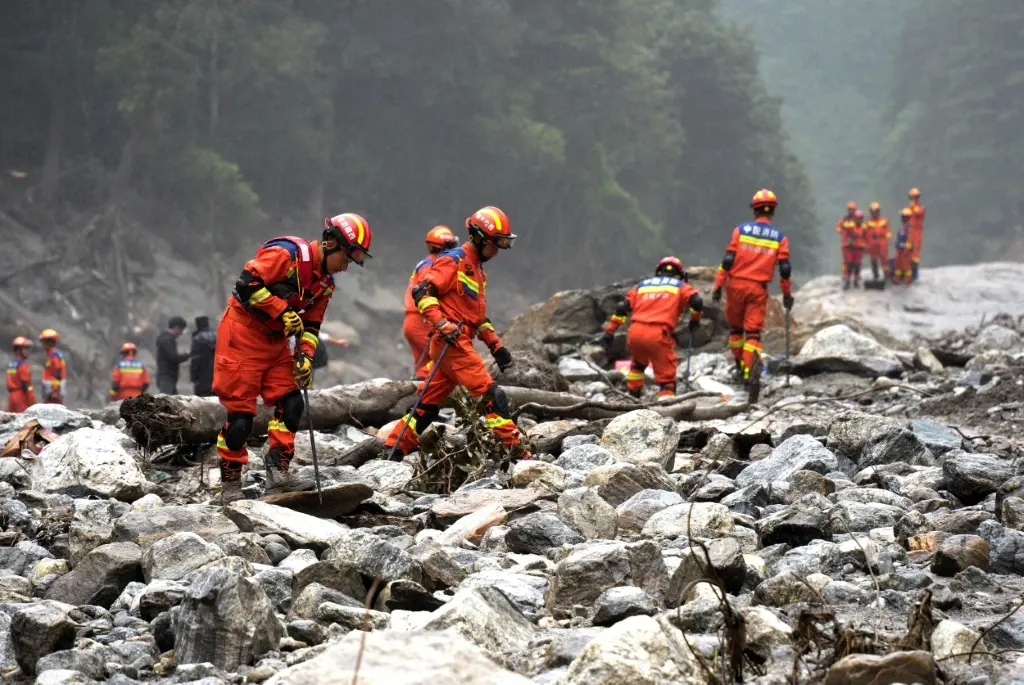
Sustainability Is Much Bigger Than “Being Green”
When people hear the word sustainability, they often think about reusable bags, recycling, electric vehicles, or eco-friendly products.
Bangkok’s flooding shows us that sustainability is much broader.
A sustainable city must understand where water will go.
Drainage infrastructure must adapt to future rainfall patterns.
Urban development must preserve places where water can temporarily remain.
Green space must become part of climate infrastructure, not simply urban decoration.
Businesses must also consider environmental impacts across their entire supply chains.
This is why concepts such as the Sponge City are receiving increasing attention internationally.
Instead of asking only:
“How quickly can we drain water away?”
Cities can ask:
“How can we absorb, store, slow down, and release water more intelligently?”
Retention parks, wetlands, permeable surfaces, green roofs, rain gardens, underground storage systems, and restored waterways can all reduce the peak amount of runoff entering drainage systems at once.
The future of flood management may therefore exist not only beneath streets in larger tunnels—but also in parks, rooftops, neighborhoods, and natural ecosystems.
What Does a Flood Have to Do With Sandals?
At first glance, Bangkok flooding may seem completely unrelated to sandals or handmade sandals.
But sustainability connects things that often appear separate.
The raw materials we choose, how products are manufactured, how far they travel, how long they last, and what happens at the end of their usable life all belong to one larger environmental system.
For Sandals World, the concept of Sustainable Thai Craft Sandals does not mean claiming that one pair of shoes can solve climate change or prevent urban flooding.
Instead, it begins with a different question:
Can we create beautiful products while becoming more responsible about the resources behind them?
Our approach connects handmade craftsmanship with Thai artisans, creative partners, and local communities.
Techniques such as macramé, crochet, embroidery, weaving, and traditional craft knowledge can become part of contemporary design, creating Artistic Handmade Sandals that carry both beauty and human stories.
Likewise, the idea behind Art & Craft Sandals is not simply to preserve craft as something from the past.
It is about demonstrating that craftsmanship can remain relevant in modern lifestyles while creating economic value for communities.
The future of Thailand sandals can therefore involve more than aesthetic design.
It can also involve better material choices, durability, thoughtful manufacturing, community participation, and continued efforts to reduce dependence on fossil-based resources wherever practical.
Real sustainability is rarely created by one perfect solution.
It happens through continuous improvements across an entire system.

Bangkok Flood 2026: A Warning and an Opportunity to Redesign Our Future
The September 2026 flooding should not automatically be interpreted as proof that Bangkok has no future.
Instead, it provides valuable real-world data showing where the current system becomes vulnerable under extreme conditions.
Research increasingly suggests that future flood management must combine many strategies:
better weather forecasting,
more intelligent canal management,
efficient pumping infrastructure,
additional water-retention areas,
more urban vegetation,
climate-adjusted drainage standards,
responsible land-use planning,
and stronger cooperation between Bangkok and neighboring provinces.
Waiting for another 200–300 millimeter rainfall event before asking these questions would mean wasting an important lesson.
Because the future of Bangkok will not be determined by rainfall alone.
It will also depend on how quickly we redesign our cities, businesses, infrastructure, and everyday choices for a changing climate.


Every Step Matters
At Sandals World, the phrase Every Step Matters can mean something larger than the footsteps we take in our sandals.
One step can mean creating more green spaces.
Another can mean protecting wetlands and canals.
One can mean choosing materials more thoughtfully.
Another can mean supporting handmade craftsmanship and local communities.
No single product can solve climate change.
No city can completely eliminate the risk of natural disasters.
But every society, business, community, and individual can decide which direction the next step should take.
𝙎𝙖𝙣𝙙𝙖𝙡𝙨 𝙒𝙤𝙧𝙡𝙙 𝙞𝙨 𝙏𝙝𝙖𝙞𝙡𝙖𝙣𝙙’𝙨 𝙡𝙖𝙧𝙜𝙚𝙨𝙩 𝙝𝙪𝙗 𝙤𝙛 𝙖𝙧𝙩𝙞𝙨𝙩𝙞𝙘 𝙝𝙖𝙣𝙙𝙢𝙖𝙙𝙚 𝙨𝙖𝙣𝙙𝙖𝙡𝙨


ABOUT THE CONTENT CREATOR
BUNTHARIK INSIRI
(Content Writer)
Sandals World | Art & Craft Sandals | Sustainable Thai Craft Sandals Tags: handmade sandals, sandals world, foot health,
Thailand sandals, artistic handmade sandals, art & craft sandals, plantar fasciitis, bunion, sustainable sandals and BIO EVA ,SW GREEN
Bangkok Flood 2026: Why Bangkok Flooded So Severely | Sandals World
Post Views: 2 At the end of September 2026, one question was on the minds [...]
Sep
El Niño 2026 and Sustainable Thai Craft Sandals: Why Every Step Matters
Post Views: 15 The climate is changing in ways that are becoming harder to ignore. [...]
Sep

Circular Fashion: Why Your Sandals Deserve a Second Life
Post Views: 12 What happens to your favorite pair of sandals when you stop wearing [...]
Sep

Chic Handmade: From Fingertips to Every Step The Story Behind Artistic Handmade Sandals from Thailand
Post Views: 12 In a world where factories can produce thousands of shoes every day, [...]
Sep

From Thai Craft to BIO EVA: How Sandals World Is Rethinking the Future of Sandals
Post Views: 11 When people think about sandals, they often think about comfort, summer, travel, [...]
Sep
Bangkok Just Became Asia’s #2 Most Repeat-Visited City in 2026 Here’s Why It’s Time to Walk the City in Handmade Sandals from Thailand
Post Views: 15 Give Bangkok another round of applause! Agoda, the world’s leading digital travel [...]
Sep

Chiang Mai, a World-Class City and the Art & Craft Sandals Behind Its Charm
Post Views: 14 Chiang Mai is no longer just a beloved destination for Thai travelers [...]
Sep
From Oil Wells to Sugarcane Fields: How Sandals World Turns Handmade Sandals Into a Climate Solution
Post Views: 17 Every year, we burn fossil fuels for energy and manufacturing. As a [...]
Sep
SANDALS WORLD GUIDE
Artistic Handmade Sandals
BY
SANDALS WORLD THAILAND
The Largest Hub
of Artistic Handmade Sandals in Thailand.