

Brand Stories
BIO EVA: A Material Transition for Handmade Sandals

Oct
Material Transition A Thoughtful Shift Toward More Responsible Materials
Can a pair of handmade sandals become sustainable simply by replacing conventional EVA foam with BIO EVA?
The answer is not necessarily.
Today, bio-based material innovations are gaining attention across the footwear industry. More brands are exploring materials derived from renewable resources, such as sugarcane, to reduce their reliance on fossil-based raw materials in certain product components.
However, changing the origin of a material does not automatically eliminate its environmental impact.
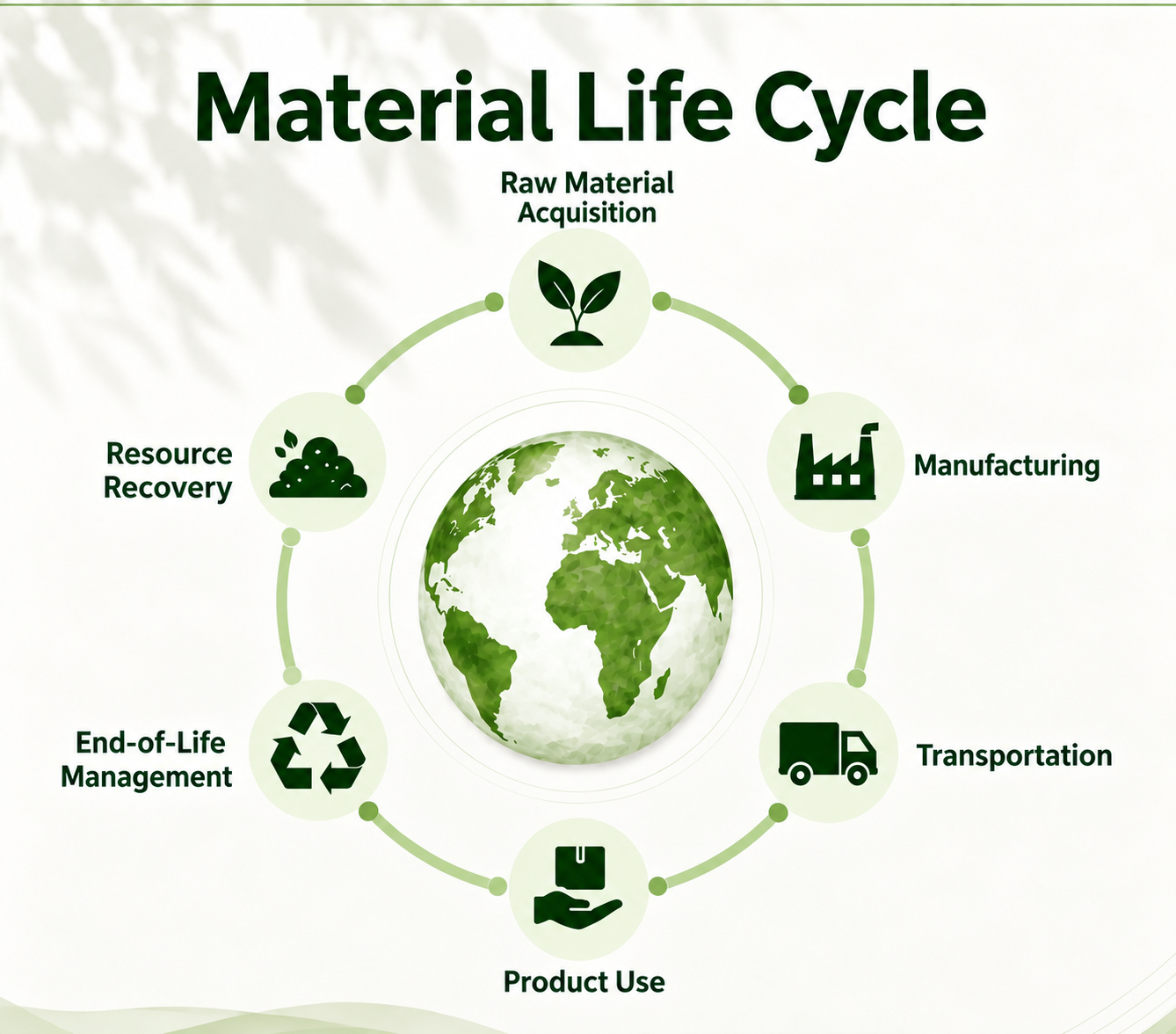
Manufacturing processes, transportation, product durability, and end-of-life management all influence a product’s environmental footprint.
For Sandals World, this is not about declaring that our handmade sandals have already achieved sustainability. Instead, it marks the beginning of a new chapter guided by Material Transition a thoughtful shift toward more responsible material choices.
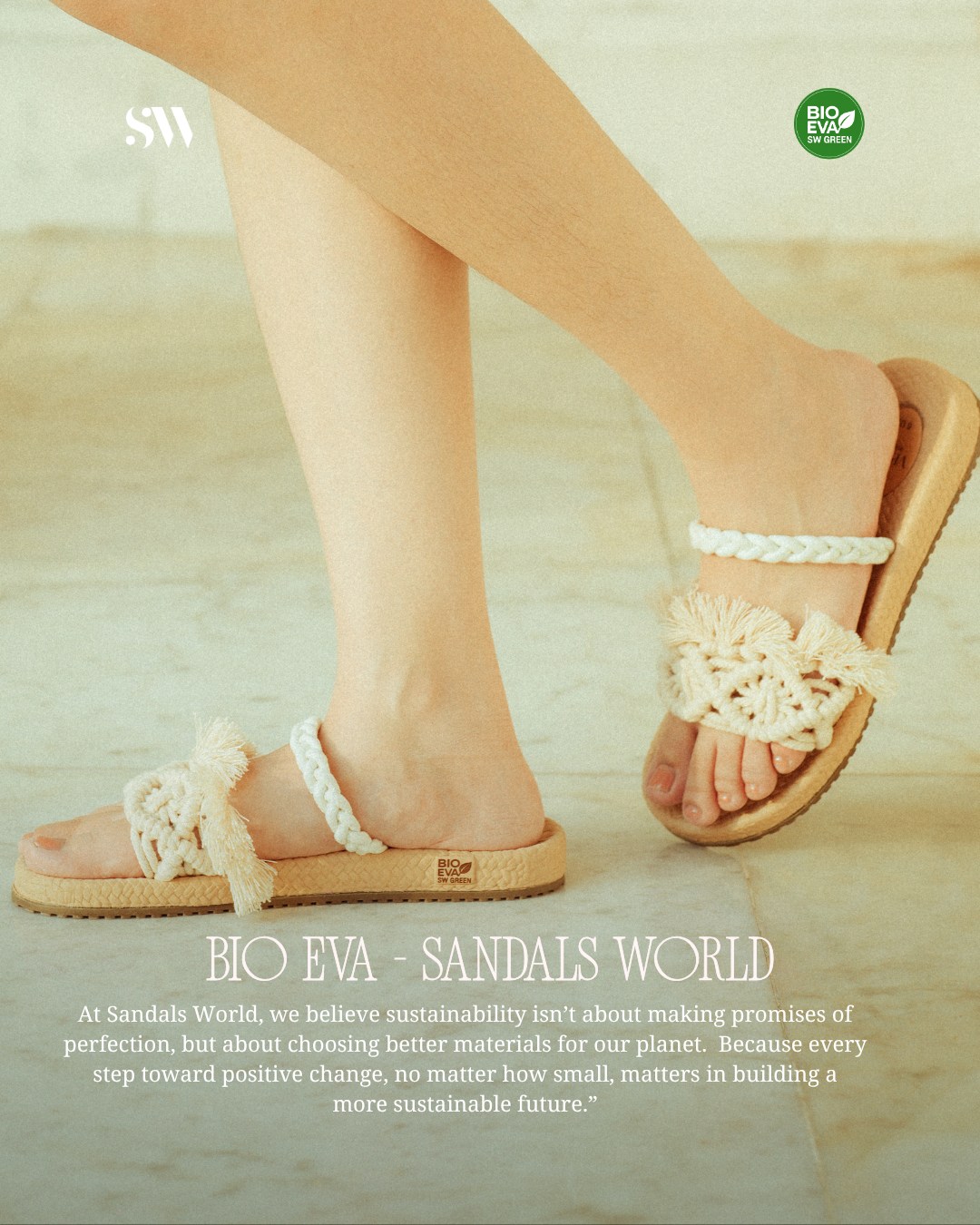
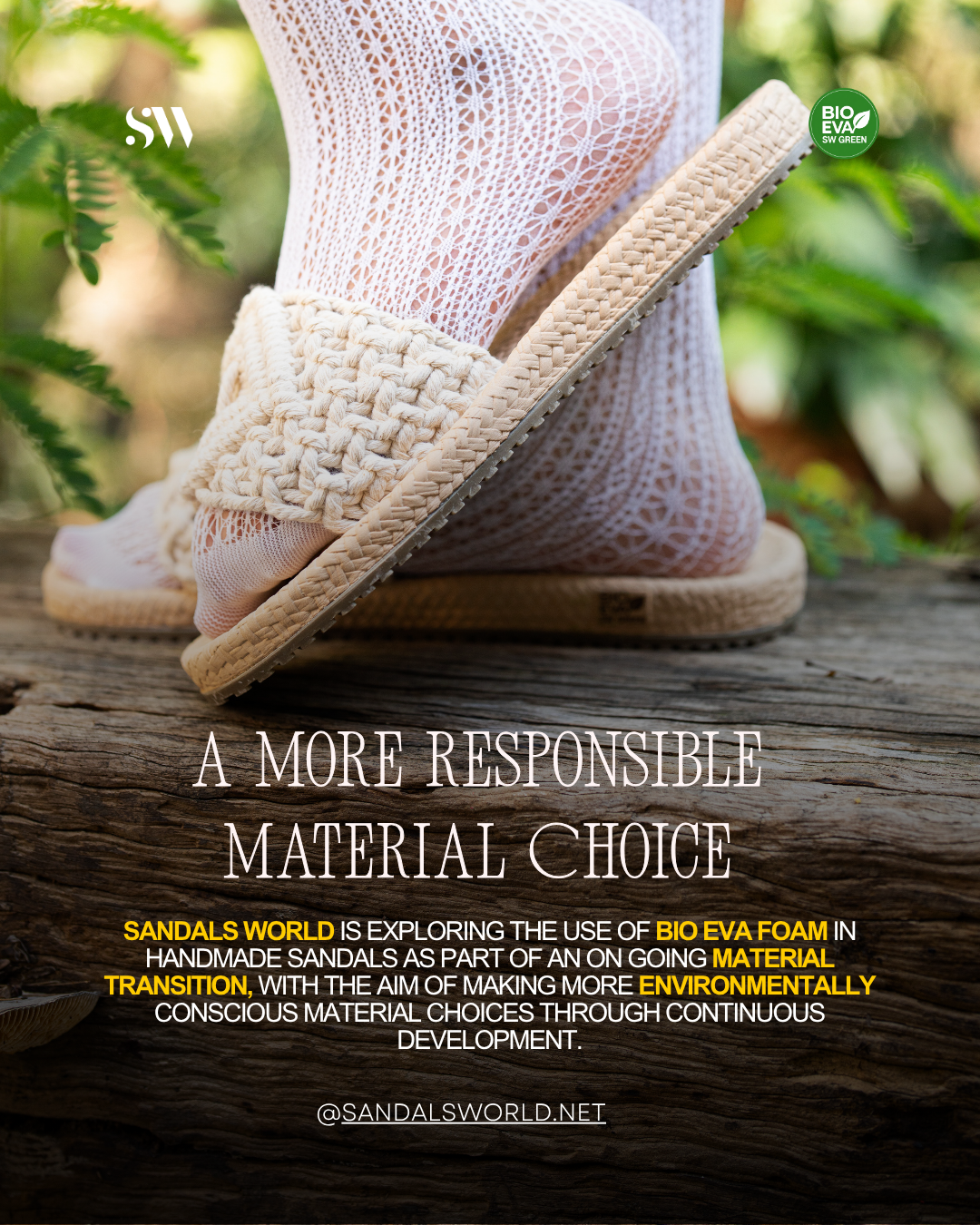
Sandals World is exploring and developing the use of BIO EVA foam containing bio-based materials in handmade sandals. Through this ongoing process, we aim to make more environmentally conscious material choices while preserving craftsmanship, thoughtful design, and the distinctive identity of Thai handmade sandals.
What Is BIO EVA, and Why Does It Matter to the Footwear Industry?
To understand BIO EVA, we first need to look at conventional EVA.
EVA, or Ethylene-Vinyl Acetate, is a copolymer widely used in footwear manufacturing. Manufacturers can process it into foam for soles, midsoles, and other components.
Depending on its formulation and production methods, EVA foam can offer desirable properties such as flexibility, cushioning, lightweight construction, and resilience.
Conventional EVA typically relies on petrochemical feedstocks.
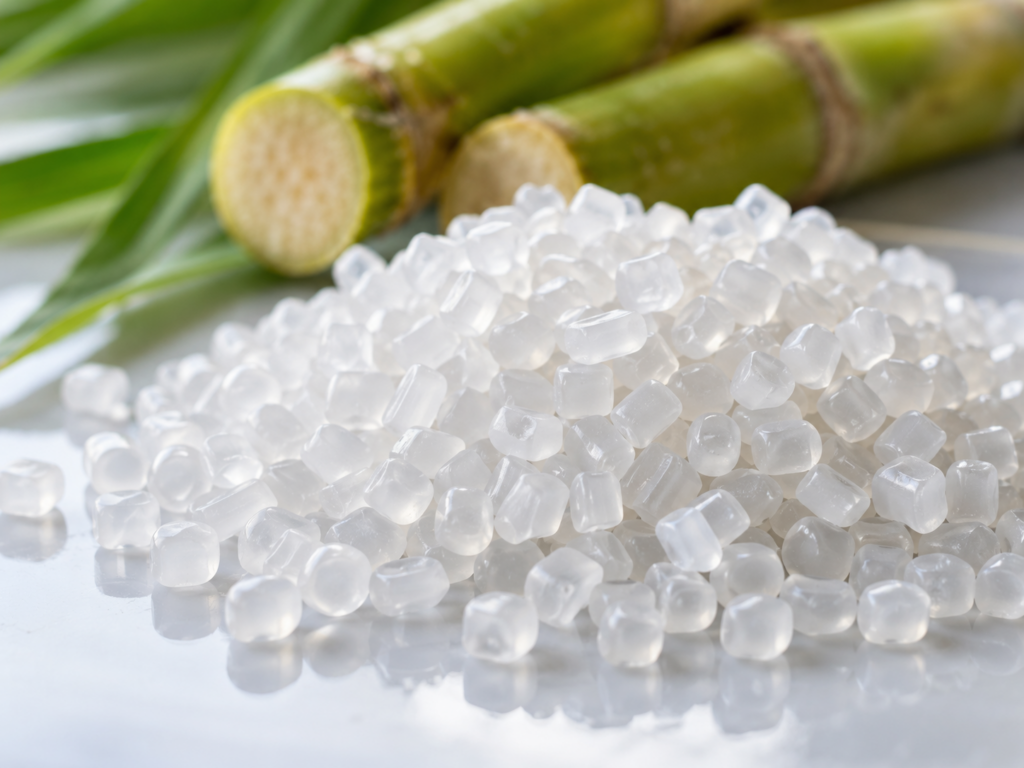
By contrast, BIO EVA, also known as bio-based EVA, incorporates raw materials derived from biological sources into its polymer production.
These materials may originate from renewable agricultural resources, including sugarcane.
However, the bio-based content varies depending on the manufacturer and formulation. Not every BIO EVA product contains the same proportion of renewable materials.
Sugarcane is considered a renewable resource because it can be grown and replenished through agricultural production. Nevertheless, its cultivation, processing, and transportation still require resources and may generate environmental impacts.
The significance of BIO EVA therefore lies in its potential to replace certain fossil-derived feedstocks with bio-based alternatives.
Rather than representing a complete environmental solution, BIO EVA offers an opportunity to rethink where footwear materials come from and how they might evolve.
From Sugarcane to BIO EVA: How Can Renewable Resources Become Sandal Foam?
Sugarcane is one of several biological resources that manufacturers can use to produce certain polymers.
For example, Braskem has developed bio-based EVA technology using ethylene derived from sugarcane.
A simplified production pathway looks like this:
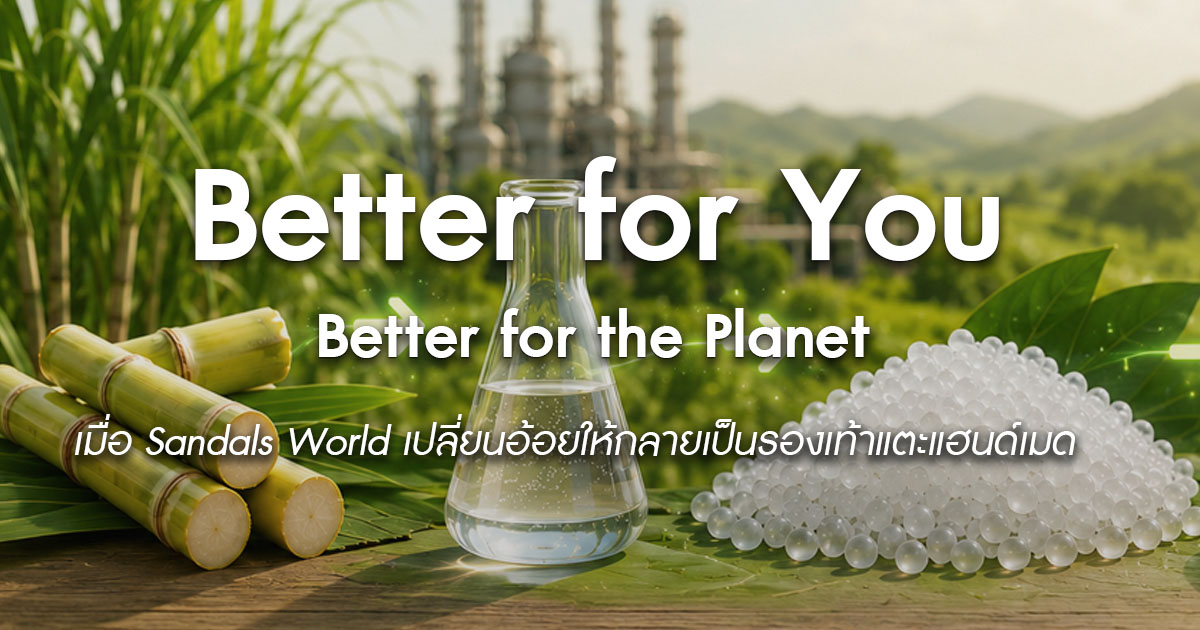
Sugarcane → Bio-Ethanol → Bio-Ethylene → Bio-based EVA → Foam → Sandals
The process begins with sugarcane-derived feedstocks, which manufacturers convert into ethanol.
They then transform ethanol into bio-based ethylene. This ethylene can serve as one of the building blocks used to manufacture EVA polymers.
After polymer production, manufacturers process the resulting materials into foam according to the properties required for their intended applications.
This pathway demonstrates how renewable biological resources can replace certain fossil-derived raw materials in polymer production.
However, an important distinction remains.
BIO EVA does not necessarily contain 100% bio-based materials, and not every ingredient used in the finished foam originates from sugarcane.
Furthermore, this production pathway describes an example of available technology. It does not confirm that the BIO EVA materials Sandals World is exploring use the exact same feedstocks, formulations, or manufacturing processes.
Those details must be verified through documentation from the actual material supplier.
BIO EVA
What Is Material Transition, and Why Does It Matter More Than Simply Going Green?
Material Transition refers to the ongoing process of reviewing, selecting, and developing materials to meet functional requirements while considering long-term environmental objectives.
It is not simply about replacing one material and declaring the process complete.
Instead, it involves examining broader questions about product development.
How much can manufacturers reduce their reliance on fossil-based raw materials? Can alternative materials maintain the required product performance? How long will the product remain usable? What happens when it reaches the end of its life?
For the handmade sandals industry, these questions also extend to the relationship between traditional craftsmanship, contemporary design, and material innovation.
Introducing a new material may create opportunities for product development. However, it also requires testing and evaluation.
Manufacturers must consider comfort, durability, foam performance, production compatibility, and suitability for everyday use.
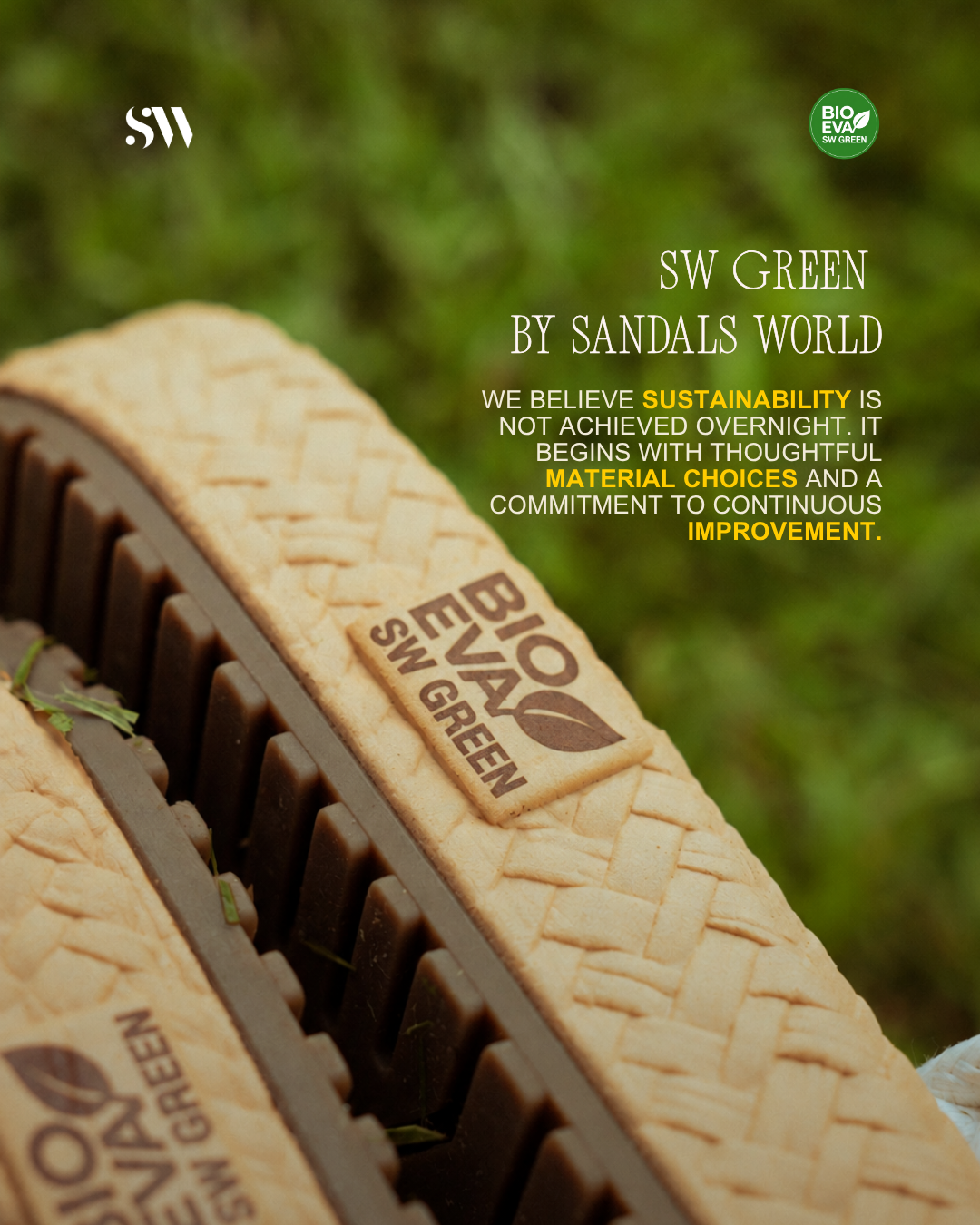
This is why Sandals World approaches BIO EVA as one area of material exploration under its SW GREEN direction, rather than presenting it as the final answer to sustainability.
Material Transition is a process of continuous improvement, not a one-time achievement.

Is BIO EVA Better for the Environment? Four Important Facts to Understand
1. Bio-Based Does Not Mean 100% Natural
One common misunderstanding is that a material containing renewable feedstocks must be entirely natural.
In reality, the term bio-based refers to the biological origin of a material’s feedstocks. It does not automatically mean that every component comes from plants.
For example, Braskem has published information about certain BIO EVA grades with bio-based carbon contents of approximately 45–80%, measured using ASTM D6866 methods.
These figures apply to the manufacturer’s specified materials. They do not represent the verified bio-based content of the foam currently being explored by Sandals World.
Importantly, bio-based carbon content is not necessarily equivalent to the percentage of bio-based material by total mass in a finished pair of sandals.
Any percentage claim should identify what was tested, which measurement method was used, and which product component the result covers.
2. BIO EVA Is Not Automatically Biodegradable
Another common misconception is that plastics produced from plants naturally decompose in soil or seawater.
However, bio-based and biodegradable describe two different properties.
Bio-based refers to the origin of a material’s raw materials.
Biodegradable describes its ability to break down under specific environmental conditions.
The European Commission explains that bio-based plastics are not necessarily biodegradable or compostable.
Therefore, BIO EVA should not be promoted as naturally biodegradable unless specific, relevant testing supports that claim.
A renewable origin does not guarantee a biodegradable end of life.
3. Renewable Materials Do Not Automatically Mean Carbon Neutral
Replacing certain fossil-derived feedstocks with renewable alternatives may support efforts to reduce fossil resource dependence.
However, the origin of a raw material alone cannot determine the total greenhouse gas emissions associated with a product.
A more complete assessment needs to consider agricultural production, energy consumption, transportation, polymer manufacturing, foam processing, sandal assembly, and end-of-life management.
Life Cycle Assessment (LCA) is one approach used to evaluate environmental impacts across defined stages of a product’s life cycle.
Without appropriate evidence, it would be misleading to claim that BIO EVA reduces carbon emissions by a particular percentage or makes an entire pair of sandals carbon neutral.
For Sandals World, responsible communication means distinguishing between the potential benefits of material innovation and verified environmental outcomes.
4. Changing the Foam Does Not Change Every Component of a Sandal
A single pair of handmade sandals may contain multiple materials.
These can include foam, rubber outsoles, textile straps, decorative elements, adhesives, and other components.
Even when the foam contains BIO EVA, it does not mean that every part of the finished sandal comes from renewable resources.
Similarly, the technical recyclability of certain polymer materials does not guarantee that finished sandals can be recycled through existing waste management systems.
Different components may be permanently bonded together, making separation and recycling more challenging.
As a result, environmental claims should clearly identify the material or product component they describe.
For example, information about BIO EVA foam should not be presented as proof of the environmental performance of an entire pair of sandals.
Sandals World and the Material Transition Behind SW GREEN
Sandals World focuses on the development of handmade sandals from Thailand, connecting contemporary design with local craftsmanship and the creativity of Thai makers.
Through SW GREEN, we are exploring and developing the use of BIO EVA foam containing bio-based materials as part of an ongoing transition toward more environmentally conscious material choices.
This direction does not replace the craftsmanship behind handmade products.
Instead, it encourages us to explore how alternative materials might work alongside established techniques, creative design, and practical footwear requirements.
We believe craftsmanship and material innovation can evolve together.
Handmade techniques contribute character, detail, and individuality to each design. Material development, meanwhile, encourages new questions about resource origins, manufacturing processes, and future opportunities.
This approach also connects with our vision for Artistic Handmade Sandals and Art & Craft Sandals.
For Sandals World, thoughtful footwear design involves more than appearance. It also considers comfort, functionality, material properties, and the people involved in creating each product.
We are not claiming that our sandals have already achieved sustainability. We are learning, exploring, and developing more responsible material choices through continuous improvement.
That is the direction we want SW GREEN to represent.
Sustainability Must Be Verifiable: Understanding Greenwashing
Greenwashing occurs when environmental communication creates misleading impressions, makes unsupported claims, or exaggerates the environmental benefits of a product.
Terms such as eco-friendly, green, and sustainable may sound appealing.
However, without clear explanations and supporting evidence, these terms can lead consumers to believe that a product has minimal environmental impacts across its entire life cycle.
ISO 14021:2026 addresses self-declared environmental claims and establishes requirements relevant to clear, accurate, and substantiated environmental communication.
Following its principles does not automatically mean that a product has received independent environmental certification.
Likewise, compliance with general environmental communication requirements does not replace specific evidence needed to support claims about carbon neutrality or overall product sustainability.
For BIO EVA, meaningful verification may involve reviewing material specifications, supplier documentation, feedstock information, and relevant test reports.
If laboratory testing is available, it is also important to identify what was actually tested.
Did the results cover polymer pellets, processed foam, or the finished sandals?
These are different materials and product stages. Evidence for one should not automatically be extended to another.
At Sandals World, we believe responsible environmental communication should prioritize clarity over exaggerated promises.
The goal is not to use the most impressive environmental language.
It is to communicate what we know, explain what we are still developing, and support our statements with information that can be verified.

The Future of Sustainable Thai Craft Sandals Goes Beyond a Single Material
When people think about Thailand sandals, they may picture intricate weaving, expressive handmade details, and designs inspired by Thai creativity.
Yet the future of handmade footwear may involve more than craftsmanship and appearance.
Consumers may increasingly value material transparency, product durability, practical functionality, and a clearer understanding of environmental impacts.
Sandals made with partially bio-based materials still need appropriate testing for comfort, performance, durability, and safety.
Their environmental characteristics also require consideration beyond the production stage.
At the same time, sustainability development needs credible information rather than simply changing material names or placing green symbols on product packaging.
For these reasons, Sandals World approaches Sustainable Thai Craft Sandals as a long-term development direction, not as a declaration that every product has already achieved sustainability.
We believe Thai craftsmanship, contemporary design, and responsible material exploration can support one another.
However, meaningful progress must begin with accurate information, practical development, and a willingness to keep improving.
Frequently Asked Questions About BIO EVA
What Is the Difference Between BIO EVA and Conventional EVA?
The main difference is the origin of certain raw materials.
BIO EVA incorporates bio-based feedstocks into polymer production, while conventional EVA typically relies on fossil-derived feedstocks.
However, the properties of the resulting foam depend on its formulation and manufacturing process.
Is BIO EVA Made from 100% Sugarcane?
Not necessarily.
Some BIO EVA formulations use sugarcane-derived ingredients to produce certain polymer components.
The actual proportion of bio-based material varies by product grade and manufacturer. Supplier documentation is necessary to verify the composition of a specific material.
Is BIO EVA Naturally Biodegradable?
Not automatically.
Bio-based materials are not necessarily biodegradable. Any biodegradability claim requires suitable evidence and testing under defined conditions.
How Much Can BIO EVA Reduce Carbon Emissions?
There is no single reduction percentage that applies to every BIO EVA formulation or every pair of sandals.
Quantifying emissions reductions requires appropriate assessment, reliable data, clearly defined boundaries, and a valid comparison.
Are All Sandals World Products Already Made with BIO EVA?
Sandals World is currently exploring and developing the use of BIO EVA foam as part of its Material Transition direction.
This should not be interpreted as confirmation that every sandal collection or product already uses BIO EVA.
Material Transition: Meaningful Progress Begins with Responsibility
Meaningful change does not always begin with a major announcement.
Sometimes, it begins with questioning a single material used in an everyday product.
It may involve studying the origin of a raw material, examining a manufacturing process, or exploring alternatives without compromising functionality and quality.
For Sandals World, the ongoing exploration of BIO EVA represents part of that journey.
We do not believe that one material can solve every environmental challenge.
Nor do we assume that introducing bio-based ingredients makes an entire pair of handmade sandals free from environmental impacts.
Instead, we believe that thoughtful development, verifiable information, and responsible decisions can help guide meaningful progress.
Sustainability is not achieved overnight. It is a continuous journey of learning, thoughtful choices, and ongoing improvement.
BIO EVA represents one part of that journey.
Not a final answer, but a thoughtful material transition.
BIO EVA — A Thoughtful Material Shift.
SW GREEN by Sandals World
Sustainable Thai Craft Sandals — A Journey of Continuous Improvement.
𝙎𝙖𝙣𝙙𝙖𝙡𝙨 𝙒𝙤𝙧𝙡𝙙 𝙞𝙨 𝙏𝙝𝙖𝙞𝙡𝙖𝙣𝙙’𝙨 𝙡𝙖𝙧𝙜𝙚𝙨𝙩 𝙝𝙪𝙗 𝙤𝙛 𝙖𝙧𝙩𝙞𝙨𝙩𝙞𝙘 𝙝𝙖𝙣𝙙𝙢𝙖𝙙𝙚 𝙨𝙖𝙣𝙙𝙖𝙡𝙨


ABOUT THE CONTENT CREATOR
BUNTHARIK INSIRI
(Content Writer)
Sandals World | Art & Craft Sandals | Sustainable Thai Craft Sandals Tags: handmade sandals, sandals world, foot health,
Thailand sandals, artistic handmade sandals, art & craft sandals, plantar fasciitis, bunion, sustainable sandals and BIO EVA ,SW GREEN

BIO EVA: A Material Transition for Handmade Sandals
Post Views: 1 Material Transition A Thoughtful Shift Toward More Responsible Materials Can a pair [...]
Oct

Milala Handmade Mini Heart Collection: A Small Heart with a Big Journey to Tainan
Post Views: 3 Big journeys do not always begin with something loud or dramatic. Sometimes, [...]
Oct

From Sacred Thai Garlands to Modern Hair Fashion: The Heritage Behind MALAI IN MOTION
Post Views: 7 MALAI IN MOTION WITH HANDMADE SANDALS BY SANDALS WORLD “Twisting Thai Garlands, [...]
Oct

VPADA Handmade Sandals October 2026: One Catalog, Endless Ways to Express Yourself
Post Views: 10 What if the perfect pair of sandals could say more about your [...]
Oct

What Is BIO EVA? Can Sugarcane Plastic Save the Planet?
Post Views: 16 Every time we buy a new pair of sandals, we may unknowingly [...]
Oct

Are Your Sandals Harming the Planet Before You Even Wear Them? The BIO EVA Revolution
Post Views: 20 What if your favorite pair of sandals had already left an environmental [...]
Oct

The Ocean Is Heating Faster Than Ever: Why Low-Carbon Design Must Start Now
Post Views: 13 What if the ocean we know today no longer looks the same [...]
Oct

If Local Art Disappears, What Will the World Remember? From Mae Hong Son to D NICE MARKET with Sandals World
Post Views: 28 Imagine a future where traditional patterns disappear from local communities. Craft techniques [...]
Oct
SANDALS WORLD GUIDE


Artistic Handmade Sandals
BY
SANDALS WORLD THAILAND
The Largest Hub
of Artistic Handmade Sandals in Thailand.