

Brand Stories
Beyond Beautiful Sandals: Celebrating 6 Years of VPADA with Craft, Comfort, and BIO EVA
Sep
What connects a carefully tied macramé knot, a northern Thai weaving community, and a field of sugarcane?
At first glance, perhaps very little. Yet together, they tell a bigger story about the future of handmade sandals.
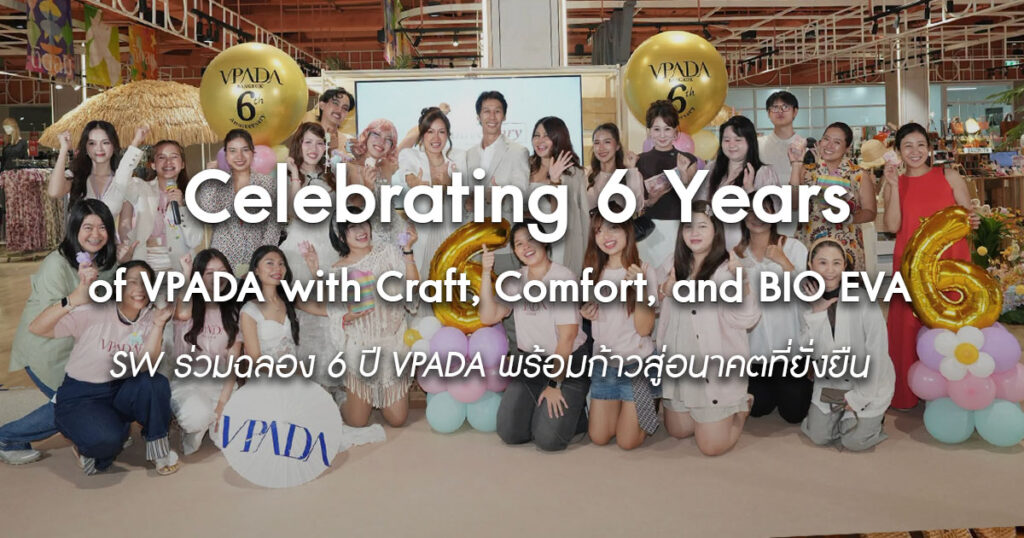
At VPADA’s 6th Anniversary celebration, Sandals World proudly joined customers, friends, and partners to honour six years of creativity. The occasion brought warm wishes, shared memories, and a chance to look ahead.
As a partner in product development, Sandals World also shared its approach to improving footwear materials through SW GREEN. This initiative explores how sugarcane-based BIO EVA can support a shift away from fossil-based feedstocks.
The message was simple: beautiful design is only the beginning. Thoughtful sandals should also consider the people who make them, the materials beneath our feet, and everyday comfort.


A handmade brand grows through countless decisions: a different knot, a softer finish, a new silhouette, or a better fit.
Over six years, VPADA has brought these details together through its distinctive approach to craftsmanship. Macramé, crochet, and decorative touches give its footwear character while keeping the designs relevant to everyday wardrobes.
However, this anniversary celebrates more than a collection of products. It recognises the dedication of makers, the trust of customers, and the partnerships that help ideas become reality.
For Sandals World, working with VPADA means contributing to that ongoing development. Together, we explore how design, materials, and construction can strengthen Thai handmade footwear and support its journey towards international markets.
The celebration offered a moment to appreciate that progress—and imagine what comes next.

SW GREEN: Rethinking What Goes Beneath Our Feet
When choosing sandals, we often notice colour and texture first. The foam underneath rarely receives the same attention.
Yet it plays an important role in how footwear feels and where its materials come from.
Conventional EVA, short for ethylene-vinyl acetate, typically relies on fossil-derived feedstocks. Manufacturers commonly use it in footwear because it offers useful combinations of lightness, flexibility, and cushioning.
Through SW GREEN, Sandals World is developing foam soles that incorporate sugarcane-based BIO EVA. This approach replaces part of the fossil-derived input with a renewable feedstock.
The process involves several stages. Sugarcane provides the raw material for ethanol production. Manufacturers then convert that ethanol into bio-based ethylene, a building block for EVA.
In other words, this is not simply sugarcane fibre pressed into a sole. It is a change in the origin of part of the polymer’s raw materials.
The resulting foam still needs careful formulation, construction, and testing to meet the needs of footwear.

Can Sugarcane-Based BIO EVA Reduce Carbon Impact?
Sugarcane-based EVA can offer a lower carbon footprint than fossil-based alternatives, depending on production conditions and the assessment boundary.
For example, Braskem’s updated life-cycle assessment reports an approximate reduction of 4.5 kilograms of CO₂ equivalent per kilogram of its bio-based EVA compared with fossil-based alternatives. The company states that the assessments followed international life-cycle assessment standards and underwent independent review. Source: Braskem’s updated life-cycle assessment
However, this result does not automatically describe a finished SW GREEN sole or an entire pair of sandals.
The final footprint depends on the material grade, bio-based content, additives, manufacturing energy, transport, and other components. Product-specific evidence is therefore essential before stating an exact carbon reduction or claiming certification.
For Sandals World, SW GREEN represents a direction towards lower-carbon material choices. It is an ongoing development effort, not a claim that footwear can have no environmental impact.
Bio-Based Does Not Mean Biodegradable
There is another important distinction behind the word “bio.”
Bio-based describes where a material’s raw ingredients originate. Biodegradable describes its ability to break down through biological processes under specified conditions.
These terms are not interchangeable.
Sugarcane-based BIO EVA remains an EVA polymer. Its renewable origin does not mean a finished sole will quickly disappear in soil or seawater.
Instead, its value lies in changing the feedstock while retaining properties useful for footwear. Commercial footwear applications demonstrate how sugarcane-based EVA blends can combine lightweight comfort with a reduced greenhouse-gas footprint under their specific assessments. Source: Braskem and Native Shoes
Clear communication helps customers understand what a material can offer and what it cannot.
The Three Pillars of Sandals World
Sandals World connects three priorities in its product development: distinctive design, thoughtful materials, and everyday comfort.
Together, these pillars shape its vision for Sustainable Thai Craft Sandals.


A handcrafted pattern can carry more than visual appeal. It can reflect local knowledge, cultural identity, and skills passed between generations.
Some Sandals World designs explore macramé and crochet. Others involve collaboration with northern Thai communities, bringing traditional weaving, embroidery, and local details into contemporary footwear.
The aim is to create wearable designs while respecting the people and traditions behind them.
This gives Artistic Handmade Sandals a deeper meaning. The artistry comes not only from decoration, but also from the relationship between the maker, the material, and the design.
Likewise, Art & Craft Sandals can introduce traditional techniques to new audiences without treating heritage as something that belongs only in the past.
For international shoppers exploring Thailand sandals, these connections offer something distinctive: footwear with a recognisable sense of place.


2. Materials Chosen with Purpose
A sandal’s identity should extend beyond its upper.
Under the SW GREEN approach, sugarcane-based BIO EVA contributes to the foam component, while Thai natural rubber forms part of the outsole development.
Each material serves a different purpose. The foam supports cushioning and lightness, while the rubber outsole contributes to the shoe’s contact with the ground.
These choices also connect product development with agricultural resources and material innovation.
Nevertheless, a renewable ingredient alone does not make a finished product fully sustainable. Responsible sourcing, manufacturing practices, durability, and end-of-life options all deserve attention.
Sandals World’s goal is to keep improving those choices while communicating their benefits accurately.


3. Comfort for Everyday Wear
Beautiful footwear should earn its place in everyday life.
Sandals World therefore emphasises contoured footbeds designed to follow the shape of the foot and provide supportive contact.
Meanwhile, rubber outsoles incorporate features intended to improve grip. Actual slip resistance still depends on the outsole design, surface conditions, wear, and appropriate testing.
The upper matters, too. Strap placement, finishing, and fit influence how comfortable a pair feels over time.
These details help turn craftsmanship into an experience, not simply an appearance. Comfort will vary between wearers, so choosing the right size and fit remains important.
More Than a Pair: Creating Opportunities Through Craft
A pair of handmade sandals can connect many contributors: designers, weaving communities, knotting artisans, sole manufacturers, agricultural suppliers, and retail partners.
When brands collaborate with communities, they can create new applications for existing skills and open access to wider markets.
However, meaningful collaboration requires more than an attractive story. Fair compensation, clear credit, and community participation should guide the process.
Respecting local knowledge also means involving its owners in how designs develop and how their stories reach customers.
Through this approach, craft can remain a living source of creativity and income rather than becoming a decorative reference.
That is an important part of sustainability: considering people alongside materials.
A Shared Future, One Meaningful Step at a Time
VPADA’s 6th Anniversary was both a celebration and an invitation to keep developing.
It created space to ask a bigger question: how can Thai handmade footwear become more distinctive, more comfortable, and more responsible?
No single material provides the complete answer. Progress comes through thoughtful design, respectful partnerships, suitable construction, and evidence-based improvements.
SW GREEN contributes to that journey by exploring sugarcane-based BIO EVA alongside Thai natural rubber and community-inspired craftsmanship.
Sandals World hopes this approach encourages more entrepreneurs to examine their materials, ask better questions, and offer consumers choices they can understand and trust.
To VPADA, thank you for welcoming us into this special celebration and for the opportunity to create and grow together.
Happy 6th Anniversary, VPADA.
Here’s to the makers, the partnerships, and the possibilities ahead—and to bringing Thai craftsmanship to the world, one meaningful step at a time.
𝙎𝙖𝙣𝙙𝙖𝙡𝙨 𝙒𝙤𝙧𝙡𝙙 𝙞𝙨 𝙏𝙝𝙖𝙞𝙡𝙖𝙣𝙙’𝙨 𝙡𝙖𝙧𝙜𝙚𝙨𝙩 𝙝𝙪𝙗 𝙤𝙛 𝙖𝙧𝙩𝙞𝙨𝙩𝙞𝙘 𝙝𝙖𝙣𝙙𝙢𝙖𝙙𝙚 𝙨𝙖𝙣𝙙𝙖𝙡𝙨


ABOUT THE CONTENT CREATOR
BUNTHARIK INSIRI
(Content Writer)
Sandals World | Art & Craft Sandals | Sustainable Thai Craft Sandals Tags: handmade sandals, sandals world, foot health,
Thailand sandals, artistic handmade sandals, art & craft sandals, plantar fasciitis, bunion, sustainable sandals and BIO EVA ,SW GREEN

VPADA Handmade Sandals: Better Together, Sweeter Your Way! Discover Chang Journey’s New Color & Orchid Sandals
Views: 9 Who says handmade sandals have to be simple? Sometimes, the smallest details can [...]
Oct

Halloween in Chiang Mai: Too Many Beautiful Sandals to Choose From! Discover CMP Handmade Sandals
Views: 12 Spooky Season, Stylish Steps! What’s scarier than ghosts this Halloween? Finding so many [...]
Oct

BIO EVA: From Sugarcane to Every Step A New Chapter in Handmade Sandals
Views: 11 When we think of sugarcane, we often imagine sugar, sweet drinks, or agricultural [...]
Oct
Witheechon x SW GREEN: Bringing Thai Cultural Heritage into the Modern World Through Sandals World’s Three Pillars
Views: 12 Before a pair of sandals begins its journey, have you ever wondered about [...]
Oct

Milala Handmade Featured on PChome Taiwan: Thai Craftsmanship Heads to STRIKE ROCK FESTIVAL 2026
Views: 19 From carefully tied knots and handcrafted sandals to recognition in Taiwanese media, Milala [...]
Oct

Recycling Is No Longer Enough: How Europe’s Circular Fashion Movement Is Changing the Future of Fashion
Views: 16 Europe discards approximately five million tonnes of clothing every year, yet only around [...]
Oct

How Much Can One Tourist Contribute to a Local Community? Thailand’s Shift Beyond Visitor Numbers
Views: 21 How Much Does One Tourist Contribute to a Local Community? Thailand’s Tourism Economy [...]
Oct

BIO EVA: A Material Transition for Handmade Sandals
Views: 45 Material Transition A Thoughtful Shift Toward More Responsible Materials Can a pair of [...]
Oct
SANDALS WORLD GUIDE



Artistic Handmade Sandals
BY
SANDALS WORLD THAILAND
The Largest Hub
of Artistic Handmade Sandals in Thailand.