

Brand Stories, Knowledge & Insights
Why the Fashion World Is Finally Walking Away from Fast Fashion

Mar
One Pair of Sandals Can Change How You Shop Forever — Why the Fashion World Is Finally Walking Away from Fast Fashion

The Rise of Handmade Sandals in a New Sustainability Era
Think about the last pair of sandals you bought on a budget. Where are they now?
If you’re honest, the answer is probably “in the back of the closet” or already thrown away after only a few wears.
That isn’t a personal mistake. It’s the result of a system designed around fast fashion: products made quickly, cheaply, and temporarily.
For decades, the fashion industry trained consumers to replace instead of repair. But today, a powerful shift is happening across the sandals world. Consumers are no longer just shopping for style — they are searching for meaning, durability, and sustainability.
And at the center of this transformation stands a growing movement: handmade sandals.
Unlike factory-produced footwear, handmade creations begin not on an assembly line but in the hands of artisans where craftsmanship, material awareness, and environmental responsibility naturally intersect.

The Fashion Industry’s Waste Problem — And Why Sandals Matter
The global fashion industry remains one of the largest contributors to environmental pollution. Billions of footwear items are produced annually, yet many are discarded before completing even a single season of use.
Fast fashion doesn’t fail by accident it succeeds by encouraging constant replacement.
Cheap adhesives weaken. Trend-driven designs expire quickly. Repair becomes impossible.
This linear system creates waste at every stage.
In contrast, Thailand sandals crafted through handmade processes follow a circular mindset rooted in longevity. Many artisan makers apply principles aligned with Zero Waste philosophy — designing products with their full lifecycle in mind.
This shift is redefining how modern consumers evaluate value.
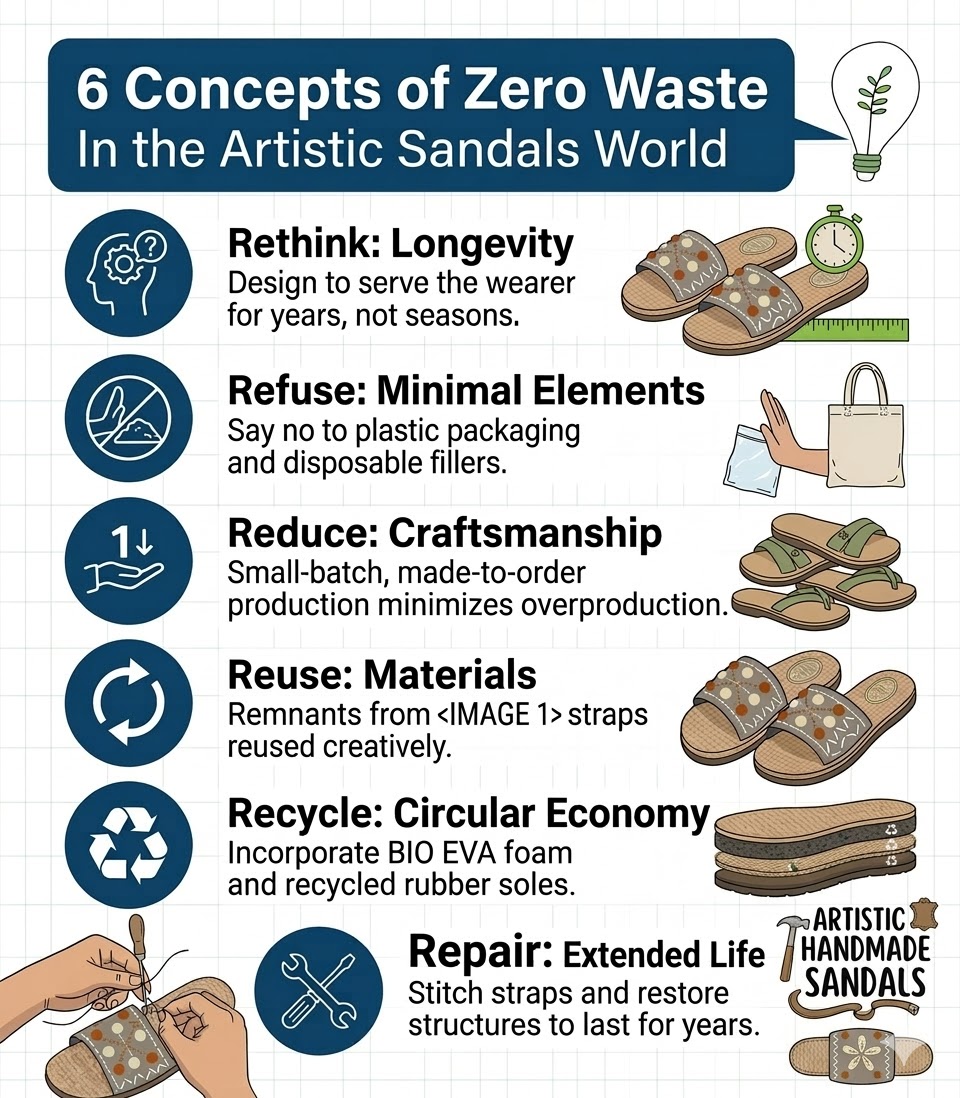
The 6 Zero Waste Principles Transforming the Sandals World
1. Rethink — Designing for Years, Not Seasons
Mass-market brands typically ask:
“What will sell this season?”
Creators of Artistic Handmade Sandals ask a different question:
“How long will this pair serve the wearer?”
That single change reshapes everything:
-
material sourcing
-
stitching techniques
-
ergonomic comfort
-
timeless aesthetics
Timeless design reduces consumption because products remain relevant beyond trends. Here, sustainability becomes a design decision rather than a marketing label.
2. Refuse — Conscious Creation Begins With Saying No
Zero Waste begins by refusing unnecessary materials.
Many Art & Craft Sandals brands intentionally avoid:
-
single-use plastic packaging
-
toxic synthetic components
-
disposable fillers
Instead, reusable cloth bags or multi-purpose packaging extend product life beyond purchase.
Customers don’t just receive footwear — they receive participation in a value system centered on responsibility.
3. Reduce — Make Less, Make Better
One defining strength of handmade production is intentional limitation.
Unlike industrial production, handmade sandals are often:
-
made-to-order
-
small-batch produced
-
crafted according to actual demand
Reducing overproduction dramatically lowers resource waste and carbon impact.
In today’s sandals world, where unsold inventory often ends in landfills, producing fewer but higher-quality items is a radical act.
Quality replaces quantity as the measure of success.
4. Reuse — Turning Imperfection Into Art
The artistic nature of Artistic Handmade Sandals allows makers to reinterpret materials creatively.
Examples include:
-
macramé rope remnants becoming straps
-
textile offcuts transforming into decorative layers
-
reclaimed packaging redesigned as eco wrapping
Each pair becomes slightly different — and that uniqueness increases emotional value.
What mass production calls inconsistency, craftsmanship calls identity.
This is where handmade footwear crosses into wearable art.
5. Recycle — Materials With a Second Life
Modern Thailand sandals producers increasingly incorporate:
-
BIO EVA foam
-
recycled rubber
-
plant-based fibers
-
responsibly sourced natural materials
Recycling in handmade production enhances both environmental impact and storytelling value.
Today’s consumers actively seek products aligned with sustainability values, making recycled-material sandals not only ethical but economically competitive.
Meaning has become part of product quality.
6. Repair — The Forgotten Skill Returning to Fashion
Perhaps the most revolutionary principle is repairability.
Factory footwear is often designed to be disposable. Handmade sandals are designed to evolve.
Artisans can:
-
replace straps
-
repair soles
-
adjust fit
-
restore structure
A well-maintained pair of handmade sandals can last 5–10 years developing character through wear.
This creates something fast fashion rarely achieves: emotional attachment between owner and object.

Why Thailand Sandals Are Gaining Global Recognition
The global rise of Thailand sandals reflects a perfect cultural alignment.
Traditional Thai craftsmanship already embodies values modern consumers now demand:
-
transparency in production
-
human-centered craftsmanship
-
artistic individuality
-
sustainable practices
While global brands invest heavily in appearing sustainable, handmade workshops naturally operate within sustainable systems.
Authenticity has become a competitive advantage.
And authenticity cannot be mass-produced.
Handmade Sandals as the Future of Sustainable Fashion
Across international markets, purchasing behavior is shifting toward products that combine:
-
craftsmanship
-
ethical sourcing
-
durability
-
storytelling
Art & Craft Sandals meet all four simultaneously.
Consumers increasingly understand that true affordability considers lifespan, not price tag.
One durable handmade pair replacing multiple disposable pairs significantly reduces environmental impact reinforcing sustainability through everyday choices.

How Consumers Can Start Choosing Better Sandals
Transitioning toward sustainable fashion does not require drastic lifestyle change.
Start with one question:
“Am I buying footwear, or am I buying longevity?”
Choosing handmade sandals means supporting:
-
skilled artisans
-
responsible material use
-
slower consumption cycles
-
meaningful design
Each purchase becomes a vote for a better fashion ecosystem.
The Future of Fashion Begins From the Ground Up
The six Zero Waste principles — Rethink, Refuse, Reduce, Reuse, Recycle, and Repair — are not modern inventions.
They are practices artisans have followed for generations.
Artistic Handmade Sandals represent the meeting point between traditional wisdom and modern sustainability awareness.
The next transformation in the global sandals world may not come from massive factories or technological disruption.
It may begin with a craftsperson in Thailand, working patiently with natural materials and practiced hands.
And with a single decision choosing handmade over disposable.
Because sometimes, changing the world starts with something simple:
One pair of sandals.

From Zero Waste to Zero Regret: เมื่อ “รองเท้าแตะแฮนด์เมด” กลายเป็นพลังของความยั่งยืนในโลกแฟชั่นยุคใหม่
ในโลกแฟชั่นปัจจุบัน คำว่า sustainability ไม่ใช่เพียงกระแส แต่กลายเป็นมาตรฐานใหม่ของผู้บริโภคทั่วโลก โดยเฉพาะใน sandals world ที่กำลังเปลี่ยนผ่านจากการผลิตจำนวนมาก (mass production) ไปสู่การสร้างคุณค่าอย่างมีความหมาย ผ่านงาน handmade ที่สะท้อนความรับผิดชอบต่อสิ่งแวดล้อมและสังคม
แนวคิด Zero Waste หรือ “การลดขยะให้เหลือน้อยที่สุด” ไม่ได้จำกัดอยู่แค่การคัดแยกขยะในบ้าน แต่สามารถนำมาประยุกต์ใช้กับอุตสาหกรรมแฟชั่นได้อย่างทรงพลัง โดยเฉพาะในกลุ่ม handmade sandals ที่มีศักยภาพในการสร้างระบบการผลิตแบบยั่งยืนตั้งแต่ต้นน้ำถึงปลายน้ำ
บทความนี้จะพาคุณสำรวจว่า 6 แนวคิด Zero Waste สามารถเปลี่ยน “รองเท้าแตะแฮนด์เมด” ให้กลายเป็นสินค้าที่มีคุณค่าทั้งด้านสิ่งแวดล้อม ศิลปะ และเศรษฐกิจสร้างสรรค์ได้อย่างไร
ทำไมโลกแฟชั่นจึงหันมาสู่ Sustainability มากขึ้น
อุตสาหกรรมแฟชั่นเป็นหนึ่งในอุตสาหกรรมที่สร้างขยะมากที่สุดในโลก การผลิตรองเท้าแบบอุตสาหกรรมจำนวนมากมักเกี่ยวข้องกับ:
-
วัสดุสังเคราะห์ที่ย่อยสลายยาก
-
การผลิตเกินความต้องการ
-
วงจรสินค้าอายุสั้น (Fast Fashion Lifecycle)
ตรงกันข้าม งาน Art & Craft Sandals หรือรองเท้าแฮนด์เมด มีธรรมชาติของการผลิตแบบ “ช้าแต่มีคุณค่า” ซึ่งสอดคล้องกับแนวคิด sustainability โดยธรรมชาติอยู่แล้ว เพราะเน้นคุณภาพมากกว่าปริมาณ
นี่คือเหตุผลที่ Thailand sandals เริ่มได้รับความสนใจในตลาดโลก เนื่องจากผสมผสานงานหัตถศิลป์ วัฒนธรรม และความรับผิดชอบต่อโลกเข้าไว้ด้วยกัน
6 Concepts of Zero Waste กับการสร้างคุณค่าใน Handmade Sandals
1. Rethink — เริ่มจากการคิดใหม่ก่อนสร้าง
Zero Waste เริ่มต้นจากการ “คิดใหม่” ว่าสินค้าหนึ่งชิ้นควรถูกออกแบบอย่างไรตั้งแต่แรก
สำหรับ Artistic Handmade Sandals การ rethink หมายถึง:
-
ออกแบบเพื่อการใช้งานระยะยาว
-
เลือกวัสดุที่มีผลกระทบต่อโลกต่ำ
-
สร้างดีไซน์ timeless ไม่ตกเทรนด์เร็ว
แทนที่จะถามว่า “ขายได้กี่คู่” ผู้ผลิตเริ่มถามว่า
👉 “รองเท้าคู่นี้จะอยู่กับผู้ใช้ได้นานแค่ไหน”
นี่คือ mindset ที่เปลี่ยน handmade จากสินค้าแฟชั่น ให้กลายเป็นสินค้าที่มีเรื่องราวและคุณค่า
2. Refuse — ปฏิเสธสิ่งที่ไม่จำเป็น
ในโลกของรองเท้าแตะแฮนด์เมดบบดั้งเดิม บรรจุภัณฑ์พลาสติกและวัสดุส่วนเกินมักถูกใช้โดยไม่จำเป็น
แนวคิด Refuse ใน handmade sandals สามารถทำได้โดย:
-
ลด packaging ฟุ่มเฟือย
-
ใช้ถุงผ้าหรือวัสดุ reusable
-
ปฏิเสธวัสดุที่เป็นพิษต่อสิ่งแวดล้อม
แบรนด์แฮนด์เมดจำนวนมากเริ่มใช้ packaging ที่สามารถนำกลับมาใช้ซ้ำ หรือกลายเป็นส่วนหนึ่งของสินค้า เช่น ถุงผ้าที่ใช้เป็นกระเป๋าได้ต่อ
ผลลัพธ์คือ ลูกค้าไม่ได้ซื้อแค่รองเท้า แต่ซื้อแนวคิดชีวิตที่รับผิดชอบต่อโลก
3. Reduce — ลดการใช้ทรัพยากรอย่างชาญฉลาด
ความพิเศษของ handmade sandals คือการผลิตตามจำนวนจริง ไม่ใช่ผลิตล่วงหน้าหลายพันคู่
การ Reduce ในระบบ handmade ได้แก่:
-
ผลิตตาม order (Made-to-order)
-
ลด stock เหลือทิ้ง
-
ใช้วัสดุให้เกิดเศษน้อยที่สุด
ใน sandals world ปัจจุบัน การผลิตเกินคือหนึ่งในปัญหาใหญ่ที่สุด แต่ระบบ handmade ช่วยลด waste ได้โดยธรรมชาติ เพราะทุกคู่ถูกสร้างขึ้นด้วยมือและความตั้งใจ
4. Reuse — ให้ชีวิตใหม่กับวัสดุ
หนึ่งในเสน่ห์ของ Art & Craft Sandals คือความสามารถในการใช้วัสดุซ้ำอย่างสร้างสรรค์
ตัวอย่างเช่น:
-
เชือกเหลือจากงานทอ → สายรองเท้า macramé
-
ผ้าเหลือ → ตกแต่งพื้นรองเท้า
-
กล่องกระดาษ → packaging แบบ eco design
Reuse ไม่ใช่แค่การประหยัด แต่คือการเพิ่ม “คุณค่าทางศิลปะ” ให้สินค้า เพราะวัสดุแต่ละชิ้นมีเอกลักษณ์ต่างกัน
ทำให้แต่ละคู่กลายเป็นงานศิลป์ที่ไม่มีวันเหมือนกัน
5. Recycle — เปลี่ยนขยะให้เป็นทรัพยากร
ปัจจุบันแบรนด์ Thailand sandals หลายแบรนด์เริ่มนำวัสดุรีไซเคิลเข้ามาใช้ เช่น
-
พื้นรองเท้า BIO EVA
-
ยางรีไซเคิล
-
เส้นใยธรรมชาติ
การ recycle ใน handmade ไม่ใช่การลดคุณภาพ แต่เป็นการเพิ่มคุณค่าด้าน sustainability ซึ่งผู้บริโภครุ่นใหม่ให้ความสำคัญอย่างมาก
ลูกค้าจำนวนมากยอมจ่ายเพิ่ม หากรู้ว่าสินค้าช่วยลด carbon footprint
6. Repair — ซ่อมแทนการทิ้ง
Fast fashion สอนให้เรา “ซื้อใหม่เมื่อพัง”
แต่ handmade สอนให้เรา “ซ่อมเพื่อยืดอายุ”
รองเท้าอุตสาหกรรมจำนวนมากไม่สามารถซ่อมได้ แต่ handmade sandals สามารถ:
-
เปลี่ยนสาย
-
ซ่อมพื้น
-
ปรับขนาดใหม่
การ repair ทำให้รองเท้าหนึ่งคู่มีอายุใช้งานหลายปี ลดขยะ และสร้างความผูกพันระหว่างเจ้าของกับสินค้า
นี่คือความแตกต่างสำคัญระหว่างสินค้า mass production กับ Artistic Handmade Sandals
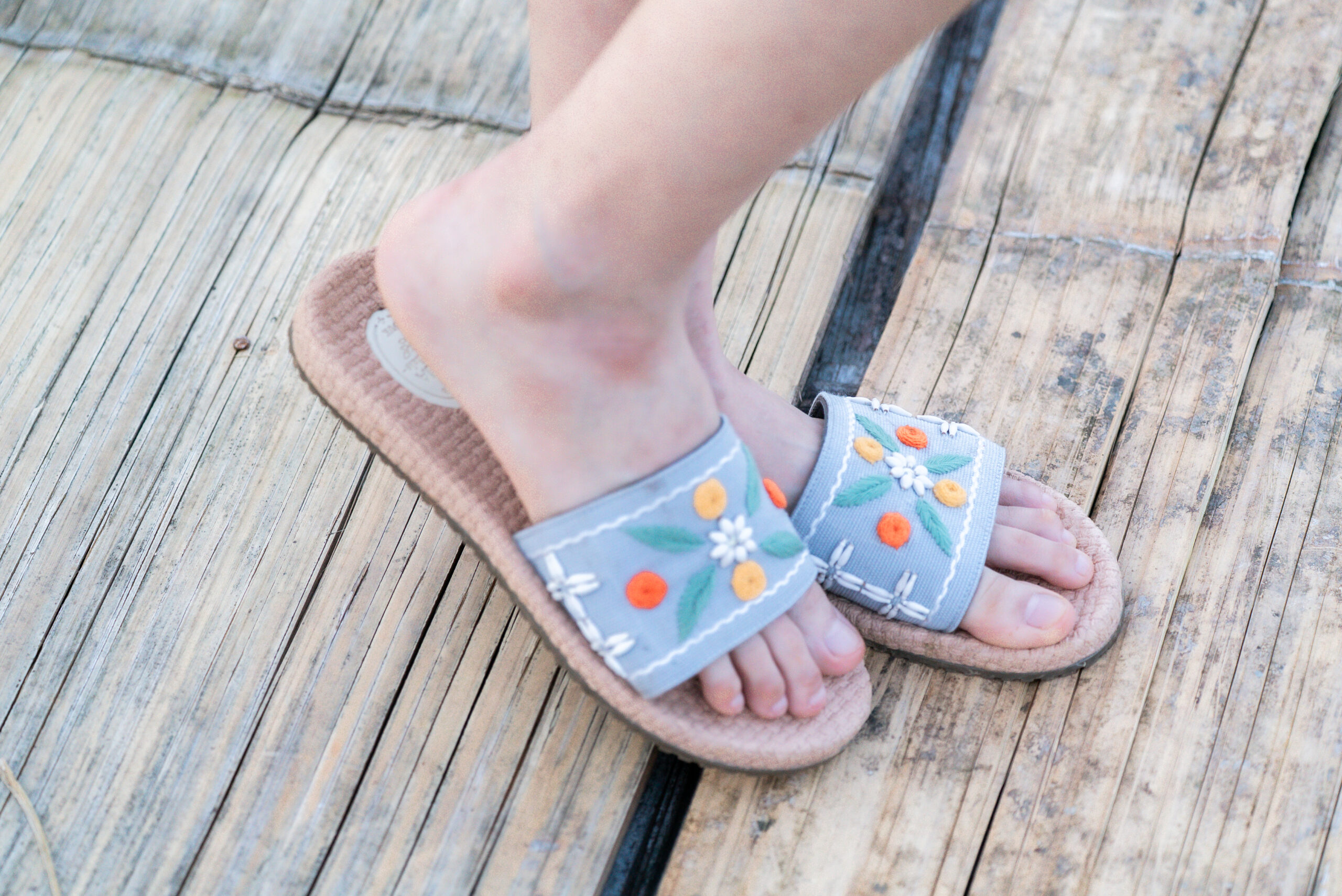
Handmade Sandals กับคุณค่าที่มากกว่าแฟชั่น
1. คุณค่าทางสิ่งแวดล้อม
ลดขยะ ลดการผลิตเกิน และใช้ทรัพยากรอย่างรับผิดชอบ
2. คุณค่าทางวัฒนธรรม
Thailand sandals ถ่ายทอดภูมิปัญญาท้องถิ่นผ่านงานฝีมือ
3. คุณค่าทางเศรษฐกิจ
สนับสนุนช่างฝีมือและชุมชน ไม่ใช่โรงงานขนาดใหญ่
4. คุณค่าทางอารมณ์
ผู้ซื้อรู้สึกเชื่อมโยงกับสินค้า เพราะรู้ว่าใครเป็นคนทำ

ทำไม Handmade Sandals คืออนาคตของ Sandals World
เทรนด์ผู้บริโภคปี 2026 แสดงให้เห็นชัดว่า คนรุ่นใหม่ต้องการ:
-
สินค้าที่มี Story
-
โปร่งใสด้านการผลิต
-
เป็นมิตรต่อโลก
-
มีเอกลักษณ์เฉพาะตัว
ซึ่งทั้งหมดนี้คือ DNA ของ handmade อยู่แล้ว
ในขณะที่แบรนด์ใหญ่กำลังพยายาม “ทำให้ดูยั่งยืน”
แบรนด์ handmade กลับ “ยั่งยืนโดยธรรมชาติ”
นี่คือข้อได้เปรียบที่สำคัญมากในตลาดโลก
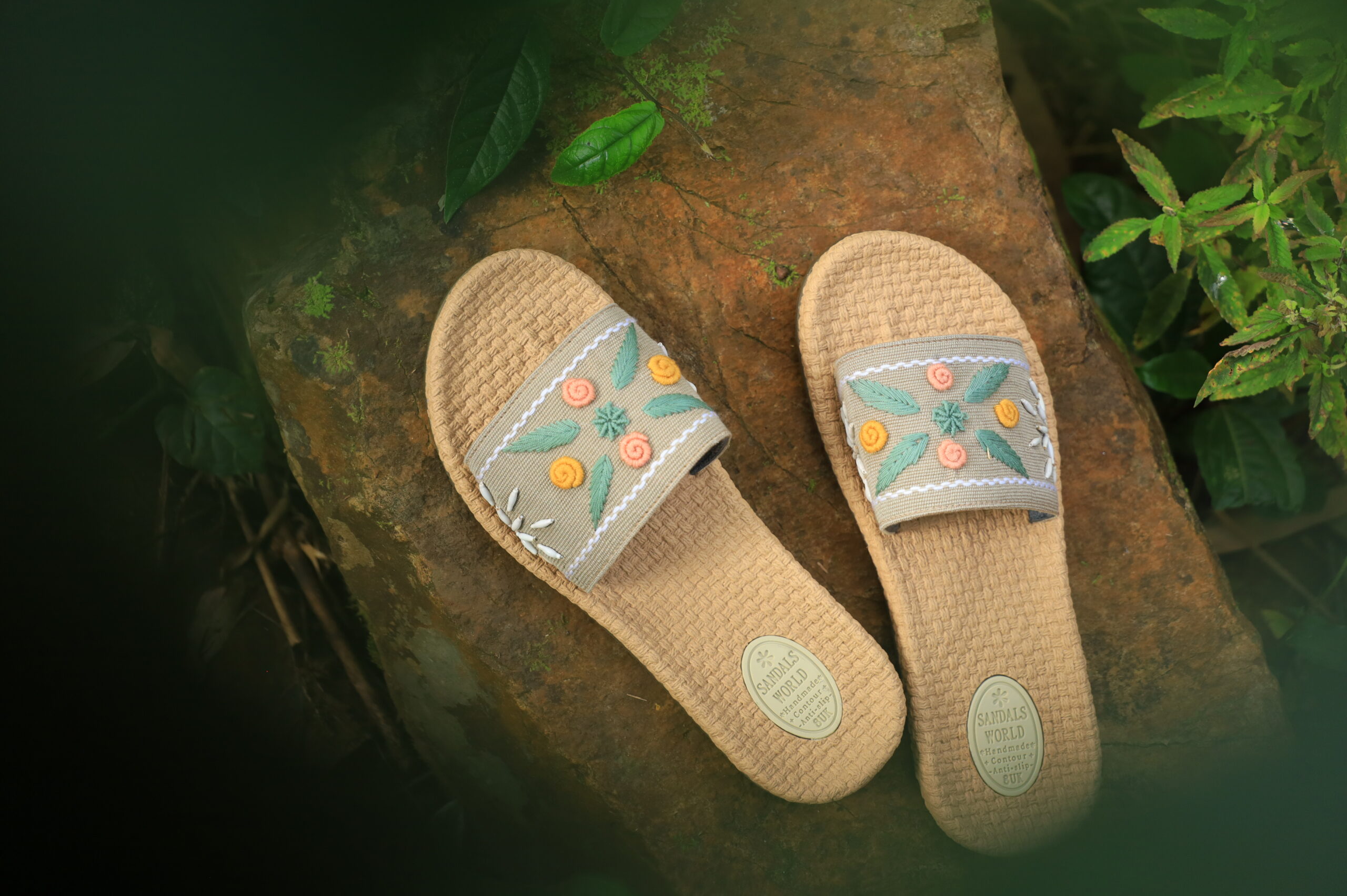
แนวทางสร้างแบรนด์ Handmade Sandals ให้ยั่งยืนจริง
✅ ออกแบบเพื่ออายุการใช้งานยาว
เน้น durability มากกว่า trend
✅ เล่าเรื่องกระบวนการทำ
ผู้บริโภคอยากเห็นมือคนทำ ไม่ใช่แค่สินค้า
✅ ใช้วัสดุ conscious material
เช่น bio-based foam หรือ natural fiber
✅ สร้างระบบซ่อมสินค้า
เปลี่ยนลูกค้าให้กลายเป็น community

เมื่อ Sustainability กลายเป็นเรื่องของหัวใจ ไม่ใช่แค่การตลาด
Zero Waste ไม่ใช่ checklist แต่คือปรัชญาในการสร้างสิ่งของ
รองเท้าแตะแฮนด์เมดหนึ่งคู่ อาจดูเล็กในสายตาโลกอุตสาหกรรม แต่เมื่อรวมกันทั่วโลก มันสามารถเปลี่ยนวิธีคิดของ sandals world ได้
เพราะทุกครั้งที่เราเลือก handmade sandals
เรากำลังเลือก:
-
สนับสนุนงานฝีมือ
-
ลดผลกระทบต่อโลก
-
ให้คุณค่ากับสิ่งที่ถูกสร้างด้วยมือมนุษย์
และนั่นคือความหมายแท้จริงของ sustainability ไม่ใช่แค่การรักษาโลก แต่คือการสร้างความสัมพันธ์ใหม่ระหว่าง คน งานศิลป์ และธรรมชาติ
รองเท้าแตะหนึ่งคู่ อาจเปลี่ยนโลกได้
แนวคิด Zero Waste ทั้ง 6 ข้อ Rethink, Refuse, Reduce, Reuse, Recycle และ Repair — ไม่ได้เป็นเพียงทฤษฎีด้านสิ่งแวดล้อม แต่เป็นแนวทางที่ทำให้ Artistic Handmade Sandals กลายเป็นสินค้าที่มีคุณค่าในทุกมิติ
ในวันที่ผู้คนเริ่มตั้งคำถามว่า “สิ่งที่เราซื้อส่งผลต่อโลกอย่างไร”
รองเท้า Thailand sandals ที่ทำด้วยมือ กำลังกลายเป็นคำตอบใหม่ของแฟชั่นยุคยั่งยืน
เพราะบางครั้ง ความเปลี่ยนแปลงของโลก
ไม่ได้เริ่มจากโรงงานขนาดใหญ่
แต่อาจเริ่มจาก
“มือของช่างคนหนึ่ง”
และรองเท้า handmade หนึ่งคู่ที่ถูกสร้างขึ้นด้วยความตั้งใจ

#Sandalsworld #รองเท้าartandcraft #รองเท้าแตะสานแฮนด์เมด #artandcraftsandals #artistichandmadesandals #handmade #artandcraft #sandals #รองเท้าแฮนด์เมด #รองเท้าแตะใส่แล้วไม่ลื่น #รองเท้ายางพารา #ใส่ไปไหนก็ได้
บทความโดย
Art and craft sandals by Sandalsworld thailand.

ABOUT THE CONTENT CREATOR
BUNTHARIK INSIRI
(Content Writer)
The Largest HubArtistic Handmade Sandals
BY
SANDALS WORLD THAILAND
of Artistic Handmade Sandals in Thailand.