

Brand Stories
Climate Crisis 2026: Four Years Left to Act? How Global Warming, El Niño, and Extreme Weather Are Changing Our Future
Oct
What if food becomes more expensive, clean water becomes harder to access, and extreme heat makes outdoor work increasingly dangerous? Would climate change still feel like a distant problem?
This question is becoming more relevant than ever. The Climate Crisis 2026 is no longer just an environmental concern. It is increasingly connected to economic stability, public health, food security, and everyday life worldwide.
Recently, the United Nations (UN) issued another urgent warning. The world is approaching a critical moment in the fight against climate change. Efforts to keep global warming within 1.5°C are increasingly unlikely to succeed without a temporary overshoot.
However, this warning does not mean the world will end in four years. Instead, it highlights a crucial opportunity to determine how severe future climate impacts may become.
The choices made today will shape the world we live in tomorrow.
UN Climate Warning: What Does “Four Years Left” Really Mean?
On October 21, 2026, the United Nations Environment Programme (UNEP) released its Emissions Gap Report 2026: The Point of Return.
The report examines the difference between current greenhouse gas emissions and the reductions needed to limit global warming.
According to UNEP, avoiding a temporary rise above 1.5°C is now highly unlikely. Nevertheless, rapid emissions reductions could still limit peak warming and increase the possibility of bringing temperatures back down over time.
The report outlines three significant global reduction milestones, compared with 2025 emission levels:
- By 2030: Reduce greenhouse gas emissions by 18%.
- By 2035: Achieve a 45% reduction.
- By 2040: Reach a 69% reduction.
These milestones represent a pathway designed to minimize the magnitude and duration of global temperature overshoot.
Under this scenario, global warming could peak at approximately 1.7–1.8°C before potentially returning to 1.5°C or below by 2100.
However, the challenge remains enormous.
Even if countries fully implement their existing climate commitments, the world could still experience approximately 2.6°C of warming by the end of this century.
That difference could have significant consequences for ecosystems, communities, and economies.
Source: UNEP Emissions Gap Report 2026
Why Is a 1.5°C Temperature Increase Such a Serious Problem?
An increase of just 1.5 degrees may sound insignificant. However, when measured across the entire planet, even a small change in average temperature can produce enormous consequences.
As the atmosphere warms, it can hold more moisture. Consequently, heavy rainfall may become more intense in many regions.
At the same time, higher temperatures increase evaporation, potentially making drought conditions more severe in vulnerable areas.
Warmer oceans also threaten marine ecosystems, accelerate coral bleaching, and contribute to rising sea levels.
Scientists are particularly concerned about Climate Tipping Points.
These are critical thresholds at which parts of Earth’s climate system may undergo major changes that are difficult or impossible to reverse on human timescales.
Examples include the large-scale loss of ice sheets and the degradation of essential ecosystems.
Although scientists cannot predict precisely when these thresholds may be crossed, the risks increase as global temperatures rise.
Therefore, every fraction of a degree matters.
Reducing warming is not simply about meeting an international target. It is about protecting the conditions that support life, livelihoods, and future generations.

El Niño 2026: Another Challenge in an Already Warming World
Previously, Sandals World explored this issue in the article:
El Niño 2026 and Sustainable Thai Craft Sandals: Why Every Step Matters
The article explains how El Niño affects global weather patterns and why understanding natural climate variations is essential in a warming world.
El Niño is a natural climate phenomenon involving changes in sea surface temperatures and atmospheric circulation across the tropical Pacific Ocean.
These changes can influence rainfall, temperatures, and seasonal weather patterns in many parts of the world.
Importantly, El Niño is not the cause of long-term global warming.
However, when natural climate fluctuations occur against a background of human-driven warming, certain weather-related risks may become more intense or complicated.
On October 26, 2026, the World Meteorological Organization (WMO) warned that a developing El Niño could affect rainfall patterns, temperatures, and food security into 2027.
Southeast Asia is among the regions that must monitor these changes carefully.
Potential concerns include unusually high temperatures, reduced rainfall during certain periods, and increasing pressure on water resources.
However, El Niño does not affect every country or season in the same way. Local weather forecasts and national climate monitoring remain essential.
Climate Crisis 2026: Real-World Impacts Are Already Emerging
1. Drought Is Threatening Agriculture and Food Security
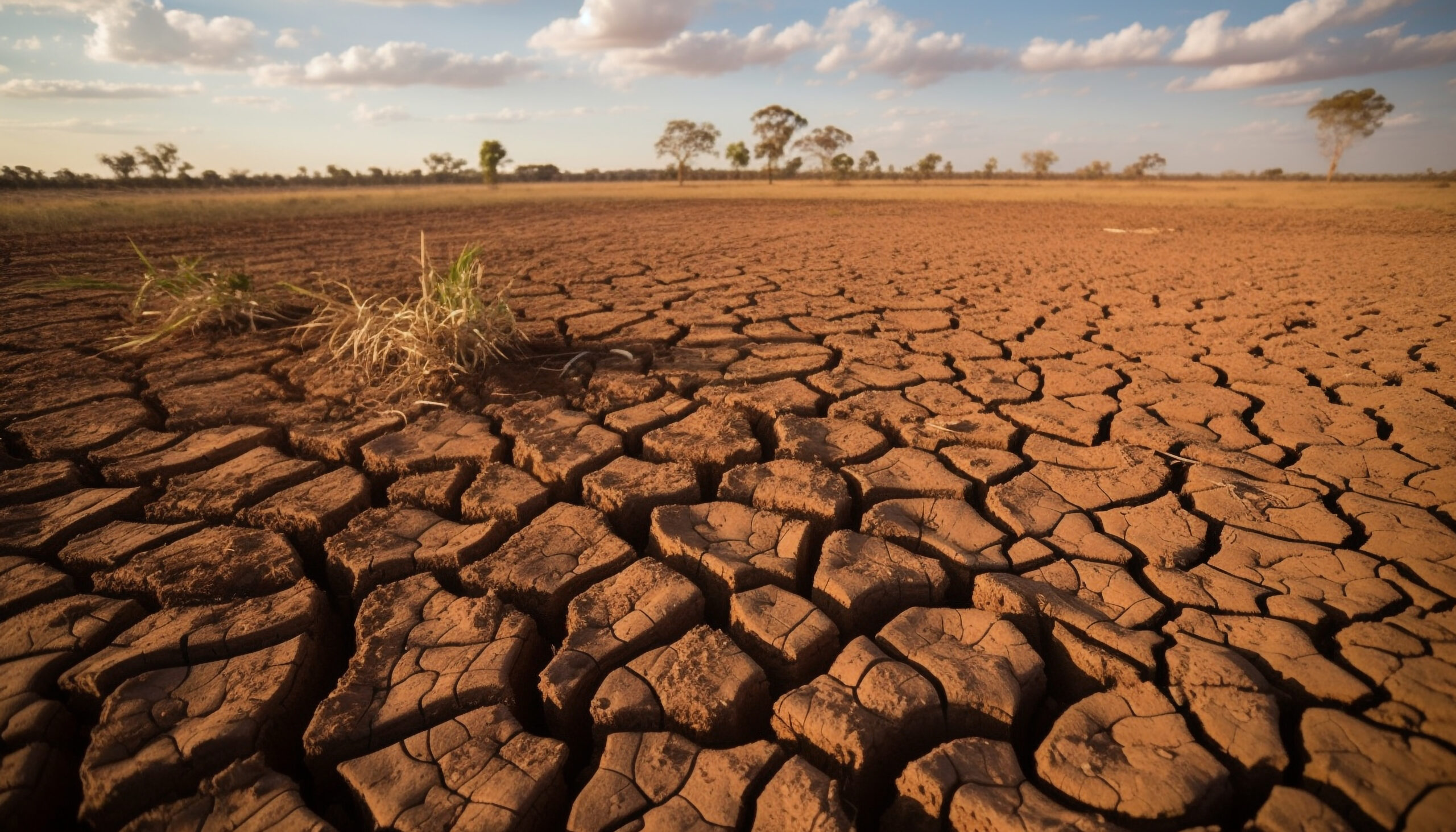
In October 2026, the Food and Agriculture Organization of the United Nations (FAO) reported drought-related challenges affecting agricultural communities in Cambodia.
Some rice-growing areas experienced water shortages and crop damage associated with El Niño conditions.
For farmers, unpredictable rainfall creates difficulties in planning planting seasons, managing irrigation, and protecting harvests.
However, the consequences extend beyond agriculture.
When crop production declines, food supply chains may face additional pressure. This can contribute to price volatility and threaten household food security.
Thailand faces similar concerns, particularly in agricultural regions that depend heavily on seasonal rainfall.
As a result, water management, climate forecasting, and farming resilience are becoming increasingly important.
2. Heavy Rainfall and Flooding Remain Major Risks for Thailand
While some Asian regions face drought, others must prepare for intense rainfall and flooding.
Between October 9 and 13, 2026, Thailand’s Department of Disaster Prevention and Mitigation issued warnings for 53 provinces and Bangkok.
The warnings covered heavy rainfall, flash floods, and landslide risks.
Later, the Thai Meteorological Department issued additional heavy-rain alerts for several areas between October 19 and 25.
These events demonstrate the importance of effective early warning systems, better water management, and climate-resilient urban planning.
However, it is essential to distinguish long-term climate trends from individual weather events.
A specific flood or storm cannot automatically be attributed to climate change without scientific attribution analysis.
Nevertheless, a warmer climate can increase the risk of intense rainfall in many regions, making long-term preparedness increasingly important.
3. Extreme Heat Is Becoming a Public Health Emergency
On October 28, 2026, the World Health Organization (WHO) highlighted findings from the 2026 Lancet Countdown report.
The findings showed that climate-related health risks continue to increase worldwide.
According to the report, average annual heat-related mortality in the years following the Paris Agreement rose by nearly 36% compared with the preceding decade.
Extreme heat can affect cardiovascular health, kidney function, respiratory conditions, and physical work capacity.
Older adults, children, and outdoor workers are especially vulnerable.
For Thailand, these concerns are particularly relevant to farmers, construction workers, and local artisans.
Working in increasingly hot conditions is no longer simply uncomfortable. It can become a serious occupational health issue.
How Can We Respond to the Climate Crisis?
Addressing climate change requires two complementary strategies: Mitigation and Adaptation.
Mitigation focuses on reducing the causes of global warming.
Adaptation involves preparing communities, businesses, and ecosystems for climate impacts that are already occurring or cannot be entirely avoided.
Governments and industries must accelerate the transition away from fossil fuels, improve energy efficiency, and expand access to cleaner energy sources.
Meanwhile, cities can reduce climate vulnerability through green spaces, improved drainage systems, and buildings designed to withstand extreme heat.
Agricultural communities also need reliable weather information, effective water management, and support for climate-resilient farming practices.
Early warning systems are another essential solution.
According to the United Nations, countries with effective multi-hazard early warning systems experience disaster mortality rates at least six times lower than countries without them.
Businesses also have an important role.
Responsible material selection, resource efficiency, better product design, and reduced production waste can support broader sustainability goals.
Although these changes require time and investment, delaying action may increase future environmental, economic, and social costs.

Sustainability Is About More Than Protecting the Environment
When people hear the word sustainability, they often think about reducing plastic waste, conserving forests, or protecting wildlife.
However, sustainability also involves economic opportunity, social well-being, and community resilience.
Communities that depend on natural resources may be especially vulnerable to changing rainfall patterns, extreme temperatures, and economic disruption.
Therefore, developing new skills, creating diverse income opportunities, and strengthening local industries can support their ability to adapt.
Traditional craftsmanship can play a meaningful role in this process.
Handmade products often carry cultural knowledge, technical skills, and identities developed across generations.
With appropriate design development, market access, and fair compensation, local artisans can create products that connect cultural heritage with contemporary lifestyles.
However, craftsmanship alone does not automatically make a product environmentally sustainable.
Its overall impact still depends on materials, production methods, durability, transportation, and end-of-life management.
A meaningful sustainability strategy must therefore consider both environmental responsibility and the people behind every product.
Sandals World: Connecting Global Challenges with Thai Craftsmanship
A single pair of sandals cannot stop global warming or prevent El Niño.
However, every product we create involves decisions about materials, energy, resources, and human labor.
This is why Sandals World believes that product development should extend beyond appearance.
As a creative hub connecting Thai handmade sandal brands, designers, and artisans, Sandals World seeks to combine craftsmanship with more responsible approaches to product development.
Its vision of Sustainable Thai Craft Sandals focuses on three essential elements: design, materials, and comfort.
Through creative design, traditional craftsmanship can evolve into contemporary products while preserving cultural value.
Concepts such as Artistic Handmade Sandals and Art & Craft Sandals demonstrate how traditional techniques can inspire distinctive modern footwear.
At the same time, improving the quality, comfort, and functionality of Thailand sandals can help Thai handmade products reach a broader international audience.
By supporting craftsmanship, Sandals World also seeks to create opportunities for artisans and local communities.
The objective is not only to create beautiful handmade sandals but also to strengthen the relationships between people, products, and cultural heritage.
SW GREEN: A Thoughtful Transition Toward More Responsible Materials
One of Sandals World’s initiatives is SW GREEN, a sustainability development project that explores responsible material choices while supporting Thai craftsmanship and production communities.
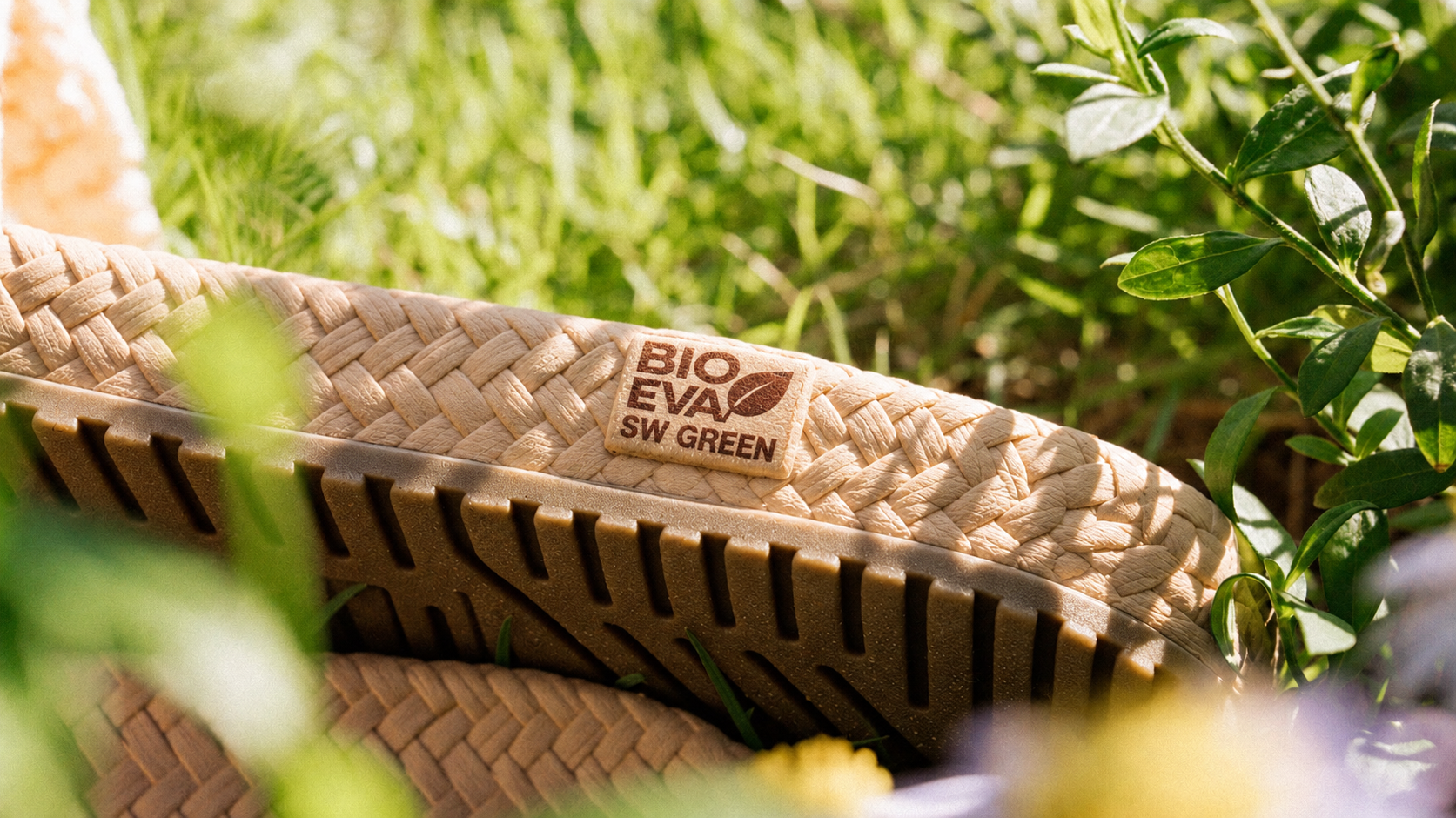
Under the concept of Material Transition, the project has begun introducing BIO EVA foam into selected VPADA sandal collections.
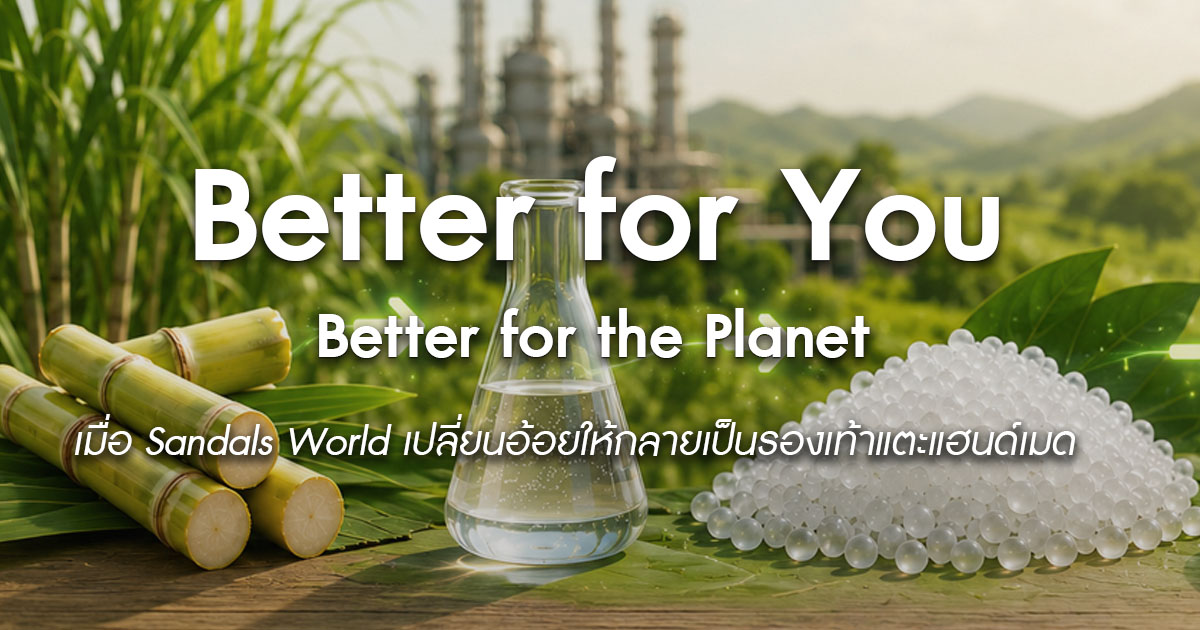
BIO EVA is a type of Ethylene Vinyl Acetate that can incorporate bio-based feedstocks, including sugarcane-derived materials, as alternatives to some fossil-based raw materials.
This represents a potential pathway toward reducing dependence on petroleum-derived resources.
However, bio-based does not necessarily mean biodegradable.
Likewise, using BIO EVA does not automatically guarantee that a finished product has a lower environmental impact across every category.
A meaningful environmental assessment must consider several factors, including bio-based content, manufacturing processes, transportation, product lifespan, and end-of-life management.
For Sandals World, this transition is therefore part of an ongoing process of research, development, and improvement.
It is not a claim that every pair of sandals is environmentally harmless.
This approach reflects the philosophy behind SW GREEN:
“A Better Material Choice, Not a Zero-Impact Promise.”
Rather than promising perfection, Sandals World aims to make more informed decisions, communicate transparently, and continuously improve its approach to materials and craftsmanship.
The Future Can Still Change If We Start Today
The Climate Crisis 2026 is a reminder that long-term promises are no longer enough.
Greenhouse gas emissions must decline in practice, while governments, industries, cities, and communities prepare for an increasingly unpredictable climate.
Individual choices alone cannot solve a global crisis. Nevertheless, meaningful systemic progress is built through decisions made by governments, businesses, producers, and consumers.
For Sandals World, developing handmade Thai sandals is not simply about creating attractive footwear.
It is also an opportunity to support local artisans, preserve cultural knowledge, strengthen communities, and explore more responsible ways of using resources.
The journey toward sustainability will involve learning, challenges, and continuous improvement.
Yet the importance of beginning that journey has never been clearer.
Because a better future is not something we should simply wait for. It is something we must help create through the choices we make today.
Sandals World — Sustainable Thai Craft Sandals.
Crafting a More Thoughtful Future, One Step at a Time.
𝙎𝙖𝙣𝙙𝙖𝙡𝙨 𝙒𝙤𝙧𝙡𝙙 𝙞𝙨 𝙏𝙝𝙖𝙞𝙡𝙖𝙣𝙙’𝙨 𝙡𝙖𝙧𝙜𝙚𝙨𝙩 𝙝𝙪𝙗 𝙤𝙛 𝙖𝙧𝙩𝙞𝙨𝙩𝙞𝙘 𝙝𝙖𝙣𝙙𝙢𝙖𝙙𝙚 𝙨𝙖𝙣𝙙𝙖𝙡𝙨


ABOUT THE CONTENT CREATOR
BUNTHARIK INSIRI
(Content Writer)
Sandals World | Art & Craft Sandals | Sustainable Thai Craft Sandals Tags: handmade sandals, sandals world, foot health,
Thailand sandals, artistic handmade sandals, art & craft sandals, plantar fasciitis, bunion, sustainable sandals and BIO EVA ,SW GREEN
Climate Crisis 2026: Four Years Left to Act? How Global Warming, El Niño, and Extreme Weather Are Changing Our Future
Views: 1 What if food becomes more expensive, clean water becomes harder to access, and [...]
Oct

Halloween 2026 in Song Wat: Explore Bangkok’s Trendiest Old Town with VPADA’s Spooky Cute Pop-up!
Views: 4 Something spooky, something cute! Halloween is taking over Song Wat, and VPADA Bangkok [...]
Oct
Milala Handmade in Tainan: Every Step Becomes a Memory
Views: 7 Some journeys end when we return home, but the most meaningful memories often [...]
Oct

VPADA Handmade Sandals: Better Together, Sweeter Your Way! Discover Chang Journey’s New Color & Orchid Sandals
Views: 13 Who says handmade sandals have to be simple? Sometimes, the smallest details can [...]
Oct

Halloween in Chiang Mai: Too Many Beautiful Sandals to Choose From! Discover CMP Handmade Sandals
Views: 15 Spooky Season, Stylish Steps! What’s scarier than ghosts this Halloween? Finding so many [...]
Oct
BIO EVA: From Sugarcane to Every Step A New Chapter in Handmade Sandals
Views: 15 When we think of sugarcane, we often imagine sugar, sweet drinks, or agricultural [...]
Oct
Witheechon x SW GREEN: Bringing Thai Cultural Heritage into the Modern World Through Sandals World’s Three Pillars
Views: 15 Before a pair of sandals begins its journey, have you ever wondered about [...]
Oct

Milala Handmade Featured on PChome Taiwan: Thai Craftsmanship Heads to STRIKE ROCK FESTIVAL 2026
Views: 22 From carefully tied knots and handcrafted sandals to recognition in Taiwanese media, Milala [...]
Oct
SANDALS WORLD GUIDE
Artistic Handmade Sandals
BY
SANDALS WORLD THAILAND
The Largest Hub
of Artistic Handmade Sandals in Thailand.