

Brand Stories
Why Sandals World Chose a Different Path From Day One
May
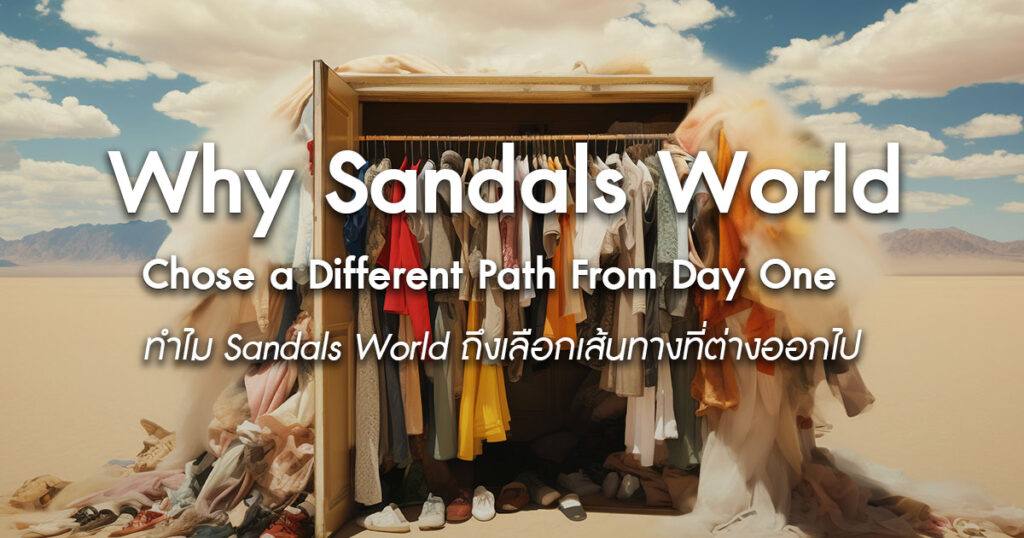
The Global Fashion Crisis 2025: When Clothing Became a Threat to the Planet and Why Sandals World Chose a Different Path From Day One
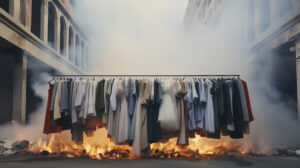
When Your Wardrobe Became a Weapon Against the World
Picture this if the global fashion industry were a country, it would be the third-largest greenhouse gas emitter on Earth. Only the United States and China would rank above it.
This figure comes from a 2025 European Commission report. It is not an exaggeration.
Today, we put all the numbers on the table. And we look at why Sandals World chose to walk against this industry from the very beginning.

The Numbers the Fashion Industry Doesn’t Want You to Know
Greenhouse Gas: More Than All Planes and Ships Combined
Apparel Impact Institute (Aii) reported in July 2025 that apparel sector greenhouse gas emissions grew by 7.5% in 2023. It was the first year-on-year increase since Aii began tracking in 2019.
Total emissions reached 944 million tonnes nearly 2% of all global emissions.
Overall, the fashion industry drives 10% of the world’s annual carbon footprint. That is more than all international flights and maritime shipping combined.
The number grows more alarming when you learn that ultra-fast fashion and virgin polyester are the primary drivers.
Water: The Resource That Disappears Every Time You Buy a New Shirt
The fashion industry uses 700 gallons of water to produce one cotton shirt. A pair of jeans requires 2,000 gallons.
The industry also generates 20% of global industrial wastewater, mostly from the fabric dyeing process. That makes it the second-largest water polluter in the world.
Microplastics: Invisible, But Everywhere
35% of microplastic pollution in the ocean comes from the fashion industry — particularly from polyester, nylon, and acrylic fibres.
Every time you wash a synthetic garment, thousands of tiny plastic fibres break free. They flow through wastewater systems, enter the ocean, and return to us through the food chain.
Textile Waste: The Problem Hidden in Your Wardrobe
Less than 1% of all clothing gets recycled into new clothes.
In 2014, people bought 60% more clothes than in 2000 but kept them for only half as long. Buy more. Discard faster. The world absorbs more damage.
The Hidden Offenders: Ultra-Fast Fashion and Green Lies
Think major brands are solving this problem? Look at these numbers.
Of the 250 largest fashion brands in the world, only 4 disclose emissions reduction targets at the level the UN demands. And 57% of brands show no clear progress on climate goals at all.
Shein pledged net zero by 2050. Yet Shein’s emissions rose by 170% over the past two years.
Worse still, recycled polyester which many brands use to claim sustainability may be the wrong solution. 98% comes from plastic bottles, not textile waste. It still releases microplastics into the environment every time it is washed.
The Real Solution: Not Recycling, But “Produce Less, Do Better”
Researchers and environmental experts agree the answer is not new recycling technology. It is a complete change in how we produce and consume.
Boston Consulting Group states that a shift to a circular economy model could push recycling rates above 30%, generate over $50 billion in fibre value, and create 180,000 new jobs.
The real answer lies in supporting local artisans, small-scale production, and thoughtful design. These approaches have a clearly lower environmental impact than mass production.
That is exactly what Sandals World has always done before it became a trend.

Sandals World: When One Pair of Sandals Becomes a Statement to the World
Global brands are still debating how to “begin” adapting to sustainability. Sandals World never needed to adapt. It was built on the foundation of sustainability from the start.
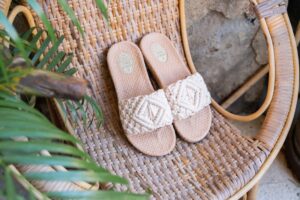
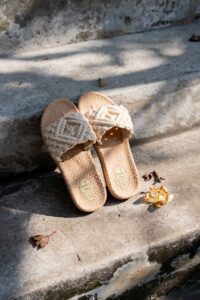
Every pair from Sandals World is an Art & Craft Sandal a direct response to fast fashion in every dimension.
Natural Materials With a Known Origin — Not Synthetic Plastic While the industry relies on polyester and nylon that shed microplastics with every wash, Sandals World selects verified natural materials. No hidden chemicals. No plastic concealed in the sole.
Through Artisan Hands — Not a Factory Assembly Line Every Artistic Handmade Sandal passes through the hands of skilled Thai craftspeople. Each detail receives attention, step by step. No excess stock becomes waste. No production runs chase trends that change every two weeks.
Made in Thailand — Near-Zero Transport Carbon Every Sustainable Thai Craft Sandal is made by Thai artisans, in Thailand. No multiple ocean crossings before reaching you. Shorter supply chain means less carbon.
Designed to Last Years — Not Months Sandals World designs each pair of handmade sandals to last for years. You buy less. You discard less. The world absorbs less impact. This is real circular thinking.
Supporting Local Artisans — Building a Sustainable Economy Every pair you buy from Sandals World sends money directly to Thai craftspeople not to a multinational corporation. Choosing Thailand sandals from Sandals World means preserving skills, culture, and livelihoods within the community.
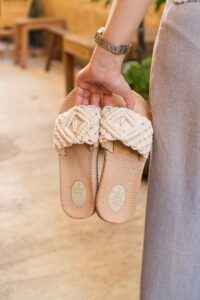
Why Sandals World Is Different From Brands That Claim Sustainability
Many brands print “eco-friendly” on a paper bag. Then they produce millions of pieces every season.
Sandals World does not do that.
The difference is the business model produce less, do it well, sell direct, no middlemen. Every Art & Craft Sandals pair that leaves an artisan’s hands is a piece with identity, a story, and a value that does not fade with the season.
That is what Artistic Handmade Sandals truly means not just beautiful, but beautiful with responsibility.
When Consumers Start to Wake Up: A Shift That Is Changing the World
Good news is arriving consumers worldwide are waking up.
More buyers now support local artisans and small-scale producers. The reason is clear: lower environmental impact through limited production and thoughtful design.
A 2025 study found that labelling products with a Cost Per Wear (CPW) value encourages people to buy higher-quality items that last longer. Quality goods often cost less than fast fashion over time.
That is what modern consumers are learning cheap does not mean good value when you count the cost the world pays instead.

Every Step You Take Is a Vote
The fashion industry’s environmental crisis cannot be solved with a tote bag. Buying a cloth bag while still purchasing fast fashion every week changes nothing.
Real change requires a shift in behaviour buy less, choose better, and choose from brands that genuinely take responsibility for the world.
Sandals World makes no claim that one pair of sandals will fix the world’s crisis.
But every pair made by hand, every piece of material with a known origin, and every artisan paid fairly proves that there is always another way.
In a world where the fashion industry burns itself and the planet simultaneously, choosing handmade sandals from Sandals World means standing on the other side of that fire.
Your next step matters more than you think.

วิกฤตแฟชั่นโลก 2025: เมื่อเสื้อผ้ากลายเป็นภัยคุกคามโลก และทำไม Sandals World ถึงเลือกเส้นทางที่ต่างออกไป
เมื่อตู้เสื้อผ้ากลายเป็นอาวุธทำลายโลก
ลองคิดภาพนี้ดู ถ้าอุตสาหกรรมแฟชั่นโลกเป็นประเทศหนึ่ง มันจะปล่อยก๊าซเรือนกระจกมากเป็นอันดับ 3 ของโลก รองจากสหรัฐอเมริกาและจีนเท่านั้น
ตัวเลขนี้มาจากรายงานคณะกรรมาธิการยุโรป ปี 2025 ไม่ใช่การพูดเกินจริง
วันนี้เราเปิดตัวเลขทั้งหมดออกมา และพูดถึงว่าทำไม Sandals World ถึงเลือกเดินสวนทางกับอุตสาหกรรมนี้ตั้งแต่วันแรก
ตัวเลขที่อุตสาหกรรมแฟชั่นไม่อยากให้คุณรู้
ก๊าซเรือนกระจก: มากกว่าเครื่องบินและเรือรวมกัน
Apparel Impact Institute (Aii) รายงานในเดือนกรกฎาคม 2025 ว่า การปล่อยก๊าซเรือนกระจกของอุตสาหกรรมเสื้อผ้าเพิ่มขึ้น 7.5% ในปี 2023 นับเป็นครั้งแรกที่ตัวเลขปรับตัวขึ้น นับตั้งแต่ Aii เริ่มติดตามในปี 2019
ตัวเลขรวมอยู่ที่ 944 ล้านตัน — เกือบ 2% ของการปล่อยก๊าซทั้งโลก
ในภาพรวม อุตสาหกรรมแฟชั่นรับผิดชอบ 10% ของ carbon footprint โลก มากกว่าเที่ยวบินระหว่างประเทศและการขนส่งทางเรือรวมกัน
ตัวเลขนี้น่ากังวลยิ่งขึ้น เมื่อรู้ว่า ultra-fast fashion และโพลีเอสเตอร์บริสุทธิ์คือตัวขับเคลื่อนหลัก
น้ำ: ทรัพยากรที่หายไปทุกครั้งที่คุณซื้อเสื้อตัวใหม่
อุตสาหกรรมแฟชั่นใช้น้ำ 700 แกลลอนเพื่อผลิตเสื้อฝ้ายหนึ่งตัว และ 2,000 แกลลอนสำหรับกางเกงยีนส์หนึ่งตัว
นอกจากนี้ อุตสาหกรรมนี้ยังสร้างน้ำเสียอุตสาหกรรมทั่วโลกถึง 20% ส่วนใหญ่มาจากกระบวนการย้อมสีผ้า จึงเป็นผู้ก่อมลพิษทางน้ำรายใหญ่อันดับสองของโลก
ไมโครพลาสติก: มองไม่เห็น แต่อยู่ในทุกที่
35% ของมลพิษไมโครพลาสติกในมหาสมุทรมาจากอุตสาหกรรมแฟชั่น โดยเฉพาะจากโพลีเอสเตอร์ ไนลอน และอะคริลิก
ทุกครั้งที่ซักเสื้อผ้าสังเคราะห์ เส้นใยพลาสติกขนาดเล็กนับพันเส้นหลุดออกมา ไหลผ่านระบบน้ำเสีย ลงสู่ทะเล และกลับเข้าสู่ห่วงโซ่อาหารของเรา
ขยะสิ่งทอ: ปัญหาที่ซ่อนอยู่ในตู้เสื้อผ้า
น้อยกว่า 1% ของเสื้อผ้าทั้งหมดนำมารีไซเคิลเป็นเสื้อผ้าใหม่ได้
ในปี 2014 ผู้คนซื้อเสื้อผ้ามากขึ้น 60% เมื่อเทียบกับปี 2000 แต่เก็บไว้เพียงครึ่งระยะเวลา ซื้อมากขึ้น ทิ้งเร็วขึ้น และโลกรับผลกระทบมากขึ้น
ผู้กระทำผิดที่ซ่อนตัวอยู่: Ultra-Fast Fashion และการโกหกสีเขียว
คิดว่าแบรนด์ใหญ่กำลังแก้ปัญหา? ลองดูตัวเลขนี้
จาก 250 แบรนด์แฟชั่นที่ใหญ่ที่สุดในโลก มีเพียง 4 แบรนด์เท่านั้นที่เปิดเผยเป้าหมายลดก๊าซในระดับที่ UN เรียกร้อง และ 57% ของแบรนด์ไม่แสดงความคืบหน้าด้านสภาพอากาศเลย
Shein สัญญา net zero ภายในปี 2050 แต่ตัวเลขการปล่อยก๊าซของ Shein กลับพุ่งขึ้น 170% ในสองปีที่ผ่านมา
ยิ่งไปกว่านั้น โพลีเอสเตอร์รีไซเคิลที่แบรนด์หลายเจ้าใช้อ้างความยั่งยืน อาจเป็นทางออกที่ผิด 98% ทำมาจากขวดพลาสติก ไม่ใช่ของเสียสิ่งทอ และยังคงปล่อยไมโครพลาสติกเมื่อซักทุกครั้ง
ทางออกที่แท้จริง: ไม่ใช่รีไซเคิล แต่คือ “ผลิตน้อยลง ทำดีขึ้น”
นักวิจัยและผู้เชี่ยวชาญสิ่งแวดล้อมชี้ตรงกัน ทางออกไม่ใช่เทคโนโลยีรีไซเคิลใหม่ แต่คือการเปลี่ยนโมเดลการผลิตและการบริโภคทั้งหมด
Boston Consulting Group ระบุว่า หากอุตสาหกรรมหันมาใช้ circular economy อัตราการรีไซเคิลจะเพิ่มขึ้นเกิน 30% สร้างมูลค่ากว่า 50,000 ล้านดอลลาร์ และงานใหม่ 180,000 ตำแหน่ง
คำตอบอยู่ที่การสนับสนุนช่างฝีมือท้องถิ่น การผลิตขนาดเล็ก และการออกแบบที่ใส่ใจ ซึ่งส่งผลกระทบต่อสิ่งแวดล้อมต่ำกว่าการผลิตจำนวนมากอย่างชัดเจน
นั่นคือสิ่งที่ Sandals World ทำมาตลอด ก่อนที่มันจะกลายเป็นกระแส

Sandals World: เมื่อรองเท้าแตะหนึ่งคู่คือจุดยืนต่อโลก
แบรนด์ระดับโลกยังถกเถียงว่าจะ “เริ่ม” ปรับตัวอย่างไร แต่ Sandals World ไม่เคยต้องปรับตัว เพราะสร้างมาบนรากฐานของ sustainability ตั้งแต่ต้น
ทุกคู่ของ Sandals World คือ Art & Craft Sandals ที่ตอบโต้ fast fashion ในทุกมิติ
วัสดุธรรมชาติที่รู้ที่มา — ไม่ใช่พลาสติกสังเคราะห์ ขณะที่อุตสาหกรรมพึ่งโพลีเอสเตอร์และไนลอนที่ปล่อยไมโครพลาสติกทุกครั้งที่ซัก Sandals World เลือกวัสดุธรรมชาติที่ตรวจสอบได้ ไม่มีสารเคมีแฝง ไม่มีพลาสติกซ่อนอยู่ในพื้นรองเท้า
ผ่านมือช่างฝีมือ ไม่ใช่สายพานโรงงาน Artistic Handmade Sandals ทุกคู่ผ่านมือช่างฝีมือไทยที่เชี่ยวชาญ ทุกรายละเอียดถูกใส่ใจทีละขั้นตอน ไม่มีสต็อกส่วนเกินที่กลายเป็นขยะ ไม่มีการผลิตเพื่อตามเทรนด์ที่เปลี่ยนทุกสองสัปดาห์
ผลิตในไทย — carbon footprint จากการขนส่งเกือบเป็นศูนย์ Sustainable Thai Craft Sandals ผลิตโดยช่างฝีมือไทยในประเทศ ไม่ต้องข้ามมหาสมุทรหลายรอบก่อนถึงมือคุณ การขนส่งที่สั้นกว่า หมายถึงคาร์บอนที่น้อยกว่า
ออกแบบให้อยู่หลายปี — ไม่ใช่หลายเดือน Sandals World ออกแบบ handmade sandals แต่ละคู่ให้ใช้ได้นานหลายปี คุณซื้อน้อยลง ทิ้งน้อยลง และโลกรับผลกระทบน้อยลง นี่คือ circular thinking ที่แท้จริง
สนับสนุนช่างฝีมือท้องถิ่น — สร้างเศรษฐกิจที่ยั่งยืน ทุกคู่ที่คุณซื้อจาก Sandals World คือเงินที่ตรงไปยังช่างฝีมือไทย ไม่ใช่บริษัทข้ามชาติ การเลือก Thailand sandals จาก Sandals World คือการรักษาทักษะ วัฒนธรรม และชีวิตของคนในชุมชน
ทำไม Sandals World ถึงแตกต่างจากแบรนด์ที่อ้างความยั่งยืน?
หลายแบรนด์พิมพ์คำว่า “eco-friendly” บนถุงกระดาษ แต่ยังผลิตเสื้อผ้าหลายล้านชิ้นต่อซีซัน
Sandals World ไม่ทำแบบนั้น
ความแตกต่างอยู่ที่โมเดลธุรกิจ ผลิตน้อย ทำดี ขายตรง ไม่มีคนกลาง ทุก Art & Craft Sandals คู่ที่ออกจากมือช่างคือชิ้นงานที่มีตัวตน มีเรื่องราว และมีคุณค่าที่ไม่เสื่อมสลายตามฤดูกาล
นั่นคือความหมายที่แท้จริงของคำว่า Artistic Handmade Sandals ไม่ใช่แค่สวย แต่คือสวยอย่างมีความรับผิดชอบ
เมื่อผู้บริโภคเริ่มตื่น: กระแสที่กำลังเปลี่ยนโลก
ข่าวดีมาถึงแล้ว ผู้บริโภคทั่วโลกเริ่มตื่นตัว
ผู้ซื้อจำนวนมากหันมาสนับสนุนช่างฝีมือท้องถิ่นและผู้ผลิตขนาดเล็ก เพราะผลกระทบต่อสิ่งแวดล้อมต่ำกว่าอย่างชัดเจน
งานวิจัยปี 2025 พบว่า การติดป้าย Cost Per Wear (CPW) กระตุ้นให้ผู้คนซื้อสินค้าคุณภาพสูงที่ใช้ได้นาน เพราะตระหนักว่าสินค้าดีมักถูกกว่า fast fashion ในระยะยาว
นั่นคือสิ่งที่ผู้บริโภคยุคใหม่กำลังเรียนรู้ ราคาถูกไม่ได้แปลว่าคุ้มค่า เมื่อคิดถึงต้นทุนที่โลกต้องจ่ายแทน
ก้าวที่คุณเดินคือการลงคะแนนเสียง
วิกฤตสิ่งแวดล้อมจากแฟชั่นแก้ไม่ได้ด้วยถุงผ้า หรือการซื้อกระเป๋าผ้าแล้วยังซื้อ fast fashion ต่อ
มันต้องการการเปลี่ยนพฤติกรรม ซื้อน้อยลง เลือกดีขึ้น และเลือกจากแบรนด์ที่รับผิดชอบต่อโลกจริง ๆ
Sandals World ไม่ได้อ้างว่าจะแก้วิกฤตโลกด้วยรองเท้าแตะคู่เดียว
แต่ทุกคู่ที่ผลิตด้วยมือ ทุกชิ้นวัสดุที่รู้ที่มา และทุกช่างฝีมือที่ได้ค่าตอบแทนอย่างเป็นธรรม คือการพิสูจน์ว่า มีทางเลือกอื่นอยู่เสมอ
ในโลกที่อุตสาหกรรมแฟชั่นกำลังเผาไหม้ตัวเองและโลกไปพร้อมกัน การเลือก handmade sandals จาก Sandals World คือการยืนอยู่คนละฝั่งกับกระแสนั้น
ก้าวต่อไปของคุณ สำคัญกว่าที่คุณคิด
#Sandalsworld#รองเท้าartandcraft#รองเท้าแตะสานแฮนด์เมด #artandcraftsandals #artistichandmadesandals#handmade#artandcraft#sandals#รองเท้าแฮนด์เมด#รองเท้าแตะใส่แล้วไม่ลื่น#รองเท้ายางพารา#ใส่ไปไหนก็ได้
บทความโดย
Sandals World | Art & Craft Sandals | Sustainable Thai Craft Sandals Tags: handmade sandals, sandals world, foot health,
Thailand sandals, artistic handmade sandals, art & craft sandals, plantar fasciitis, bunion, sustainable sandals

ABOUT THE CONTENT CREATOR
BUNTHARIK INSIRI
(Content Writer)
The Largest HubArtistic Handmade Sandals
BY
SANDALS WORLD THAILAND
of Artistic Handmade Sandals in Thailand.